Pages

Thursday, January 28, 2016

Training for the Ministry in the Reformed Baptist Tradition by Robert Oliver

Image result for robert oliver london theological seminary

On Wednesday we had a meeting of the Bradford on Avon Ministers' Fraternal. Our longstanding Chair and former Minister at Bradford on Avon Baptist Church gave an address on the subject in the title above. Here are some brief (and rough around the edges) notes. 

In 1644 the 1st London Baptist Confession was drawn up and approved by seven London Baptist Churches. But to understand the emergence of Reformed or Particular (that is Calvinistic, not fussy) Baptists we have to go back a little further in history. 

The English Reformation that had developed in fits and starts since the reign of Henry VIII was brought to a juddering halt by Queen Mary. She set about to literally burn Protestantism out of England and many faced a martyr's death. 

Some English Protestants fled to Calvin's Geneva for refuge. There they encountered a more thorough reformation than they had witnessed back home. The regular preaching of the Word was especially prominent. This emphasis on biblical exposition and application let to the printing of the Geneva Bible, replete with notes and other study aids. 

As the Geneva Bible came into the hands of godly English-folk it stimulated a desire for sound biblical preaching. 

Mary died and was followed by Elizabeth I. Hopes were raised that the new monarch would give fresh stimulus to the Reformation in England. However, virtually all she would allow was for the Church of England to revert to it's pre-Marian state. The Elizabethan Settlement set the Reformation in stone. Queen Bess was certainly no great fan of preaching.  

The Puritan vision of Reformed Church driven by a revitalised preaching ministry was going nowhere fast. Some began to question the very idea of a State Church. They held that churches should be allowed to reform themselves according to the Word of God without having to wait for permission from the State. There were the Separatists.

Initially they were not Baptists. A persecuted minority, they sought refuge in Netherlands. In 1596 they drew up a confession of faith. This, with some revisions, was the basis of 1st London Baptist Confession of 1644.

A pioneer Reformed Baptist movement began to emerge among Separatists in 1630 London. Initially they questioned the validity of  CofE baptism, as they had seceded from the 'corrupt' church. The position of believers' baptism was adopted in 1638. General Baptists had already rejected infant baptism, but they were Arminian in their theology and baptised adults by effusion. The Reformed Baptists were Calvinistic and advocated believers' baptism by immersion.

And so the 1644 confession was agreed. The Calvinistic stance was in part due to the influence of William Ames. Ames was an English Separatist who found refuge in Holland. He was present at the Synod of Dort and authored the widely read, Marrow of Theology.

None of early Reformed Baptists had  had any formal theological training. Their pastors were artisans and merchants. But they had been brought up on a solid diet of sound Puritan preaching. Eventually theology graduates joined number such as Samuel Cox.

The RBs held that Ministers of the Word needed to be proficient in Hebrew, Greek and Latin. Early pastors Christopher Blackwood and John Tombs were scholarly men. 

With toleration granted to Baptist in the 1650s, RB churches proliferated. Gifted preachers and evangelists such as Richard Gifford were mightily used by God to spread the Word and plant new RB churches. 

The RBs disapproved of 'disorderly preaching' by unrecognised men. Church approval was required for 'lay preachers' or 'gifted brethren'. It was insisted that churches not the not the magistrate should grabt this approval to competent and orthodox men.

When the monarchy was restored with the return of Charles II, only Anglican worship was allowed. Non Anglican preaching was officially banned, but Baptists such as John Bunyan and Benjamin Keach continued. 

In 1677 the 1st London Confession was revised and the 2nd London Baptist Confession drawn up. It made provision for preachers who were not pastors or elders (26:11). The updated confession was formally adopted by RB churches in 1689 when Dissenters were granted toleration.

The need for training was recognised. Both for pastors and 'others who are gifted and qualified' to preach. Training was initially provided by local churches. But Academies also began to emerge. Some RB's like Samuel Howe saw no need for 'human learning'. But that was not the general view. 

In 1679 Broadmead Baptist Church in Bristol was left a legacy by wealthy merchant Edward Tyrell to establish a training ministry associated with the church. Bernard Foskett led the Bristol Academy with distinction from 1720-58. He was proficient in Hebrew and Greek, taught systematic theology and Bible handling skills to a growing body of students.

Dissenting Academies sprung up across the country to train men for the Ministry, as Nonconformists were not allowed to attend university at the time. The Bristol Academy trained preachers from all over UK. As well as the Academies some candidates for the Ministry received personal tutoring from experienced pastors. 

The Baptist Academies tended to be more confessional in orientation and held to trinitarian orthodoxy, while other Nonconformist Academies drifted into Unitarianism, to the detriment of the Presbyterian and Congregationalist churches. 

With Robert's historical overview in mind we discussed training for pastoral and preaching ministries today in the UK RB scene. Currently there is no dedicated RB seminary. Reformed Seminaries and Bible Colleges tend to be interdenominational. That can be a strength in terms of fostering catholicity of spirit, but may be a weakness in terms of fostering a distinctive RB ministerial identity. 

We had a planning session over lunch to draw up a schedule for the year ahead. Robert announced that he was standing down as Chair after many years of distinguished service. It was kind of fitting that his swansong as Chair was an historical talk on training for the Ministry. Two subjects that are very close to his heart. I first came across Robert when attending the London Theological Seminary in the late 1980's and he was appointed Church History lecturer. 

I joined the Bradford on Avon fraternal when a newbie pastor in Stalbridge, Dorset in the early 1990's, and have been attending regularly since we moved to Westbury in 2003. Being part of this 'Band of Brothers' has been of real encouragement to me over the years. I'm sure Robert's wise and gracious chairmanship of the fraternal has been much appreciated by members past and present. We were glad to hear that he intends to continue meeting with us despite stepping down as Chair.  

Monday, January 11, 2016

Anglican Primates' conference: the church militant or muddled?


There's nothing that draws the attention of the media to church-related matters so much as stories involving splits and sex. A story featuring both factors in one is the religious affairs correspondents' equivalent of the Holy Grail. As ever, our dear old Church of England is happy to oblige. This week Justin Welby has convened an Anglican Primates' meeting at Canterbury with the hope of holding the fractured communion together. The issue that threatens to divide global Anglicanism is, of course, homosexuality. 

Cue calls issued by the Liberal wing for the church to repent over its treatment of gays. While Evangelicals warn, "Everywhere we see the danger of Christians committed to a gospel without salvation, reconciliation without repentance, a Saviour without a cross and a Lord without a word." 

This being the Church of England with its habit of muddling through crisis after crisis, conciliatory voices are hoping that the grand assemblage of Primates will find some way of agreeing to disagree. Apparently, church needs both the Liberals with their 'love for people' thing and the Evangelicals with their 'love for doctrine' thing. 

After all, writes David Ilson, Dean of St. Paul's, "The Church is not a body defined by rules and dogmas, but a fellowship of diverse people joined together by faithfulness to following Jesus Christ." OK, but it is pretty hard to know what faithfulness to following Jesus Christ looks like without at least a smidgen of agreed dogma concerning his identity and the purpose of his work. If there is no doctrinal agreement on who Jesus is and what he came to do, there can be no grounds for meaningful fellowship. Is Jesus the Son of God incarnate who came to save the world from sin? Or was he a very nice, spiritual sort of fellow who taught a kindly message of inclusion and tolerance? 

Faithfulness to following the 'Evangelical Jesus' will look quite different to following your 'Liberal Jesus'. The question of which is the authentic Christ of the New Testament brings us back to doctrinal matters and we can't go there because 'doctrine divides', and the main thing is to hold the CofE together come what may. That's the case even though its various 'wings' fundamentally disagree on what constitutes the gospel, consequently what constitutes a Christian, and what therefore constitutes the church. 

Not being an Anglican I don't have a dog in this particular fight. The nearest I've got to any primates lately was spotting an elderly silverback gorilla when visiting Longleat Safari Park. But this story does raise some interesting questions. Even for a Baptist. The first is, what on earth are Evangelicals still doing in the CofE, and is there anything that would prompt them to break with Canterbury en masse?

The Liberal ascendancy in the 1980s didn't do it, with David Jenkins describing the bodily resurrection of Jesus as 'a conjuring trick with a bag of bones'. Womens' ordination was meant to be the tipping point, and then female Bishops. Tipping points come and go, biblical authority is flouted, historic church teachings are jettisoned, but Evangelical Anglicans don't seem to be able to to let go of Mother Anglican's apron strings. 

And now this. Will the acceptance of active homosexuals as Ministers of the Church finally tip Evangelical Anglicans over the edge? I dunno. Given the precedents, what do you reckon? Some may say that Christian teaching on sexuality isn't a core doctrinal issue anyway. In a sense that's right. What Scripture says about sex in general and same sex relationships in particular isn't up there with gospel-defining truths such as the doctrine of the Trinity, the incarnation of Christ, his sin-atoning death and bodily resurrection etc. Why should Evangelicals leave the CofE over a second order issue? 


Which brings us to another question, what's the relationship between church and culture when it comes to deciding what Christians should believe and do? In this case, does God as Creator have the right to order the form of our human relationships, and has he deigned to reveal that form to us? Most Christians would say, 'yes' and 'yes'. If the the Holy Spirit speaking in Scripture rather than fashionable opinion is to function as the ultimate authority in the church, then it is clear that male-female marriage is only legitimate context for sexual intimacy. That's it. Period. If anything Jesus tightened things up on that point, jettisoning the Old Testament's rather lax approach to polygamy and divorce, Matthew 19:3-6. When the apostles of Christ were confronted with same sex relations in Gentile culture of their day they made it clear that such behaviour was not acceptable for Christians.


The church is called to follow the teaching of Scripture as an expression of her submission to the lordship of Christ. If he is our Lord and Head, we cannot simply ignore or reject those bits of the Bible that might be upsetting Guardian readers. In 1930's Germany the church was being pressurised to conform to the culture. By way of response the confessing church drew up the Barmen Declaration, which included the points:

8.11 Jesus Christ, as he is attested for us in Holy Scripture, is the one Word of God which we have to hear and which we have to trust and obey in life and in death. 
8.12 We reject the false doctrine, as though the church could and would have to acknowledge as a source of its proclamation, apart from and besides this one Word of God, still other events and powers, figures and truths, as God's revelation.
What is at stake here is the church's loyalty to Christ's revealed will. It is not our calling to conform to the world and it's patterns of thought, but to confront the world with the challenge of the gospel. When contemporary church leaders suggest that we should listen to what the Holy Spirit is saying to the church on the issue of same sex relations and then we hear them simply reaffirming fashionable liberal opinion on the matter, we know that they have well and truly lost the plot. In that case, apart from the clergy decked out in fancy dress and a few rituals, what's the difference between the 'church' and the world?  We have no other source of revelation besides the Word of God. And if any teaching of the Word of God is subject to sustained attack, the task of the church is not to surrender, but stand and fight. As Martin Luther put it, 
If I profess, with the loudest voice and the clearest exposition, every portion of the truth of God except precisely that little point which the world and the devil are at that moment attacking, I am not confessing Christ, however boldly I may be professing Christianity. Where the battle rages the loyalty of the soldier is proved; and to be steady on all the battle-field besides is mere flight and disgrace to him if he flinches at that one point.
For how much longer can Evangelicals remain in the forever flinching Church of England? Less the church militant and more the church muddled. 

And yet, one final question needs to be faced. Has the church always treated people who feel same sex attraction with the respect and love that is their due as human beings made in the image of God? The call to repent referred to above is not altogether misplaced. The conservative position of Nigerian church leaders would be all the more credible if they campaigned against the demonisation and criminalisation of gay people in their own land. The cry of the church should not be, 'lock 'em up', but 'Christ came into the world to save sinners', whatever their race, gender, background or sexual orientation. That was certainly the gospel-centred approach of the apostles, 1 Corinthians 6:9-11. Christians wrestling with same sex attraction should be treated with great pastoral sensitivity and offered the love and support of the church. It is good to note that UK Evangelicals are now beginning to adopt a much more caring and thoughtful approachsee here

This is not a matter of the church needing both Liberals with their 'love for people' and Evangelicals with their 'love for doctrine' to deal with this matter in an appropriately balanced manner. Framing it like that is just an ecclesio-political way of papering over gaping wide theological chasms. Rather, the church's witness must forever be characterised by costly compassion, 'speaking the truth [however unpopular] in love [extended to all people without exception]', Ephesians 4:15. Christ our Lord demands nothing less. We'll have to wait and see to discover what the Primates have to say, and then what Evangelical Anglicans do by way of response. 

Wednesday, January 06, 2016

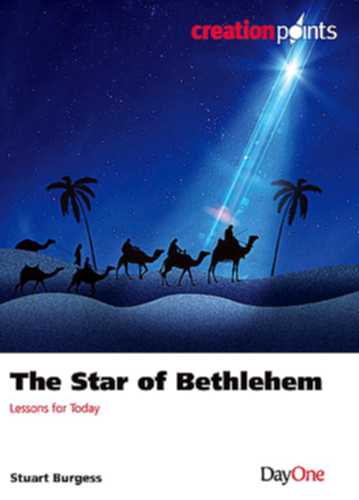
The Star of Bethlehem by Stuart Burgess

The Star of Bethlehem: Lessons for Today,
Stuart Burgess, Day One Publications, 2015, 62pp

In this little book Professor Stuart Burgess aims at unpacking the message of the star of Bethlehem. That special sign in the heavens that led the wise men of Matthew 2 from the East to Jerusalem, seeking the King of the Jews. And then from Jerusalem to the very place in Bethlehem where Mary, Joseph and the infant Jesus could be found. 

The book is simply written and is designed to help people who are seeking Jesus today to find him and experience his saving power. It also serves to remind believers of the wonder of Christ's coming into the world as man, and what that means for us.

Burgess worked on the Hubble Space Telescope that has beamed back to earth some amazing images of the universe and has an abiding interest astronomy. He sees the star of Bethlehem as a supernatural phenomenon that was specially sent by God to guide the wise men to Jesus. The writer unfolds the narrative of Matthew 2 in a simple and easy to grasp way that draws the reader in, making telling points of application along the way. 

If I had a criticism of the book it would be that Burgess somewhat confusingly chops and changes between reflecting on the star of Bethlehem and describing Jesus as a star in his chapter headings. While that is an entirely appropriate biblical designation for Jesus, it can be a little confusing when 'A guiding star' of one chapter heading, meaning the star seen by the wise men becomes, 'A star of grace' and 'A hated star', meaning Jesus in other chapters. 

But that said, this is an engaging little work that will encourage people to seek the only true Star, Jesus Christ, to whom the star of Bethlehem once pointed.

The book is dedicated to Hannah Stone, a young woman in our Providence congregation who was suffering from seemingly terminal lymphoma cancer, but in the goodness of God was recently given the all clear. 

Sunday, December 27, 2015

Christmas past


So that was it, then. Another Christmas over and done with. As ever the build up was a whirl of services, shopping, gift wrapping and card writing in preparation for the Big Day. We had encouraging numbers at our Carol Service on the Sunday before Christmas and the Christmas Morning Service was also well attended. 

For pressies I mostly had clothes and books. My ageing Mod midlife crisis thing continues with the gift of a Ben Sherman polka dot button down shirt. I'm looking forward to getting stuck onto Ralph Cunnington's Preaching with Spiritual Power. I may not agree with everything he has to say, but it's good to have one's views challenged. Flicking through I note that he references an article on this blog, so it can't be all bad.  

We look forward to catching up with family in London and Wales later this week. 

Tuesday, December 22, 2015

Something extra for Christmas

Once in our world, a stable had something in it 
that was bigger than our whole world.
C. S. Lewis. 

We won't get hung up on whether our Lord was born in a stable as opposed to a lower room in the house where animals were often brought in for the night because the 'inn', meaning guest room was occupied. What I'm interested in here is Lewis's theological insight that Jesus was at one and the same time inside the 'stable' and bigger than the whole world in which the stable was set. He is emphasising that Jesus became what we was not [Man] without ceasing to be what he was [God]. He is Immanuel; God with us as one of us. 

This is sometimes referred to as Calvin's extra. Although it can easily be shown that in teaching this the Reformer did not in fact add anything extra to the church's understanding of the person of Christ. His thinking was in line with historic orthodoxy. In his chapter devoted to 'The Extra' in John Calvin's Ideas, (Oxford, 2004) Paul Helm cites E. David Willis's view that the extra Calvinisticum could well be called the extra Catholicum

Why is this important other than to historical theologians? Because in seeking to understand and proclaim the incarnation of Christ we need to ensure that we give due weight to the Son's divine and human natures. If in becoming man he became less than God, Jesus was not the full and final revelation of God and his sacrificial death is divested of its infinite sin-atoning value. John 1:18 and 1:29 make little sense if when the 'Word became flesh' (John 1:14) he ceased to be the Word. Calvin expressed it like this:
Another absurdity which they obtrude upon us, viz., that if the Word of God became incarnate, it must have been enclosed in the narrow tenement of an earthly body, is sheer petulance. For although the boundless essence of the Word was united with human nature into one person, we have no idea of any enclosing. The Son of God descended miraculously from heaven, yet without abandoning heaven; was pleased to be conceived miraculously in the Virgin’s womb, to live on the earth, and hang upon the cross, and yet always filled the world as from the beginning. Calvin, J. (1997). Institutes of the Christian Religion II:xiii.4. Bellingham, WA: Logos Bible Software.
This bears a striking similarity to a statement by Augustine in his Letter to Volusian:
And we think that something is impossible to believe is told us about the omnipotence of God, when we are told that the Word of God, by whom all things were made, took flesh from a virgin and appeared to mortal senses without destroying His immortality, or infringing His eternity, or diminishing His power, or neglecting the government of the world, or leaving the bosom of the Father, where He is intimately with Him and in Him. (Cited in John Calvin's Ideas, Helm, p. 59)
Source critics argue that Calvin was familiar with Augustine's letter and his words in the Institutes quoted above bear the imprint of the Church Father's influence. But what of the fact that Scripture speaks of the Son being given [as a man] John 3:16, or that the Son was born of a woman Galatians 4:4.? Does that not suggest that the Son became man and nothing else at the incarnation? No. Calvin drew upon the notion of the 'communion of attributes' to help explain why the Bible designates human properties to the divine Son. This lays down that aspects of one or the other nature (divine or human) may be predicated to the whole person of Christ. In so doing both the unity of Christ's person and the integrity of his divine and human natures are preserved. 

According to the witness of Scripture Son was not only 'born of woman', he also 'gave himself for us' at Calvary, Galatians 2:20. How could the eternal Son begin to be, and the immortal One die? In his divine nature he could not do either of those things. But in the incarnate Christ we have the person of the Son with divine and human natures. The Son was born and died for us in his humanity. But we do not hold that the human nature of the Son gave itself for us, but that the Son died in our place in his human nature. That which may only be predicated of Christ's human nature is attributed to his person as the Son because what he did through his human nature was a personal act on our behalf. Calvin's careful use of the 'communion of attributes' doctrine is in line with Chaldeconian 'one person/two natures' Christology and helps us understand the way in which the New Testament describes the work of the incarnate Son of God. 

May I conclude with a plea for extra worship? Loose theological talk continues to find its way into our hymns that sing to Jesus, 'You laid aside your majesty', or 'you left your throne and kingly crown'. The idea here is of divestment of glory and abandonment of sovereignty. But that is not what happened at the incarnation. John tells us 'the Word was made flesh and we beheld his glory'. The government of the world was not neglected when the Son was born of a virgin in Bethlehem. Jesus continued to 'uphold all things by the word of his power' (Hebrews 1:13) even as he was cradled in Mary's arms. The Son's aseity (that he exists in and from himself and all things that exist are from him and depend upon him) was not compromised when he became a weak and vulnerable baby in need of his mother's milk. The language of some of our hymns (and sermons?) goes beyond what might be said under the heading of the 'communion of attributes'. For while the Son was born and died, we are not told in the New Testament that he laid aside any aspect of his divine being, or that he stepped down from the throne of the universe when he became man. 

The finite cannot enclose the infinite, even in the incarnate Christ. Lewis understood this, 'Once in our world, a stable had something in it that was bigger than our whole world.' 

O come, let us adore him, 
Christ, the Lord.

Tuesday, December 08, 2015

Why should any Church of England Bishops sit in the House of Lords?

Image result for westminster abbey parliament

A recently produced report, LIVING WITH DIFFERENCE community, diversity and the common good argued, "The pluralist character of modern society should be reflected in national forums such as the House of Lords,so that they include a wider range of worldviews and religious traditions, and of Christian denominations other than the Church of England". The thrust of the report is that Britain is no longer a 'Christian country' and that should be reflected in the worlds of politics, society and education. I would venture to suggest that the report does not go far enough when it comes to Church of England Bishops taking ex-officio seats in the House of Lords. The fact that they do is a reminder that the Church of England is the Established Church of this part of the United Kingdom. That is why the position of the Archbishop of Canterbury is not quite the same as pastor of an independent evangelical Church. He is appointed to office by the Prime Minister of this country, under the authority of Her Majesty the Queen, who is the Supreme Governor of the Church of England. The integral link between Church and State in our constitution explains why Anglican Bishops sit in the House of Lords where they have the authority to scrutinise and amend Government legislation.

In effect the Church of England is the religious arm of the State. This is a throwback to the Reformation under Henry VIII. The king divided from the Rome because the Pope would not sanction his divorce from Catherine of Aragorn. He quickly installed himself as Supreme Governor of the English Church, which remained largely Catholic in its structure and teaching under his reign. Archbishop Cranmer slowly nudged the Church of England in the direction of Protestantism, with huge strides being made under Edward VI. Then came the backlash Catholic under Queen Mary, followed by the the stabilising reign of Elizabeth I. And so the Church has remained unchanged, the established Protestant Church of England (apart from the experiment with Presbyterianism during the Commonwealth period). In some ways, Anglicanism is a strange beast, with its Roman Catholic-style Episcopal government and Protestant 39 Articles. The Church finds itself stuck in an historic compromise between Rome and Geneva, with its leaders appointed by a democratically elected Prime Minister.

We could go back even further and discuss the alliance of Church and State under Constantine and the development of Christendom, but let's not go there. The question is, 'Should the Church of England remain Established?' I would argue that it should not, because the idea of an established Church is alien to the New Testament. Under the old covenant there was no distinction between the religious and civil aspects of Israel's life. The nation was a theocracy - God's chosen nation, living under the terms of his covenant. But all that changed under the new covenant. Now the people of God are gathered from all nations. The Church may be a theocracy under the lordship of Christ, but she is distinct from the State.

Church and State are two very different institutions. The State has been ordained by God to restrain evil and preserve peace and order in society (Romans 13:1-7). But the Church has been called to carry out her Great Commission to preach the gospel and make disciples for Christ from all peoples. The State may use force to subdue law breakers and protect its citizens. The Church's only weapon is the sword of the Spirit, the word of God. State establishment obscures the Church's unique gospel-centred mission. That is why there is no sense in the New Testament that the Church should aspire to establishment by the State. Obviously, that kind of thing would have been impossible anyway under Nero. But the apostles don't so much as hint that establishment would be in any way desirable. All they asked was that the State tolerate the existence and activities of the Church (see Paul in Acts). The apostles would certainly have been outraged at the thought that the State should appoint Church leaders. However, the Church/State distinction found so clearly in the New Testament was gradually eroded away from Constantine onwards.

Even the Reformers were willing to use the powers of the State to further their cause. They are called Magisterial Reformers because they expected the Magistrate to help reform both church and society. In 16th century England, some Protestant got so fed up with the slow pace of Reform in the Church of England, that they took the radical step of separating from the established Church. In the words of a title of one of their books, they believed in Reformation without Tarrying for Any. These Separatists, men like Henry Barrowe, John Greenwood and John Penry argued that the Church should not have to wait for permission from the State to implement reform. This was seen as so subversive of the unity of the country that some Separatists were actually put to death. But it slowly began to dawn on more and more Protestants that Church and State should be separated. The Independent Puritans tended to this view, while Presbyterians held that the godly Magistrate had a duty to assist with Church reformation. The 1689 Baptist Confession amends the Westminster Confession's section on the Civil Magistrate(here), to limit the State's role in Church affairs (here).

Some would no doubt like to see the Church of England disestablished for reasons of secular pluralism. The report cited at the top of this post does not call for full-blown disestablishment, but for a limit to be placed on the number of Church of England Bishops in the Lords, while room is made for representatives of other faiths. Pluralism is the order of the day where an attempt is made to reduce all faiths to an irreducible minimum that amounts to little more than, 'Let's all be nice to each other'. While I'm all in favour of peaceful co-existence between people of all faiths and none, that cannot be at the expense of the doctrinal disctinctives of the Christian faith.

The report also veers towards a secularising agenda that would push faith-based values and views to the margins of public life. While I would welcome the separation of Church and State, that does not mean the public square should be seen as a God-free zone. Jesus Christ is Lord of all. He is head of the church and King of the world. All created reality is subject to his rule, including human society and culture. Christians should act as salt and light to influence the direction of their country. Having Church of England Bishops sit in the Lords is not the way to do it. But individual believers can exercise influence by serving as politicians, writing to their MPs on matters of concern, getting involved in their local communities and so on. By all those means and more we can 'seek the peace of the city' and ensure that Christian values are brought to bear upon the public square.

In 1914, the Church of England was disestablished in Wales, largely due to pressure from the Nonconformist Churches. Isn't it about time that England got up to speed?

*This is an update of a post that was published a while back. 

Thursday, December 03, 2015

“I wish it could be Christmas everyday” Really?

Image result for i wish it could be christmas everyday
Yes, it’s that time of year again. There are pressies to buy, cards to write and decorations to retrieve from the loft. Then there’s the tree; do you go for a real one, or the thing you bought from Woolies years ago? Better not forget to order a turkey for the Big Day. Wonder what’s going to be on telly? A Doctor Who special, I guess and other seasonal treats. And then there’s the music. Stuff about sleigh bells, snow and Santa. “‘Tis the season to be jolly”, and we invest a huge amount of time, energy and dosh into making sure that Christmas is the happiest time of all.

“I wish it could be Christmas everyday” hollers the old Wizard hit. But who apart from wide-eyed little kids really thinks that? Once a year is quite enough, thanks. Anything else would drive us crackers. Yes, it’s fun while it lasts. Family gatherings, giving and receiving gifts, and a slap up Christmas dinner with all the trimmings. What’s not to like? But doing it all again everyday? “Let it snow, let it snow, let it snow...” in July? Maybe not.

In any case, even with all we throw at it, the joys of Christmas fizzle out all too soon. Perhaps that’s because we’ve forgotten the “reason for the season”. We all know that Jesus wasn’t in fact born on 25th December, but that’s the date on which we traditionally celebrate his coming into the world. His birth was announced by the angel of the Lord to some unsuspecting shepherds. They were rather startled at the sight of the angelic being, but he reassured them, “Do not be afraid. I bring you good news that will cause great joy for all the people. Today in the town of David a Saviour has been born to you; he is Christ, the Lord.”

The birth of Jesus was an occasion of great joy because he had come as the Saviour. There is a direct line between Christmas and Easter. The Son of God came into the world as a human being in order to die on the cross for our sins and rise again so that we may be put right with God. The gifts we give and receive at Christmas time are a pale reflection of the greatest Gift God has given to the world, “God so loved the world that he gave his one and only Son, that whoever believes in him shall not perish but have eternal life.” For those who receive God’s gift of Jesus, the joy of Christmas is not just for everyday, but for eternity. Really.  

See here for info on Providence and Ebenezer Christmas services.  

* For Trinity and News & Views parish magazines 

Thursday, November 26, 2015

John Owen Centre Doctrine Study Day on 'Sinai: What was the Law For?'


Well, that was good. Yesterday I attended a John Owen Centre Study Day led by Garry Williams on 'Sinai: What was the Law For?' This was the 5th of these events hosted by our Bradford on Avon Ministers' Fraternal. 

The study days take the form of a seminar where Garry leads the group in discussing a paper he has prepared on the subject in hand. The papers contain a distillation of his study, setting out the diverse views of various writers before drawing some conclusions.  

We gave attention to the character of the Sinai covenant. Was it a covenant of works, a covenant of grace administered as a covenant of works, or a covenant of grace with a special focus on law? That led to a lively discussion, especially when it came to the views of Meredith Kline. We also considered what is the 'problem' with the law? Your view on this second issue will probably be determined by your attitude to the Sinai covenant. 

It was a real 'iron sharpening iron' occasion where group members endeavored to assess the various theological viewpoints in the light of Scripture. It really made me think and just occasionally blurt out what I was thinking. With so many Bible literate colleagues around, woe betide anyone who (like me) tried quoting Scripture from memory and got it a bit wrong.

It wasn't all about high level theological discussion, though. Thought was given to how what we had learned might impact on our preaching and so be of benefit to the people Of God.

I look forward to giving Garry's paper a good read through, as we had to skip some bits on the day due to time constraints. 

I'm not going to try and summarise the paper, or the discussion it stimulated here, as this Study Day is still on the road and I don't want to 'steal Garry's thunder'. Far better to attend one near you. See the John Owen Centre website for details of other Study Days around the country, or contact them about hosting one at your Fraternal. 

Thursday, November 19, 2015

Building Better Boards: An Opportunity for Education

Published by Wild Search

This report seeks to assess the state of school governance today and makes proposals that are intended to enable governors to respond to the challenges presented by a rapidly changing educational landscape. Governance used to be the Cinderella of schooling, receiving little attention from government ministers and policy wonks. That has now changed. The much discussed Trojan Horse affair has shown up the damage than can be done when governance goes awry. The move towards academisation, and with it the diminishing power of Local Education Authorities has placed an increasing burden on governors to monitor the performance of their school or group of schools in the case of Multi Academy Trusts. The preface by Lord Nash highlights the excellent work of the All Party Parliamentary Group for Education Governance and Leadership. He recognises the importance of governance as an agent for  change in a school-led system. It is instructive that head of Ofsted, Sir Michael Wilshaw chose to devote the second of his monthly 'commentaries' to the subject of governance for 21st century schools

By 'school-led system' Nash means schools working together under the auspices of an Academy Chain or Multi-Academy Trust. The jury is out on whether academies perform better than maintained schools, especially when it comes to raising standards for disadvantaged students. But with David Cameron wanting all schools to have the 'opportunity' to become an academy by the end of the current parliament, it looks as though the drive towards academisation remains a key plank in the government's education policy.

But if governors are going to help fill the vacuum left by the decline of LEAs they are going to have to sharpen up their act. The report emphasises the need for governors to be appointed on the basis of their skills and for existing governors to engage in high quality training and professional development. The authors are rather sniffy about Parent Governors. They would like to see a shift from the stakeholder model towards skills-based governance, as if it's a case of either the one or the other. I disagree. It is rather patronising to suggest that Parent Governors don't necessarily have the skills needed to govern. At our school Parent Governors are a highly skilled bunch, but they are also passionate about seeing the school attended by their children continuing to make rapid progress. A concern about Parent Governors only being interested in the welfare and progress of their own darling children can be resolved by effective induction and training so that they understand the strategic nature of the role. The answer to the tendency for governor meetings to be sidetracked by parents raising issues to do with their children is good chairing, not getting rid of Parent Governors altogether.

The core functions of governance are: 1. Setting the Vision, Ethos and Strategy of the school. 2. Holding the Headteacher to account for the educational progress of the school. 3. Ensuring value for money. In all those areas parents have a role to play, as well as school leaders, staff,  members of the local community and governors appointed simply on account of their skills. In any case, when Parent Governor vacancies become available it is good practice for the role advertisement to include a description of the desired set of skills that a parent might bring to the table to complement the existing team. Do we really want a situation where Governing Boards are almost exclusively comprised of accountants, lawyers and high-powered business men and women? With all due respect to the good people of those professions, that would represent a considerable narrowing of the range of interests and backgrounds represented at board level. But whatever the composition of our boards we need to ensure that governors are trained and empowered to contribute to the strategic leadership of their schools and to hold senior leaders to account. In her recent address to the NGA conference Emma Knights issued a rallying call to governors that we would do well to heed. 

Attention is given to the challenges of governance in  Multi-Academy Trusts, especially in the light of the Education and Adoption Bill 2015-16. The bill will legislate to make it harder for maintained schools judged 'Inadequate' or 'coasting' by Ofsted to resist being forced to join an Academy Chain or MAT. However, recent Ofsted reports arising from the inspection of Chains and MATs suggest a mixed picture when it comes to these 'school-led systems' being able to turn around failing schools. Often the problem with poorly performing schools is not their maintained status, but ineffective leadership and weak governance. Forcing a struggling school to join a group that may share those characteristics isn't going to help anyone (see here and here). Far better for a successful local school to offer school-to-school support at leadership and governance level to an underperforming neighbour. But where is the funding to facilitate that kind of thing? If MATs are the way to go, let them at least be area-wide set-ups that are the product of a shared vision, ethos and strategy, not 'marriages of convenience' with several schools in one part of the country and a few dotted elsewhere, having little in common save a bit of branding. 

The aspect of this report that garnered media interest was the proposal that governors, notably Chairs should be remunerated for their work. Sir Michael Wilshaw concurs with this view in his 'commentary' . However, while reasonable expenses should be paid so that no one is left out of pocket for their efforts, I'm not sure that I would want governors to be paid. That does not make us dilettante amateurs, but 'unpaid professionals', who seek to serve as governors in local schools for the common good of the communities in which we live. Even when it comes to Chairs, it is difficult to see how either they would be offered little more than an insulting pittance for their work, or be paid so much as to change the nature of the role in a detrimental way. Chairs might be reluctant to do anything that might deprive them of 'a nice little earner' and fail to upset apple carts that sometimes need upsetting. Effective chairing might be better secured by in-post chairs taking advantage of high quality training such as the Chairs of Governors' Leadership Development Programme. Thoughtful succession planning is also vital for ensuring continuity of good leadership at the helm of the GB.  

One area that did not receive sufficient reflection here was the professionalisation of clerking. If more is going to be expected of governors and they are to remain unpaid for their services, then governing boards are going to need the support of highly effective clerks. The role of the clerk is to offer the board procedural and legal advice and guidance, organise and prepare for meetings, take minutes and so on. Too often clerks are regarded as semi-professionals who routinely work well over their contracted hours. They are not always subject to regular performance management to help ensure their continued professional development. This needs to change. Effective clerking is essential for efficient, sharply focused and properly functioning school governance.  

I don't want to sound too negative about this report, though. That fact that governance is being given attention in a document like this is welcome in itself. There are some good things here, such as arguing the case for governors to engage in rigorous self-evaluation. The emphasis on skills and training is welcome. The pieces on The Importance of Communications and Promoting the Role of Governors are helpful enough. The findings of Building Better Boards should stimulate discussion among governors as to how we may best respond to the challenges that we face in the current educational climate. Boards would do well to review their practices in the light of the report's recommendations. While not all of the proposals found here may command agreement, they at least deserve serious thought and consideration. 

I am grateful to the publisher for supplying a free review copy.