Pages

Showing posts with label Theology. Show all posts

Thursday, September 25, 2025

'God Without Passions' by Samuel D. Renihan

God without Passions: The Majesty of God's Unshakeable Perfection,
by Samuel D. Renihan, Broken Wharfe, 2024, 86pp

Throwing in 'I am passionate about...' has become a hackneyed phrase in Uni personal statements, CVs and job interviews. Beyond the worlds of study and work, someone might say, their real passion in life is for hang gliding, foreign travel, or whatever. In other words, we consider 'passion' to be a highly commendable thing. Someone who professed to lack any sort of driving passion would strike us as rather dull. Depressed, even. 

A book with the title God Without Passions might sound rather off-putting, then. Who'd be interested in a remote, passionless deity? But passions weren't always viewed quite so positively. That struck me only recently when reading John Aaron's Thomas Charles of Bala (Banner of Truth Trust, 2022). Charles lived from 1755-1814. In his day passions tended to be viewed with some suspicion. You wouldn't necessarily admit to harbouring them in a job application.  

Chapter 4 of Aaron's  biography details the preacher's pursuit of and eventual marriage to Sally Jones. When a young man Charles was based in Milbourne Port, Somerset and his beloved Sally in Bala, North Wales. Their long distance courtship was largely conducted by letter. In their correspondence Sally played hard to get and was forever second guessing the purity of her own and Charles's motivation for getting married. What if their budding romance were simply a matter of blind passion, she wondered?  In one of his letters Charles acknowledged, "Passions are unsteady things; they are no sooner excited but they subdue again, and cannot be depended upon." (p. 61). 

With that in mind it is little wonder that the Second London Baptist Confession of Faith, 1689 states, 'God is... a most pure spirit,  invisible, without body, parts, or passions' (Chapter 2:1). The Particular Baptists were not being idiosyncratic on this point. They were simply echoing the theological consensus of Reformed Catholic theology. That consensus is beginning to break down in the world of contemporary Evangelicalism (see here). In fact the doctrine of divine impassibility has become the subject of passionately argued debate. 

Renihan doesn't approach the impassibility of God with theological daggers drawn. His approach is irenic, lucid and pastorally motivated. The writer accepts that Scripture itself often speaks of God in terms of a human seeming emotions. In Genesis it is said that prior to the Flood 'the Lord was sorry that he had made man... and it grieved him to his heart' (Genesis 6:6).  In Ezekiel 6:9 the Lord complains about Israel, 'I have been broken over their whoring heart that has departed from me'. 

What are we to make of such language? For a start it is qualified in the pages of Scripture itself. The Lord's statement, 'I regret I have made Saul king' (1 Samuel 15:11) should not be taken at face value. Why? Because of the words we find in the very same chapter, 'the Glory of Israel will not lie or have regret, for he is not a man, that he should have regret.' (1 Samuel 15:29). How may we reconcile these two sayings of the Lord? Well, we need to recognise that in the Scriptures God speaks of himself in accommodated language that is accessible to us, given our human limitations. We often have regrets about decisions we made and opt for a different course of action when things don't work out as we planned. God's plans always work out, including the raising up and removal of Saul. Divine 'regrets', then are merely apparent, signalling the outworking of his eternal decree in this world of time. 

When we confess that God is 'without passions' one thing we are saying is that he is not affected by anything that happens outside of his own being. Nothing can therefore upset God's eternal blessedness or disturb his peace. Human beings are not like that. As Renihan points out, we are creatures of affections and passions. In our affections we are attracted by what we consider good and repelled by what we see as bad. We may be cheered by the kind words of a friend. We may be hurt by the cruel barbs of an enemy. Passions may be defined as twisted affections. They are characterised by undue intensity, or even irrationality. Taken in that sense says Renihan, 'to love is an affection, to lust is a passion; to be angry is an affection, but to rage is a passion'. (p. 21). 

You can see why Sally Jones and Thomas Charles wanted to avoid being motivated to marry merely by blind passion. And clearly, passions so defined cannot be attributed to an eternal and unchanging God. Neither can affections for that matter, for as we have said God is not affected by anything outside of himself. But does that mean when the Bible speaks of the love of God, or the wrath of God, that the Scriptures are merely playing with words? Certainly not. God loves and we love, but while love in humans may be analogous to the  love of God, we don't love as God loves. God is love in the fulness of his infinite, eternal and unchanging being. Similarly with the wrath of God. Unlike us, he isn't provoked into fits of raging fury. Divine anger is the expression of God's unalterable justice when faced with sin.

God's love, justice and faithfulness and so on are not passions or affections, then. They are divine perfections, of which our human equivalents are a shadowy likeness. But in the incarnate Son of God we have one who was both impassible according to his divine nature and who possessed a full range of human feelings, yet without sin. While the Son could not suffer and die as God, he did suffer and die in our place as Man. Because the two natures are united in the person of Christ, we do not say that his human nature was given as a sacrifice for sin. Rather we confess with Paul, 'the Son of God loved me and gave himself for me' (Galatians 2:20). 

Confessing that God is 'without passions' is of great pastoral worth. If the love of God was an affection like ours, his affection might change if the object of his affections changed. But God does not love as we do, because he was attracted to what was good in us. Neither is his love a flash in the pan passion. God loves us with an everlasting love that flows to us from the depths of his being. He loves us even as sinners, which is why he sent his Son to save us by his blood. He loves us as his children, wayward and fickle though we are. It is precisely because God is impassible that Paul can assure suffering saints, 'nothing can separate us from the love of God in Christ Jesus our Lord'. (Romans 8:39). 

We can therefore trust God to keep his promises and rest in his faithfulness, 

The steadfast love of the Lord never ceases; his mercies never come to an end; they are new every morning; great is your faithfulness. (Lamentations 3:22-23). 

Samuel Renihan has produced a most helpful introduction to the doctrine of divine impassibility. He wrestles with the biblical text sensitively and draws upon the theological wisdom of the past to illuminate his accessible study. The publisher Broken Wharfe is to be congratulated for making this handsome volume available. Now going for only £4.50.  

Monday, November 11, 2024

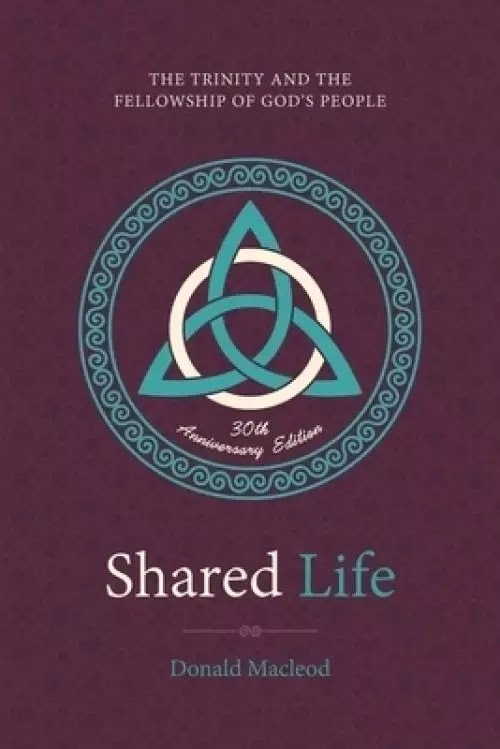
Shared Life The Trinity and the Fellowship of God’s People, by Donald Macleod

Christian Focus, 2024, 30th anniversary edition, 129pp, hbk 

The doctrine of the Trinity can sometimes seem just that, a doctrine we are called to believe and defend, and that’s about it. Nothing can be further from the truth, as is demonstrated by the author in these pages. Of course, he discusses the biblical evidence for the claim that the one God eternally exists in three persons; Father, Son and Holy Spirit. The theologian also covers what the first Christian thinkers made of the Bible’s teaching, as set out at the Council of Nicea. Macleod’s handling of matters biblical and historical is admirably clear and concise. But that is just the beginning.

The doctrine of the Trinity is of deep practical relevance. It speaks to us of the God we have been called to understand, worship and serve. The fact that the God who made is ‘in his image’ exists in three Persons tells us something very important about human equality and our need for community. Macleod cautions, however, that Bible’s teaching on male headship should not lead us to think that the Son’s relation to the Father is one of eternal submission to his authority.

Father, Son and Holy Spirit indwell each other in the fullness of the divine being.  Jesus prayed that his people may share in the fellowship of the persons of the Trinity (John 17:21). With that in mind, the unity of the church is not a drab uniformity, but unity in diversity. The doctrine of the Trinity has profound implications for the Christian life. We have become children of the Father though his Son and by the Spirit of Adoption. The indwelling presence of the Triune God secures our final salvation. In our evangelism we have been commissioned to ‘make disciples of all nations, baptising them in the name of the Father, Son and Holy Spirit’ (Matthew 28:19).

Shared Life is an ideal introduction to the Trinity for believers wishing to read up on the subject. It will also be of help to pastors in equipping them to tease out the practical implications of this most glorious of doctrines. 

Thursday, October 05, 2023

God's emotions!


In a previous post I argue that God does not have emotions, see here. In this post I want to assert that God does have emotions like us. Joy and sorrow, compassion and anger, astonishment and disappointment are all part of the range of feelings experienced by God. 

But I am not contradicting myself.

How am I able to hold that God both does and does not have emotions? Because God did something that enabled him to do things that God cannot do. Given the aseity (self-existence) of God, he cannot die. His life is self-sustaining. Given his immensity, God cannot be bound by space. Given his eternity, God is not subject to time. Given his impassibility, God experiences no fluctuating feelings. But the God who has life in himself became mortal. The omnipresent God was bound by space. The eternal God entered time. The impassible God experienced fluctuating feelings. How? Because 'the Word was made flesh and dwelt among us' (John 1:14).

At the incarnation the Son of God took a human nature. In his human nature our Lord not only had a human mind and will, but also human emotions. B. B. Warfield writes most helpfully on this in his essay, The Emotional Life of Our Lord. Even in his exalted state, Jesus 'knows our frame, he remembers that we are dust'. He knows what it is to be a member of suffering humanity from the inside. Jesus  can therefore sympathise with us in our weaknesses, having been tempted on all points as we are, yet without sin. (Hebrews 4:14-15).

The Reformers developed the idea of the 'communion of attributes' to help clarify the relationship between the divine and human natures in the person of Christ. They certainly did not mean that divine attributes are communicated to Jesus's human nature, or the other way around. At the incarnation the Son of God became what he was not [man], without ceasing to be what he was [God]. That is the so-called extra-Calvinisticum. According to John Calvin, 'The Son of God descended miraculously from heaven, yet without abandoning heaven; was pleased to be conceived miraculously in the Virgin’s womb, to live on the earth, and hang upon the cross, and yet always filled the world as from the beginning. ' (Institutes of he Christian Religion, II:xiii.4). 

The 'communion of attributes' is an aid in making sense of passages in the Bible say things like, 'they... crucified the Lord of glory' (1 Corinthians 2:8), or 'the Son of God loved me and gave himself for me' (Galatians 2:20). Does that mean Jesus suffered as God and died on the cross? No. Should we understand, then, that Christ's human nature died for our sins? No. We believe the person of the Son of God gave himself to the suffering and death of the cross in his human nature. The Second London Baptist Confession explains,

Christ, in the work of mediation, acts according to both natures, by each nature doing that which is proper to itself; yet by reason of the unity of the person, that which is proper to one nature is sometimes in Scripture, attributed to the person denominated by the other nature. (8:7 - see also WCF and SDF) 

It is in that sense we may speak of 'God's emotions', because in the person of the Son, God entered into the sorrows and joys of life in our fallen world, 'tears and smiles like us he knew'. We don't need to cut God down to size to make him more relatable when he has already descended to our level. In other words, if you want a God who feels like us, don't deny the impassibility of God, proclaim the incarnation of God. 'And the Word was made flesh and dwelt among us'.

See here for an earlier post on Anselm and the suffering of the impassible God.

Monday, October 02, 2023

God’s emotions?

In his article God's emotions in September's Evangelical Times, Psychiatrist Alan Thomas argued that God has emotions that correspond to our human feelings. He tries to square this view with the impassibility of God taught in historic Reformed confessions such as the Second London Baptist Confession of Faith. Here is my response. 

God's 'emotions' and accommodated divine self-revelation 

Thomas notes that biblical revelation depicts God as having 'a complex range of emotions', including 'raging, painful emotion' (Genesis 6:6). Such descriptions of God reveal something of his character - his wrathful response to sin, but are they meant to be taken at face value? After all, Scripture also speaks of God having 'hands', 'eyes' and 'back parts'. We usually regard language like that as anthropomorphic, or speaking of God in human terms. That is not because of some prior philosophical commitment, but because Jesus tells us, 'God is Spirit' (John 4:24). God is also 'one' (Deuteronomy 6:4). Divine simplicity rules out God having a bodily form, which necessarily involves being composed of complex parts (1 Corinthians 12:14).

The fact that the Bible uses anthropomorphic language of God tells us something about biblical revelation. It speaks of God in ways that are accommodated to our capacity as finite and fallen human beings. To get technical, Scripture does not speak of God univocally so that what is true of us is true in the same way of him. Rather, the Bible speaks of God analogically, or by way of analogy. When passages describe God delivering Israel from Egypt with his 'outstretched arm', they are speaking analogically of a display of his power on behalf of his people. We would not understand such speech univocally, as if God acts as we do by extending a divine limb through time and space.  

The analogical view of divine self-revelation in Holy Scripture is in place to safeguard the Creator/creature distinction that is fundamental to sound Christian theology. If anthropomorphic figures of speech are taken univocally, what you get is a vision of God remade in our image. The same holds true when it comes to interpreting the Bible's 'anthropopathic' language, which speaks of God in terms of human emotions such as 'grief' and 'regret'. 

But how do we know that God doesn't actually 'feel' regret when the text of Scripture says he does? Consider 1 Samuel 15:11 & 35, where the Lord is said to regret making Saul King of Israel. Surely we should take these verses at face value and not try to rationalise expressions of divine disappointment? The prophet Samuel no less suggests otherwise when he says, 'And also the Glory of Israel will not lie or have regret, for he is not a man, that he should have regret.' (1 Samuel 15:29). God works all things according to the counsel of his will (Ephesians 1:11), including the appointment of Saul as King of Israel and his subsequent rejection. Taken literally expressions of 'regret' would mean that Saul's reign didn't work out as God intended, but that is not the case. God is not a man that he should feel regretful when his high hopes are not realised. A univocal reading of 1 Samuel 15:11 & 35 would be misleading, for in reality God is not like us in harbouring regrets.  

God's 'emotions' and divine impassibility

Thomas notes that historic Reformed confessions such as the Westminster Confession of Faith and the Second London Baptist Confession teach that God is 'without body, parts, or passions' (1689, 2:1). He reflects on the theme of impassibility later in the article, arguing that it means that God is unchangeable and concluding, 'God has emotions, but he does not change.' But he has already admitted that our human emotions are in a state of constant flux as we interact with the world around us. Indeed, emotion may be defined as 'a strong feeling deriving from one's circumstances, mood, or relationships with others.'  (Oxford Languages). Which is why theologians have tended to be cagey about ascribing emotions to God. We are creatures of ever-changing moods. Circumstances affect how we feel, from the simple pleasure of eating an ice cream by the beach, to deep grief on losing a loved one. God is not like that. He is the ever-blessed God. There is nothing within him to disturb his infinite peace. Nothing outside of him can affect him. That is not because God is apathetic, but because he is perfectly fulfilled in the joyous perfection of his Triune life. That is precisely why the church has confessed impassibility.

What about divine wrath against sin, isn't that a case of the world impacting on God's emotional life? We must not think that God's wrath involves him being provoked into ‘losing his rag’. That would be a passion. Rather, God's wrath is the unchanging expression his holy justice when confronted by sin. Apart from the Fall God would have been eternally just, but his justice would not have been revealed in the wrathful punishment of sinners (Romans 1:18, 2:5). God's wrath is removed from sinners not because his feelings towards them change, but because his justice is satisfied by Christ's propitiatory sacrifice, Romans 3:25. God sent his Son to propitiate his wrath out of love for his people, 1 John 4:10. We benefit from the atoning work of Christ when we are united to him by faith. 

Properly understood, impassibility  does not make God cold or remote. The Lord is most loving and merciful. But his love is not a fickle passion that was ignited by our love for him and may be doused if our love should grow cold. His love for us is eternal and unchangeable, flowing to us from the infinite depths of God's being. The Father loves his people even as he loves his own Son (John 17:23, 26). That is why Paul can assure believers that, 'nothing can separate us from the love of God in Christ Jesus our Lord' (Romans 8:39). Depicting God's love as if it were a passion or fluctuating emotion robs us of that certainty. Thomas knows this, saying, '[God] is utterly different from us as our exalted Creator who is eternal and unchangeable.' Yes, hence impassibility. 

God's 'emotions' and divine personality 

Thomas's tendency to start at a human level and then project up to God doesn't end with his handling of texts that speak of God in an arthropathic manner. He also reinterprets key theological terms in the light of human experience. For example, 'To be a person is to be a being who experiences emotions.' That may or may not be an adequate definition of human personhood. It is way off beam when applied to God, as the author does here: 'To be a person is to be in relationships, and such relationships always generate feelings. So since God is personal and eternally in relationships within the Godhead then feelings must be integral to who he is.' 

The Fathers who developed early Trinitarian terminology were very circumspect when it came to defining what is meant by divine personhood. Augustine confessed, 'We say three persons, not in order to say that precisely, but in order not to be reduced to silence.' In traditional Trinitarian theology the words 'person' or 'hypostases' simply denote what is true of the Father, Son and Holy Spirit as they may be distinguished from each other, as opposed to what is true of the being of God, which is wholly possessed by the Three. Hence the formula: 'One God in three persons'. The three persons may be distinguished only in terms of their eternal relations of origin. The Father is unbegotten, the Son is eternally begotten of the Father and the Holy Spirit proceeds from the Father and the Son. That is their manner of subsisting in the being of God. The Fathers certainly did not read characteristics of human personhood such as having emotions into the divine persons. 

The Fathers also carefully distinguished between the personal attributes of Father, Son and Holy Spirit as reflected in their eternal relations of origin and the attributes of God's being, which are possessed equally by the three persons of the Trinity. What makes God 'personal' is that the one God subsists in three persons. It is misleading therefore for Thomas to speak of God's 'personal attributes, including emotions' or, 'In personal terms, he is faithful and true' and, 'Since his emotions are the attributes of a person'. Faithfulness and truth, much like justice and love are moral attributes of God's being, not personal attributes such as Fatherhood and Sonship. The person-to-person love the Father has for his Son is the infinite and eternal love of God's being. The Son who is of the same divine essence as the Father loves him with the same infinite and eternal love. Trinitarian orthodoxy demands that the we maintain the distinction between what is true of the three divine persons and what is true of the one divine essence. In construing attributes of God's being in personal terms we are in danger of making it sound like his being is a fourth person alongside the Father, Son and Holy Spirit. 

Thomas's novel definition of divine personhood plays havoc with Christology. According to the Definition of Chalcedon (451 AD), the incarnate Son of God is person with two natures, divine and human. The historic Reformed confessions like the Second London Baptist Confession reflect this understanding: 'two whole, perfect, and distinct natures were inseparably joined together in one person..which person is very God and very man, yet one Christ' (1689, 8:2). However, according to the author'To be a person is to be a being who experiences emotions.' Jesus experienced emotions in his human nature such as sorrow and joy, anger and compassion. Using Thomas's definition, that makes Jesus a human person, as well as the second person of the Trinity. The incarnate Son, in that case, is a union of two persons, rather than a union of two natures in one divine person. That is a Nestorian understanding of Christ, which is explicitly ruled out by Chalcedon. 

Concluding thoughts 

Of course, there is nothing stopping us redefining time-honoured theological terms and investing them with new meanings, but in doing so we may find ourselves inadvertently stepping outside the bounds of historic Christian orthodoxy. For all their emphasis on sola Scriptura, the Reformers and Puritans were happy to identify themselves with the ancient creeds of the church. With its drive to reinvent theological wheels contemporary Evangelicalism is in danger of drifting from the Reformed Catholic faith of our Fathers. That said, we would be rather suspect if someone from the Evangelical family tried to rework the doctrine of Scripture so as to call into question its inspiration and inerrancy. We would also look askance at any attempts at including good works in a redefined doctrine of justification by faith. The doctrine of God, however, seems fair game for theological revisionism. Strange, that. 

Tuesday, December 13, 2022

Deity & Decree, by Samuel D. Renihan

 Published in the UK by Broken Warfe, 2021, 134pp.

Evangelicals rightly demand theological precision and accuracy when it comes to the doctrine of Scripture, or justification by faith alone. Any drift from biblical inerrancy is detected and rejected in short order. Similarly when it comes to including works in justification. 'By faith alone, by grace alone', we insist. The same theological care isn't necessarily displayed when attention turns to the doctrine of God. Some contemporary Evangelical theologians suggest that belief in divine impassibility makes seem God cold and remote. Others have argued that the Son stands in a eternal relationship of submission and authority to the Father. 

Part of the problem is that Evangelicalism contents itself with brief statements of belief, as opposed to elaborate confessions of faith. Compare the Doctrinal Basis of the Fellowship of Independent Evangelical Churches with the Second London Baptist Confession of Faith, 1689. Point 1 of the FIEC Doctrinal Basis has a 54 word statement on 'God'. What it says is perfectly fine and good. But by way of contrast, the 2LBCF Chapter 2 devotes three paragraphs totalling 408 words to 'Of God and the Trinity'. The older confession self-consciously echoes the creedal heritage of the church and gives expression to what is sometimes called the 'classic doctrine of God', 'The Lord our God is a... most pure spirit, invisible, without body, parts, or passions'. Renihan wants to recover the older emphasis of the confession. 

If the doctrine of God is 'first theology' and of primary importance, we need to ensure that what we say of God is biblically accurate and informed by the theological reflection of the past. That is where Deity & Decree comes in. With impressive clarity and brevity Renihan gives attention to God's Unity, Triunity and Decree. 

God's Unity: God is self existent, with life in himself. He is uncaused cause of all things. God's attributes such as his omnipotence, holiness and love are not the bits of which his being is composed. God is simple, having no component parts. All that is in God is essential to God, because all that is in God is God. That is why he cannot change. An unchanging God is not susceptible to suffering. There is nothing within the being of the ever blessed God that could cause him to suffer. Suffering cannot be imposed upon him from without, as that would give the created order an advantage over him, compromising his omnipotence and immutability. The impassible God is not cold, or remote, however, for God is love, full of self-generated compassion and mercy towards lost sinners. The move towards attributing suffering to God's being risks compromising the uniqueness of the incarnation of the Son of God. In Christ as man God did what is impossible for him to do as God namely, to suffer and die for sinners. 

God's Trinity: The Bible reveals that in the one God there are three persons, or subsistences: Father, Son and Holy Spirit. All three persons are equally and fully God, yet the Three are not interchangeable. The Father is unbegotten, the Son is eternally begotten of the Father, and the Holy Spirit proceeds from the Father and the Son. It is these personal properties alone that distinguish the persons. We may not ascribe an attribute such as authority to the Father and submission to the Son in terms of their eternal relations. The Son has the same power and authority as the Father because he is of the same essence as the Father. But there is an order in the Trinity and the missions of the three persons in the world of time reflect the eternal relations. The Father sent the Son into the world at his incarnation. The Father and Son poured out the Holy Spirit upon the church on the Day of Pentecost. Getting the Trinity right isn't theological hair splitting. As the Second London Baptist Confession states, "which doctrine of the Trinity is the foundation of all our communion with God, and comfortable dependence on Him." (2:3). 

God's Decree:  The decree is a simple, eternal and sovereign act of God's being. The Almighty's unchangeable decree, however, does not reduce creatures to the status of puppets in his hands. As the confession makes clear, "nor is violence offered to the will of the creature, nor yet is the liberty or contingency of second causes taken away, but rather established; in which appears His wisdom in disposing all things, and power and faithfulness in accomplishing His decree." (3:1). The decree does not make God the author sin, which he willingly permits for his own ends. Neither does it  deprive human beings of  responsibility to God for their actions. God decreed the salvation of his people not because of anything in them, but because of his own free grace given them in Christ before the foundation of the world. Those not elected to salvation are passed by according to God's decree. The cause of the damnation of the wicked is not the divine will per se, but their own sin, which rightly deserves eternal punishment. 

In line with the Reformed Catholic tradition Renihan insists that God's decree is the expression of his will which is a property of the divine being, not the persons of the Trinity. This cuts across the idea proposed by some contemporary Evangelicals that the Son's will was eternally subordinate to that of the Father. The divine will is common to all three persons of the Trinity in the being of God. The Son, as well as the Father and the Holy Spirit was therefore party to the decree of salvation. The Son's submission to the Father in the economy of redemption cannot be read back into the eternal relations of the Trinity. 

Renihan handles the biblical materials underlying God's Unity, Trinity and Decree with insight and care. His treatment of these topics is enriched by the Great Tradition of Christian thought, especially writers of the Reformation and Puritan periods. The author's prose is limpid and precise, yet his tone  tone is meditative and devotional. A fine work of 'first theology' that demands a response of joyful doxology of the reader:
Glory be to God the Father. Glory be to God the Son. Glory be to God the Holy Spirit. 
Glory be to the only, living, true, and triune God.

Tuesday, January 04, 2022

A Christian’s Pocket Guide to Humanity: Created and Re-created, by David McKay

Christian Focus, 2021, 113pp, paperback

‘What is man?’, asks the psalmist. We will only begin to know the answer to that question if we understand what it means to be human in relation to God. This is exactly what this pocket guide sets out to do. McKay’s treatment is concise and straightforward without ever being superficial. He sets modern day concerns such as identity politics and transgenderism in clear biblical perspective, drawing upon the insights of Reformed covenant theology.          

Human identity

There is a lot of talk these days about human ‘identity’. For some their fundamental identity is tied up with their gender, sexuality, race, or political views. As David McKay shows, our true identity is not one that is made up by us, but one that is handed down by God. Our Triune Lord created human beings in his image as male and female. That fact bestows great dignity and worth on every human person. 

Ruined humanity

Recently Headmistress Katharine Birbalsingh got herself into spot of bother on Twitter when she suggested that due to ‘original sin’ children need rules and sanctions to keep them in line (see here). Cue predictable outrage at the idea that children might be morally flawed. But the Christian doctrine of original sin insists that all are sinners before God. McKay gives attention to humanity Ravaged by Sin. Man was created to live in a covenant relationship to his Maker. Adam represented the human race in the Covenant of Works. When Adam fell into sin, humanity fell with him. Adam’s sin was imputed to the whole human race. All are born with a sin-corrupted nature. Death reigns over all in Adam.

Redeemed humanity

But God has raised up a new representative for humanity in Jesus, the mediator of the Covenant of Grace. United to him, our sins are atoned for so that we may be forgiven and put right with God. In Christ believers are set apart as God’s holy people and adopted into his family. McKay could perhaps have said more about the corporate aspects of union with Christ in the life of the church.  

Renewed humanity

Finally, redeemed humanity will share Christ’s glory, gaining in him more than we ever lost, or could have had in Adam. God’s new humanity will bear the image of the last Adam in resurrection glory. Only then will the full answer to the psalmist's question, ‘What is man?’ be revealed. 

An excellent treatment of a timely theme.

*An edited version of this review was published in The Banner of Truth Magazine, January 2022

Wednesday, June 30, 2021

Subordination? Another Shedd-load of Trinitarian theology


In an earlier post I wrote appreciatively of W. G. T. Shedd's handling in of the relationship between the single divine essence and the three persons of the Trinity. In this article I offer criticism of the theologian's argument that the Son is subordinate to the Father "in respect to order and relationship". He is clear that there is no subordination of essence,
While there is this absolute equality among divine persons in respect to the grade of being to which they belong, and all are alike infinite and uncreated in nature and essence, there is at the same time a kind of subordination among them....As a relation, sonship is subordinate to fatherhood. (p.  301).

Shedd distinguishes his position from Arianism, which teaches subordination of essence as well as person.  But he is clear that an element of subordination is intrinsic to the relation between the Father and the Son. Subordination cannot be limited to the Son's mediatorial role, "This... involves condescension and humiliation; but the trinitarian subordination does not. It is no humiliation or condescension for a son to be the son of his father." (p. 302). 

This subordination is rooted in the eternal relations of origin according to which the Father is unbegotten, the Son is eternally begotten of the Father and the Spirit eternally proceeds from the Father and the Son. The external actions of the Trinity are undivided. That is because, "In every external operation of a person, the whole essence operates, because the whole essence is in each person. The operation, consequently, while peculiar to a person, is at the same time essential, that is, is wrought by that one divine essence which is also and alike in the other persons." (p. 304-305). But when it comes to the internal actions, only the Father may be said to beget and only the Father and Son may be said to spirate. Accordingly,

The internal characteristics include the order according to which the Father is immutably the first, the Son immutably the second, the Spirit immutably the third person of the Trinity, and the ground or foundation of this order in certain constitutional and necessary acts in the divine essence. (p. 302).  

The view advanced by Shedd is far from the Eternal Relation of Authority and Submission of the Father in relation to the Son that is advocated by some contemporary Evangelical theologians. Unlike them Shedd does not teach that will is an attribute of the persons, rather than the divine essence, and that the Son eternally submitted his will to that of the Father. Neither does Shedd suggest that the Father possesses a personal attribute of authority that the Son does not share. Divine authority is a perfection of God's being, which is possessed wholly and without division by all three persons. The the persons may be distinguished only in terms of the eternal relations of origin and in no other way. 

What Shedd does say is that being Son involves subordination to the Father according to the order of persons in the Trinity, "It relates only to the personal characteristics of paternity, filiation, and procession." (p. 303). He does not make this point, but it is commonplace in classic Trinitarian theology to hold that the economic missions of the Trinity reflect the eternal processions. The persons are not interchangeable and so it was fitting that the Son was sent into the world by the Father and that the Holy Spirit was poured out by the Son from the Father.  Herman Bavinck spells this out,

But this "being sent" in time is a reflection of the imminent relations of the three persons in the divine being and is grounded in generation and spiration. The incarnation of the Word has its archetype in the generation of the Son, and the outpouring of the Spirit is a weak analogy of the procession from the Father and the Son. The church fathers, accordingly, derived the eternal and imminent relations existing between the persons from the relations that were manifest before the human eye in time. (Reformed Dogmatics: God and Creation Volume 2, Baker Academic, 2006, p. 320-321).

Unlike Shedd, however, theologians in the classic tradition have tended to avoid using the language of 'subordination', which smacks of Arianism. Although as already pointed out, Shedd is careful to distinguish what he calls 'trinitarian subordination' from any idea that the Son's essence is in any way inferior to that of the Father. The Particular Baptist pastor-theologian John Gill (1697-1771) better represents classic Trinitarianism. In his discussion of the doctrine of the Trinity Gill explicitly rules out any notion of subordination when it comes both to the Son's essence and person, 

Christ, as all sound divines hold, is αυτοθεος, “God of himself”, and independent of any other, though he is the Son of the Father; and as the distinct personality of the Son of God arises from his relation to his Father as such, so the distinct personality of the Father arises from his relation to his Son as such; hence the distinct personality of the one, is no more dependent, than the distinct personality of the other; and both arise from their mutual relation to each other; and both arise and commence together, and not one before the other; and both are founded in eternal generation. (Gill, John. A Complete Body of Doctrinal and Practical Divinity (With Active TOC and Bible Links) . E4 Group. Kindle Edition.) 

And he goes on to say,

As to subordination and subjection, and inequality, which it is supposed the Sonship of Christ by generation implies; it may be answered, that Christ in his office-capacity, in which he, as Mediator, is a Servant, and as he is man, and appeared in the form of one; it will be acknowledged, that he is subordinate and subject to the Father; but not as he is the Son of God: and whatever inequality sonship may imply among men, it implies no such thing in the divine nature, among the divine persons; who in it subsist in perfect equality with one another; and in particular, the Scriptures represent the Son of God as equal to his Father, as one who thought it no robbery to be equal with God; being of the same nature, and having the same perfections with him, and that he is equal to him with respect to power and authority; for with respect to power he says, “I and my Father are one”; and they represent him as having the same claim to equal honour, homage, and worship; since all men are “to honour the Son, as they honour the Father”; not as in subordination to him, but as equal with him. (Gill, John. A Complete Body of Doctrinal and Practical Divinity (With Active TOC and Bible Links) . E4 Group. Kindle Edition.) 

What Shedd denies Gill affirms, namely that it is only in respect to his 'office capacity... as Mediator' that Christ may be said to be subordinate to the Father. The Son assumed the role of Mediator in eternity. The counsel of redemption was an expression of the one will of God differently appropriated by the three persons so that the Father would send the Son, the Son would be sent by the Father and the Spirit would be sent by the Father and the Son. The economic missions reflected the order of the eternal processions, but the processions do not involve any hint of subordination. The divine persons 'subsist in perfect equality' (Gill). The Son's subordination to the Father was official, not essential, or personal. Although the Son was 'in the form of God', he 'did not count equality with God a thing to be grasped [held onto at all costs], but made himself nothing, taking the form of a servant, being born in the likeness of men. And being found in human form, he humbled himself by becoming obedient to the point of death, even death on a cross." (Philippians 2:6-8). 

Quotations from Dogmatic Theology Volume I, Klock & Klock 1979 reprint. You can also find a e-copy online, but the pagination is different, here. See p. 5 of the PDF for clickable contents. Also, see here for an article by Michael Haykin on John Gill and His  Defence of the Trinity

Tuesday, June 22, 2021

Bavinck: A Critical Biography, James Eglinton

Baker Academic, 2020, 450pp

Even if you think Dogmatics is the name of the dog in Asterix the Gaul, you should probably read this book. That's Dogmatix to you, anyway. If you are a Christian who is struggling to hold fast to the faith in rapidly changing times, (and who isn't?) you will find a soul mate in good old Herman. If you are theologically aware enough to know that Dogmatics is not in fact the canine companion of Asterix, this biog is certainly just the thing for you. 

It took me seven years of on/off reading, to finish reading the English translation of Herman Bavinck's magisterial four volume Reformed Dogmatics. I appreciated the depth of Bavinck's scholarship, admired his orthodox yet original theological vision and valued his attempt at bringing Reformed theology into dialogue with the concerns of the modern world. Yes, Bavinck was a Presbyterian and I'm a Reformed Baptist, so there were points of disagreement, but I won't hold that against him. Catholic-spirited of me, I know. 

But what of the man himself? The English translation of Reformed Dogmatics carries a biographical sketch, which is a handy guide. In 2010 Ron Gleason published Herman Bavinck: Pastor,  Churchman, Statesman and Theologian. The Gleason effort was defective in a number of respects, leaving me hoping for a biography that would offer a more compelling portrait of its subject. See my review here.  Cue James Eglinton's Bavinck: A Critical Biography. 

It's a 'critical' biography not because the author keeps having a go at Bavinck, but because the work is based on a fresh reading of the original source materials, rather than being a rehash of earlier Dutch biographies. The picture that has emerged from previous accounts of Bavinck's life is of a somewhat conflicted figure. He was the product of the highly conservative Christian Reformed Church and yet he also desired to be a man of the modern world, moving ever closer to the centre of Dutch society. 

Eglinton challenges that take. The separatist Christian Reformed Churches had been coming in from the cold for some time. The beginning of the modern era in Dutch national life was signalled in 1848 when toleration was granted to other church groupings beyond the established Dutch Reformed Church. The life of Bavinck's father, Jan straddled the pre-modern and modern periods in Holland. He began his pastoral ministry in 1848. Members of the Christian Reformed Church no longer faced discrimination. Some Separatists welcomed the opportunities that their new-found freedom offered, Jan Bavinck was one. Others worried that their orthodox stance would come under pressure should they engage too closely with the modern world. 

Herman Bavinck began his theological training in the Christian Reformed Church's own Theological School in Kampen. It was not to his liking. He wanted to broaden his horizons and study under the modern theologians at the University of Leiden. Some more conservative, not to say reactionary members of his own denomination criticised him for the move. But with his father's support Bavinck enrolled at Leiden, while remaining a student at Kampen. Bavinck excelled in his studies, where he faced the challenge of maintaining his Reformed faith in an academic environment dominated by a critical attitude to the Bible and a revisionist approach to doctrinal orthodoxy. Friendships struck at Leiden were to endure throughout Bavinck's lifetime. 

The move to Leiden did not signal a move away from the Christian Reformed Church on Bavinck's part. On completing his studies both at Leiden and Kampen Herman accepted the call to pastor the denomination's congregation at Franeker, where he served from 1881-82. Following that short spell in pastoral ministry Bavinck was appointed to teach at the Theological School in Kampen, where he remained until 1902. It was during his time there that Bavinck wrote the original editions of his Reformed Dogmatics, which he continued to edit and revise over the years. His time at Leiden acquainted Bavinck with the modern philosophical and theological ideas with which he wrestled in his Dogmatics. That gives the theologian's writings a fresh feel, as he engaged with a wide range of thinkers, while maintaining an orthodox Reformed standpoint. His approach was that of 'theological theology', where the discipline justified itself on its own terms as faith seeking understanding of God's self-revelation in Holy Scripture.   

In the early phase of his teaching ministry Bavinck sought to advance Reformed distinctives over and against alternative versions of the Christian faith. He viewed Dutch society and culture as Reformed in nature, unlike America, where he did not see Reformed theology taking off in a big way. As Dutch society became increasingly secular under the influence of Friedrich Nietzsch and others, Bavinck shifted his emphasis. He urged the churches to engage in evangelism and devoted himself to defending the Christian faith understood more broadly, rather than simply championing the distinctive aspects of Reformed theology. 

Even before he became a Professor at Kampen Bavinck had come to the attention of Abraham Kuyper, who had established his Free University on Reformed principles in Amsterdam. Over the years Kuyper made several attempts at luring Bavinck to the University. It was only when Bavinck became weary of the tensions between fellow lecturers at Kampen that he eventually succumbed, taking up the position of Professor of Theology at Amsterdam. By that time the Christian Reformed Church had merged with the Doleantie churches associated with Kuyper to form the Reformed Churches in the Netherlands. Attempts at bringing together the Theological School and the Free University to form a single educational institution ended in failure, much to the frustration of all involved. Bavinck included.  

Kuyper and Bavinck were united in their quest to reshape Dutch society in line with a Christian worldview. Bavinck was active in the Antirevolutionary Party under which Kuyper became Prime Minister of Holland from 1901-05. Eglinton describes Kuyper as a Zeus-like figure, who viewed the world from a lofty Olympian perspective, confident of his ability to to reorder human affairs. Bavinck was ever the careful scholar, journeying like Odysseus from a starting point to the truth. He lacked Kuyper's political skills and did not make a success of his role as chairman of the Antirevolutionary Party. Bavinck was not always in theological agreement with Kuyper. He carefully distanced himself from the latter's stance on the presumptive regeneration of baptised infants and justification from eternity. Kuyper was very much a man of affairs. Even his death was a public event, while Bavinck was a deeply private character. 

That fact makes Eglingon's biography all the more impressive an achievement. His use of Bavinck's dagboeks (private journals) and correspondence enabled him to get under the theologian's skin. We feel for him as the young Bavinck falls in love with Amelia den Dekker. Any hopes of him marrying his beloved Amelia were dashed by her unyielding father. Bavinck later to marry Johanna Adriana Schippers, which whom he had a daughter. Bavinck had an enlightened view of the place of women in society and championed female suffrage in the face of opposition from Kuyper. He was capable of maintaining close friendship with people whose views were far different to his own, such as Christiaan Snouck Hurgronje. They became friends when they were students at Leiden. Snouck was a liberal skeptic who secretly converted to Islam. He questioned how Bavinck could hold to conservative views, given what he had learned under the liberal lecturers at university. Bavinck defended his position, but without alienating his freethinking friend. In polarised times like our own the two men provide a model of of critical, yet cordial engagement between people with wildly different views.

Herman Bavinck was born in 1854, just as the Secession Churches were adjusting the new-found freedoms offered by the modern world. He ended his life a scholar garlanded with academic honours and a statesman elevated to the Upper House of the Dutch Parliament. All the while Bavinck felt the ground moving under his feet as Dutch society became increasingly post-Christian in outlook. He sought to engage with the challenges of the modernity, rather than retreating into a ghetto mentality, a strategy favoured by some Separatists. Bavinck maintained his Kuyperian vision of a culture shaped in all its parts by the Christian faith, but he realised that Christianised society could not be achieved without Christians. Over the course of his lifetime theologian witnessed the Dutch element of Christendom becoming progressively estranged from the faith. With that in mind the older Bavinck rallied the churches to the cause of evangelism, which he defined as "the proclamation of the evangel (the good news of salvation in Christ) to Jews and gentiles." (p. 317). 

Eglington has produced a well-written and rounded account of Herman Bavinck's life set in the context of his rapidly changing times. By going back to the original sources the biographer corrects some of the inaccuracies present in previous biographies. Especially that the subject was painfully torn between his Seceder roots and the modern Dutch society in which he found himself. The author presents a compelling portrait of the man behind the voluminous writings. He was no conflicted soul, but a Reformed Catholic, faithful to the Calvinistic doctrinal heritage of his Church, yet concerned to address the challenges raised by modern thought. In fact as Bavinck claimed, "modern culture and Christianity are inseparable", a point ably demonstrated by Tom Holland in his Dominion: The Making of the Western Mind

Kuyper's all-embracing vision may be summed in his famous words, “There is not a square inch in the whole domain of our human existence over which Christ, who is Sovereign over all, does not cry, Mine!” Bavinck agreed. The two men poured a huge amount of effort into reshaping Dutch society in line with a Christian worldview. Meanwhile, Dutch society was drifting away from the faith. Bavinck saw, perhaps too late, that the great need of the hour was for the church to engage in evangelism. If that was the case in the early years of 20th century Europe, how much more urgent is the call to herald the evangel in the early years of the 21st century. 

Beyond renewed evangelistic endeavour, if lost ground is to be recovered for the gospel in the 'post-Christian' West, what is needed is a mighty outpouring of the Spirit in revival power. Bavinck seemed to be a little circumspect about revivals and the strange phenomena sometimes associated with them (see this post on Herman Bavinck and Evan Roberts). But he knew well enough that the preaching of the word needs to be accompanied by the empowering presence of the Holy Spirit,  ‘[The Holy Spirit] always works through the word but not always in the same way…Hence the subjective activity of the Spirit has to be added to the objective word. In the nature of the case it cannot be enclosed in the word; it is another activity, an additional activity, a subjective activity, not through but along with the word’. (Reformed Dogmatics, Volume Four: Holy Spirit, Church, And New Creation, Herman Bavinck, Grand Rapids, Baker, 2008, 459-460). Yes, we need to apply the Word of God to the whole of life and herald the gospel of salvation. But if we would see whole societies transformed, the church needs to be revived and the preaching of the gospel of empowered by the Spirit so that multitudes sinners are converted to Christ. 

If Bavinck was too optimistic in his expectation that Dutch society would maintain its Reformed character, he was too pessimistic in thinking that America would have little time for  Reformed theology. The publication of his Reformed Dogmatics in English translation by an American publishing house has led to renewed interest in Bavinck's life and thought both in the USA and on this side of the Pond. James Eglingon has done a great service in producing this excellent account of the life and times of Herman Bavinck, whom he describes as 'an orthodox Calvinist, a modern European and a man of science'. 

* Most importantly, I get a footnote all to myself, n 13 on p. xx and a mention in the Bibliography, p. 428. 

Monday, June 14, 2021

On the divine persons: a Shedd-load of Trinitarian theology


W. G. T. Shedd (1820-1894) devotes a lengthy chapter in Dogmatic Theology Volume I  to Trinity in Unity. It's not my purpose to sketch out his teaching as a whole. Rather, I want to draw attention to his remarkable treatment of the relationship between the single divine essence and the three persons of the Trinity. 

The theologian takes the simplicity of God's essence for granted and denies that the essence is in any way 'chunked-up' (my words) between the Father, Son and Holy Spirit. Rather, "this undivided essence is common to three persons" (p. 268). Further, "The Father, Son, and Holy Spirit are each and simultaneously the whole divine essence; so that while there are three persons, there is but one essence." (p. 275). Shedd admits, however, "that we have no adequate idea of what is meant by person when applied to God and use it only because distinct personal attributes and actions are ascribed to the Father, Son, and Holy Spirit in Scripture". (p. 268). 

These "personal attributes and actions" are the eternal relations of origin within God, namely, "That immanent and necessary activity within divine essence whereby the Father begets the Son, and the Father and the Son spirate the Spirit, makes it to be self-contemplating, self-knowing, and self-communing." (p. 272). The divine persons are not interchangeable. The Father only is unbegotten, the Son alone is begotten of the Father, the Holy Spirit uniquely proceeds from the Father and the Son. But it is simply in terms of the eternal relations of origin that we may distinguish the persons. In essence they are one, 
The whole undivided divine nature is in each divine person simultaneously and eternally. The modifying of divine nature by eternal generation and spiration does not divide the nature, as temporal generation does, but leaves it whole and entire, so that the substance of the begotten Son and the spirated Spirit is numerically and identically that of the unbegotten and unspirated Father. (p. 278).

Shedd then proceeds to discuss how the three persons relate each to the others. I quote him at length, 

Revelation clearly teaches that these personal characteristics are so marked and peculiar that the three divine persons are objective to each other. God the Father and God the Son are so distinct from each other that some actions which can be ascribed to the one cannot be ascribed to the other. The Father "sends" the Son; this act of sending the Son cannot be attributed to the Son. The Father "loves" the Son; this act of loving the Son cannot be ascribed to the Son. An examination of the Scriptures gives the following series of twelve actions and relations of the three trinitarian persons, which prove that they are objective to one another, that one may do or experience something that is personal to himself and is not personal to the others. One divine person … loves another (John 3:35) dwells in another (John 14:10–11) suffers from another (Zech. 13:7) knows another (Matt. 11:27) addresses another (Heb. 1:8) is the way to another (John 14:6) speaks of another (Luke 3:22) glorifies another (John 17:5) confers with another (Gen. 1:26; 11:7) plans with another (Isa. 9:6) sends another (Gen. 16:7; John 14:26) rewards another (Phil. 2:5–11; Heb. 2:9) Here are twelve different actions and relations which demonstrate that the Father, Son, and Holy Spirit are not one and the same person. (p. 279). 

Each person of the Trinity stands in an 'I"-"Thou" relation to the others. Shedd teases out what that means for the divine self-consciousness, "And the three persons are so real and distinct from each other that each possesses a hypostatic or trinitarian consciousness different from that of the others. The second person is conscious that he is the Son and not the Father, when he says, "O Father, glorify me" (John 17:5). The first person is conscious that he is the Father and not the Son, when he says, "You are my Son, this day have I begotten you" (Heb. 1:5). The third person is conscious that he is the Spirit and neither the Father nor the Son, when he says, "Separate me Barnabas and Saul for the work whereunto I have called them" (Acts 13:2)." (p. 282). 

But that does not mean that the divine persons are three individual centres of self-consciousness, akin to three human persons having a chat. Shedd is no social Trinitarian. He explains, "These three hypostatic consciousnesses constitute the one self-consciousness of divine essence. By reason of and as the result of these three forms of consciousness, divine essence is self-contemplative, self-cognitive, and self-communing. Though there are three forms of consciousness, there are not three essences or three understandings or three wills in the Godhead because a consciousness is not an essence or an understanding or a will. There is only one essence, having one understanding and one will. But this unity of essence, understanding, and will has three different forms of consciousness: paternal, filial, and spiritual because it has three different forms of subsistence, namely, the Father, the Son, and the Spirit." Shedd draws an analogy between the divine essence in relation to the persons and the divine self-consciousness and the hypostatic/personal consciousnesses,  "As the one divine essence is the same thing with the three persons, and not a fourth different thing by itself, so the one divine self-consciousness is the same thing with the three hypostatic consciousnesses and not a fourth different thing by itself." (p. 282-283). 

Shedd's handling of the doctrine of the Trinity has relevance for debates within Evangelicalism on the Eternal Relational Submission (ERS) of the Son to the Father. Advocates of ERS sometimes argue that classic Trinitarianism fails to do justice to divine personhood, having little to say beyond the eternal relations of origin. As Shedd makes clear, however, Father, Son and Holy Spirit each stand in an "I"-"Thou" relation to the others. But that does not mean we should attribute an individual will to each person, or posit that each is a distinct centre of self-consciousness. As Shedd rightly underlines, will is an attribute of the divine being and there is only one self-consciousness in God. The theologian's distinction between the personal consciousness of the Father, Son and Holy Spirit and the singular divine self-consciousness is a useful safeguard against social Trinitarianism. "The three hypostatical [personal] consciousnesses in their combination and unity constitute the one self-consciousness." (p. 283).  

You never know what useful stuff may be found lying around in the Shedd. I may rummage around a little more. 

Quotations from Dogmatic Theology Volume I, Klock & Klock 1979 reprint. You can also find a e-copy online, but the pagination is different, here. See p. 5 of the PDF for clickable contents. 

Wednesday, June 09, 2021

New Studies in Dogmatics: The Triune God, by Fred Sanders

Zondervan, 2016, Kindle edition, 243pp

In many treatments of the doctrine of the Trinity the theologian's basic approach is to attempt to bring together the scattered bits and pieces of the Bible's teaching into a coherent whole. Something like assembling a jigsaw puzzle. The theologian will often begin by identifying Trinitarian hints in the Old Testament and then give attention to some of the key passages in New Testament Scripture. 

Fred Sanders proposes and alternative approach. He argues that God is revealed as three persons primarily in the redemptive historical missions of the Son and the Holy Spirit. The role of Scripture is to bear witness to and interpret those missions for us. Contrary to 'Rahner's rule' Sanders is not saying that the economic Trinity we encounter in the missions is the ontological Trinity. Rather, that the eternal processions within God are disclosed in the economic missions of the Son and Holy Spirit . 

The Son is eternally begotten of the Father. The Holy Spirit proceeds from the Father and the Son. The Son and the Spirit are fully God, of the same divine essence as the Father. Given the eternal relations of origin, it was fitting that the Son should be sent into the world by the Father in order to save us from sin and that the Holy Spirit was poured out from the Father by the Son on the Day of Pentecost to give us new life. 

Hence the church confesses its belief in one God in three persons. But according to Sanders we can say no more of what it means to be a divine 'person' than that the Three have distinct eternal relations of origin. The Father in his person is unbegotten, the Son is begotten of the Father and the Holy Spirit proceeds from the Father and the Son. We certainly should not suffuse the personhood with any notion that the Three are separate centres of self-consciousness, each with their own distinct will, who happen to cooperate together for certain ends. Any such account shatters the simplicity of God and veers in the direction of Tritheism.  

We need to tread carefully when it comes to defining what is meant by 'persons' and not lapse into social trinitarianism. But we should also factor in the way Scripture enables us to eavesdrop on communications between the persons of the Trinity, where the Father affirms his love for the Son (Matthew 3:17) and the Son expresses his love for the Father (John 14:31). God's love in Christ is poured into the hearts of his people through the Holy Spirit (Romans 5:5). The missions reveal the mutual love between the persons of the Trinity from eternity. The only begotten Son of the Father is the beloved Son of the Father. This has implications for our understanding of how as persons the Three relate to each other in loving communicative action. Certainly 'person' is to be preferred to some of the other alternatives such as 'mode of subsistence'. As Robert Leatham affirms, "Since God is personal, he is love, the living God, for life and love go together.' (Systematic Theology, Crossway, 2019, 9. 128). Louis Berkhof adds further clarity when he says, 'but [we] should not... lose sight of the fact that the self-distinctions in the Divine Being imply an “I” and “Thou” and “He,” in the Being of God, which assume personal relations to one another.' (Systematic Theology, Biblical Training.org edition, p. 95). 

While Sanders' treatment is enriched by the theological reflection of the church, he is keen to underline that, "Trinitarianism is a gift of revelation before it is an achievement of the church." (p. 23). Biblical exegesis is therefore the key factor on constructing a doctrine of the Trinity. But this does not mean exegesis of individual texts in glorious isolation. Biblical revelation as a whole is Trinitarian in character. The Old Testament sets the scene for the missions of the Son and the Holy Spirit. The New Testament bears its witness to their coming into the world for our salvation. Individual texts need to be seen in that light.  This overall approach has has the advantage of rescuing Trinitarian theology from the 'jigsaw puzzle' method. 

Giving attention to the biblical materials, the author discusses 'New Covenant Attestation' to the Trinity, focusing on 'The Trinitarian Life of Jesus', 'Epiphany at the Jordan', 'The Threefold Name' and 'Paul and the Presupposition of Salvation'. He then discusses 'Old Covenant Adumbration'. Sanders is not happy to label manifestations of God in the Old Testament as 'christophanies'. Evangelicals have sometimes used that label on the basis that it is the Son's nature to be visible in a way that the Father is not, which is a contradiction of 'homoousios', that the Son has the same essence as the Father. Also, the idea that it was always the Son who put in a temporary appearance in Old Testament narratives deprives the eventual enfleshment of Jesus of its uniqueness. Better to say with Augustine that the theophanies represent, “simply the one and only God, that is the Trinity without any distinction of persons.” (p. 225). In the New Testament Isaiah's vision of the Lord seated upon the throne is predicated of both the Son (John 12:40-41) and the Father (Revelation 4:2, 8 cp. Isaiah 6:3). 

That is not to say that we cannot glimpse distinct revelations of the three persons in the pages of the Old Testament. Sanders commends the Fathers' 'retrospective prosoponic (personal)' reading of Old Testament Scripture. The author cites the examples from the writings of of Gerhohus the Great (1093–1169), 

Psalm 1: Wherefore: Glory be to the Father, Who knoweth the Way of the righteous; glory be to the Son, Who is the Way of the righteous, the Man Who is blessed, and prosperous in whatsoever He doeth; glory be to the Holy Ghost, Who is the Wind that scattereth the ungodly. As it was in the beginning, is now, and ever shall be: world without end. Amen. (p. 236). 

Evangelicals have got themselves into something of a muddle on the doctrine of the Trinity of late. A narrowly biblicist approach has led to denials of eternal generation. Some have posited that the Son's will is eternally subordinate to that of the Father, attributing will to the persons of the Trinity rather than the divine nature. Sanders' approach provides a necessary corrective to these harmful tendencies. In an online article Adding Eternal Generation the theologian engages with Wayne Grudem's handling of the doctrine of the Trinity in the second edition of his Systematic Theology.  

Evangelicals are by definition people of the Evangel. That is why we need to get the doctrine of the Trinity right. The revelation of the Trinity is umbilically joined to revelation of the mystery of the gospel. For in the gospel is nothing less than the good news that the Father has sent the Son to be the Saviour of the World and to raise up ruined humanity by the power of his Spirit. In the words of the Second London Baptist Confession, 1689 "which doctrine of the Trinity is the foundation of all our communion with God, and comfortable dependence on Him." (2:2). Sanders' study demands careful thought as he develops his argument and interacts with a range of other scholars, but the work is no way dryly academic. As he points out, to contemplate the Trinity is to seek the face of God and tune one's mind to doxology:

Glory be to God the Father, 
Glory be to God the Son,
Glory be to God the Spirit, 
Great Jehovah three in One.
Glory, glory while eternal ages run.