Pages

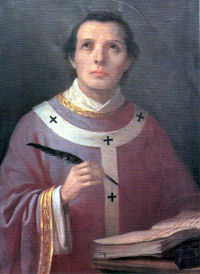
Showing posts with label Anselm. Show all posts

Tuesday, December 22, 2020

Anselm on the suffering of the impassible God

Reading through Anselm's Why God Became Man I came across a remarkable passage on how the impassible God is said to suffer in Christ. This is important, because many Evangelicals seem to have abandoned divine impassibility in recent years. Jürgen Moltmann has been highly influential in precipitating  the turn from impassibility. He argued that the theological task must be reconfigured in the light of the Holocaust. A God who cannot suffer is of no use to a suffering world, "Only a suffering God can help' was his famous dictum. 

We may instinctively recoil from the idea of impassibility, as if by that world it is being suggested that God is cold, remote and apathetic. Such a God would be indifferent to the miseries of life in the veil of tears. However, when our forefathers confessed that God is 'without body, parts or passions' (here), they did not mean that he is without emotions, but that he is devoid of emotional spasms. A 'passion' is a temporary feeling of elation or irritation, a flash in a pan. There is nothing 'flash in a pan' about God. He is eternal and unchanging in his being and attributes. 

Impassibility is not a defect in God. He is not emotionally stunted or remote. God is love. He is totally satisfied in the perichoretic union and communion of Father, Son and Holy Spirit within the fullness of his perfect being. It is out of his self-sufficient aseity that God relates to us as his creatures. He is not dependent upon us for love or emotional completion, but he generously stoops to bring us into the the loving fellowship of the Trinity. That is why he made us in his image. That is why he acted in Christ to reconcile us to himself after the fall.

The impassible God loves without sentiment and burns with wrath against sin without the least irritation. He is free to reach out to us in our suffering without being overcome by it. Divine impassibility is the grounds of God's covenant faithfulness. His self-generated and eternal love cannot be stretched to breaking point by the failings of his chosen people. In his impassibility God is never discouraged or disappointed. Nothing can quench his determination to save hopeless sinners. His is an impassioned impassibility. 

The impassible Father spared not his own Son, but delivered him up for us all at Calvary. That does not mean the Father was coldly indifferent to the suffering of his Son. He loved him infinitely as he hung and suffered there (John 10:17). But he loved us too and it was only through the willing sacrifice of his Son that the wrath of God could be averted from sinners, 1 John 4:10. For that happen the impassible Son had to be made flesh to suffer and die for us. And so to Anselm, reflecting on the passion of the impassible God in Christ, 

For we affirm that the divine nature is undoubtedly incapable of suffering, and cannot in any sense be brought low from its exalted standing, and cannot labour with difficulty over what it wishes to do. But we say that the Lord Jesus Christ is true God and true man, one person in two natures and two natures in one person. In view of this, when we say that God is suffering some humiliation or weakness, we do not understand this in terms of the exaltedness of the non-suffering nature, but in terms of the weakness of the human substance which he was taking upon himself.... For we are not, in this way implying lowliness on the part of the divine substance, but are making plain the existence of a person comprising God and man, (Anselm of Canterbury: The Collected Works, Oxford, 2008, p. 274-275.

Note that Anselm does not merely say that the human nature of Jesus suffered for us, but that the person of the Son, impassible in his deity, suffered for us in his human nature. What we need from God is not the sympathy of a cosmic fellow-sufferer, but one who has acted to save us from sin and suffering. Only a suffering God in Christ can help us. Calvary reveals the true the depths of God's limitless, unchanging love for sinners, Romans 5:6-8. Impassible love is not needy and vulnerable, but free and outgoing; flowing from the Father, through the Son and by the Spirit to the world. 

As the Puritan Poet Edward Taylor (c1642-1729) meditated,

Meditation 1
What Love is this of thine, that Cannot bee
In thine Infinity, O Lord, Confinde,
Unless it in thy very Person see,
Infinity, and Finity Conjoyn'd?
What hath thy Godhead, as not satisfide
Marri'de our Manhood, making it its Bride?

Oh, Matchless Love! filling Heaven to the brim!
O're running it: all running o're beside
This World! Nay Overflowing Hell; wherein
For thine Elect, there rose a mighty Tide!
That there our Veans might through thy Person bleed,
To quench those flames, that else would on us feed.

Oh! that thy Love might overflow my Heart!
To fire the same with Love: for Love I would.
But oh! my streight'ned Breast! my Lifeless Sparke!
My Fireless Flame! What Chilly Love, and Cold?
In measure small! In Manner Chilly! See.
Lord blow the Coal: Thy Love Enflame in mee.

Monday, December 14, 2020

Anselm On The Incarnation of the Word

My idea of getting all Christmassy was to read On The Incarnation of the Word by Anselm of Canterbury. Better that than waste time putting up a tacky tree. It's a remarkable little work in which the great Medieval theologian sets out to refute the idea that the Father and the Spirit became incarnate as well as the Son. He set down his thoughts in a letter addressed to Pope Urban II. 

The work is a marvel of tightly compressed theological reasoning. Its occasion was a controversy between Anselm and 'a certain cleric' he encountered when he was abbot of a monastery in Bec, France. This cleric held that, 'if the three persons are only one thing and not three things... then the Father and the Holy Spirit as well as the Son became flesh', p. 233. 

Anselm initially wrote to refute this error while still ministering in Bec. The cleric in question seemed to have recanted his heterodox views. It transpired later that he only recanted because he feared the population might kill him. Meanwhile, once the danger had passed, he continued to teach the incarnation of the whole Trinity. Partial copies of Anselm's refutation were doing the rounds and now as Archbishop of Canterbury Anselm felt the need to respond in a more thorough and complete way to the French cleric's 'novelty'. 

Despite his high ecclesiastical rank and theological ability. the Archbishop felt ill equipped to defend the faith. He likens the task to a man endeavouring to stabilise Mount Olympus. He wrote not so much to confirm the faith, as to satisfy Christian brothers who urged him to put pen to paper in response to the error under discussion. And this was no mere intellectual exercise for Anselm. He saw his task as one of faith seeking understanding the things of God. Our minds need to be illuminated by the Spirit if we are to receive and experience  God's truth. 

Anselm did not believe that doctrinal disputes can be resolved simply by appealing to the text of Scripture. Some heretics don't believe in the authority of the Bible. Others interpret it in a perverse sense. It is necessary therefore to use theological arguments derived from the Bible to expose error and defend the faith. That does not mean, however, that everything is up for grabs. The Catholic faith that is based on Scripture and confessed by the Church should be received and lived out by faithful believers. We must believe in order to understand the mysteries of God's Word. 

In terms of the Trinity, Anselm assumes the orthodox teaching that there is but one will and power in the being of God, which all three persons share, as each is fully divine. Yet there are not three gods, but one. Plurality in God is a property of the persons, not the divine nature. Were plurality a property of  nature, God would be composed of parts, which he cannot be. God is the perfect being. In all composite entities are some things superior and some things inferior. God cannot be anything less that perfect in his simple and undivided essence. He is a being than which none greater can be conceived (Anselm's Proslogion). 

The persons may be distinguished not in terms of their shared nature, but on account of their personal relations. The three are not interchangeable and there is an order of persons in the Trinity.  The Father is unbegotten, the Son is begotten of the Father, the Holy Spirit proceeds from the Father and the Son. These distinctions may not be misattributed. The Son is Son because he is begotten of the Father, the Father is Father because he begets the Son.

The personal distinctions are real, not modes in a unipersonal god. The same man may be a father in relation to his son and a son in relation to his father, yet he is one person, not two. The situation is quite different in the Trinity, where there are three distinct persons in the one God. 

It was fitting that the Son should become incarnate rather than the Father or the Holy Spirit. Had the Holy Spirit taken human flesh, reasons Anselm, there would have been two sons in God, the eternal Son of the Father and the human son of Mary to which the Holy Spirit had become personally united. Had the Father been born of Mary, according to Anselm, 'two persons of the Trinity would take the name of grandson, since both the Father would be grandson of the Virgin's parents, and the Father's Son would be the Virgin's grandson, although the Son himself would have no part from the Virgin'. (p. 251). 

The economic missions of the Trinity reflect the eternal processions. It was signally appropriate that the only begotten Son of the Father should have become the son of Mary. 'Therefore' continues Anselm, 'no divine person other than the Son ought to become flesh, since there cannot be any least inappropriate thing in God. For although we declare that the Son in his humanity is less than the Father or the Holy Spirit, yet the latter two persons do not on that account surpass the Son, since the Son also has the same majesty whereby he himself is also superior to his humanity.' (p. 251). 

It is not right to say that because there are three persons in the one God that all three persons therefore became incarnate. The incarnation was not an act of the divine nature, but an act of a divine person, namely the Son.  Neither do we say that the Son as the second person of the Trinity became a human person at the incarnation. Rather, the Son took a human nature in addition to his divine nature into the unity of his person. Having said that, the external acts of the Trinity are undivided so the Son did not become man apart from the Father who sent him and the Spirit by whom his human nature was conceived in the womb of Mary. 

Anselm's On the Incarnation of the Word might seem to address a rather abstruse point; that the whole Trinity became incarnate, rather than simply the Son. Who would ever say such a thing these days? His letter is worth reading, however. Anselm's grasp of Catholic trinitarian dogma is is remarkably clear and profound. The arguments he deploys to refute his opponent's theological novelty are in full accord with the Nicene Creed and Definition of Chalcedon

The simplistic biblicism of some sectors of Evangelicalism has left its pastors and theologians incapable of doing much more than trading proof texts. Our ability to engage in theology as a work of 'holy reason', or 'faith seeking understanding' is often weak and underdeveloped compared with Medieval theologians such as Anselm, the Church Fathers, the Reformers and their Orthodox Reformed successors.  

The Reformers did not jettison the creedal heritage of the church. The Westminster Confession of Faith and its Congregational and Baptist derivatives (the Savoy Declaration and  the Second London Baptist Confession) bear all the hallmarks of historic doctrinal orthodoxy. See this Tabular Comparison for Chapters II (The Trinity) & VIII (Christ the Mediator). We are Reformed Catholics, recognising that while Scripture alone has magisterial authority for the church, the ancient creeds have ministerial authority, as they accurately summarise key Bible teachings and help to guard against erroneous ideas. 

In recent years Evangelicals have denied the eternal generation of the Son, which is a key component of trinitarian theology, here and here. Others have posited that will is a property of persons rather than the being of God, which leads to them saying that the Son eternally submitted his will to that of the Father, here. Anselm is a better guide to understanding the relations between the three persons in the being of God and what that means for the incarnation. 

The Trinity and the incarnation are the two great mysteries of the Christian faith. The role of creeds, confessions and classic treatments of these doctrines is not to fully explain the fundamental truths of Holy Scripture. Rather, such texts serve to erect a fence around the high mysteries of divine self-revelation. In doing so they act as a safeguard against error and provide us with sound parameters for faith seeking understanding. 

As to 'Why God Became Man', that's next on my 'Christmas with Anselm' reading list. But I guess that tree tinsel decked-tree will have to go up sometime. 

Wednesday, September 19, 2012

Anselm on faith seeking understanding of the Trinity


The other week I posted some thoughts on Anselm's treatment of God's justice and mercy in his Proslogion (here). I mentioned that I also wanted say something about his thinking on the Trinity in the same work. I thought it might be interesting to contrast Anselm's approach to the subject with that of John Calvin in the Institutes (Book I:XIII). Like Anselm, the Reformer begins with the essential unity of God and then discusses his tripersonality. But even here, methodological differences are evident. Anselm cites Scripture in the Proslogion, and the God who is 'something-than-which-nothing-greater-can-be-thought' is clearly the God of the Bible. But his work is not sufficiently grounded in the self-revelation of God in Holy Scripture. Human reason rather than divine revelation to the fore as Anselm elaborates his argument for the existence of God.

What Calvin has to say both on the the essence of God and his triunity is more explicitly rooted in the Scripture. He has less faith in the power of human reason to explore the divine essence. What the Bible says regarding the immensity and spirituality of God's essence "checks the audacity of the human mind" (I:XIII:1). This is quite unlike Anselm's approach in the Monologion, a meditation on God's essence where "nothing whatever be argued on the basis of the authority of Scripture, but [by] the constraints of reason" (Anselm of Canterbury: The Major Works, OUP, 2008, p. 5). While Calvin believed that reason and philosophy had a place in theological work, he would not have shared Anselm's confidence in human thought processes to search out the divine. For him faith seeks understanding in the Bible not in elaborately constructed arguments that sit loose with Scripture. 

In the Monologion, Anselm devotes a large number of sections to the Trinity (29-66). He seeks to explore the doctrine in accordance with "the constraints of reason". However, he has to cheat a little. Were Anselm's thinking not already informed by biblical revelation, he would have known that the One God exists in three persons, Father, Son and Holy Spirit. While the doctrine of the Trinity is not irrational, it could not have been discovered by the human mind apart from Scripture. 

The Proslogion devotes only one section to the Trinity (23). In this brief compass Anselm offers a distillation of his teaching on the triunity of God that was more fully developed in the Monologion. His handling of the subject is highly influenced by Augustine. The Church Father posited that in the One God there is Lover (the Father) Loved (the Son) and Love (the Holy Spirit). Similarly, Anselm argues that God's Word is God speaking. The Word therefore cannot be anything less than God. As God's essence is simple, nothing can be born from God that is not God.  The Love that proceeds to and from the Father and the Son/Word is the Holy Spirit. The Spirit  is not different in being from the Father and the Son, as he proceeds from the simple unity of the divine essence. 

Anselm's account of the doctrine of the Trinity owes more to Augustine's psychological model (God as Lover/Loved/Love) than biblical revelation. As a result Anselm offers a rather speculative account of the Trinity, especially in the MonologionThe actions of the Trinue God in the drama of redemption as disclosed in Holy Scripture are not given a determinative enough role in theologian's treatment of this most important teaching. 

This is exactly the point where Calvin  differs from Anselm. The Reformer does not shy away from the use of philosophical terminology such as 'person', and 'essence' in formulating his doctrine, but he wants to rein in speculation as much as possible. He does not begin with the simple divine essence and posit that God's Word must be God and that the Love between God and the Word must also be divine. He appeals to divine revelation, "While he proclaims his unity, he distinctly sets it before us as existing in three persons" (I:XIII:2). The tripersonality of God is not arrived at by a process of reasoning, 'he proclaims...he distinctly sets it before us.'  And God reveals this truth about himself because he does not simply want us to believe that there is a divine being, even One who is 'something-than-which-nothing-greater-can-be-thought', but that we might know him personally. "These we must hold [God's unity and three persons], unless the bare and empty name of Deity merely flutter in our brain without any genuine knowledge." (I:XIII:2). 

Calvin justifies the use of extrabiblical terms in with reference the doctrine of the Trinity in order to safeguard the meaning of biblical truth which was under attack from heretics. But he would much rather a minimalist approach that sticks as closely to the language of Scripture as possible. "I wish, indeed, that such names were buried, provided all would concur in the belief that Father, Son and Spirit, are one God, and yet that the Son is is not the Father, nor the Spirit the Son, but each has his peculiar subsistence." (I:XIII:5). 

Notwithstanding, Calvin is insistent that the word 'person' is appropriately used of the Three. This is important, because although Anselm also speaks of one God in three persons, his account of the intertrinitatian relations tends to undermine the distinct personhood of the Son and the Spirit. As noted earlier, he refers to the Word/Son as God's truth, which cannot be anything other than God, and the Spirit as the Love that proceeds from the Father and the Son. This is to confuse attributes and persons. The Son is not simply God's truth. He is a person with the same essence as  the Father, sharing all the attributes of his divine being. The Spirit is a person who loves the Father and the Son and is loved by them, not merely the Love that proceeds from the Father and the Son. Anselm knows this saying, "whatever each is singly, that the whole Trinity is together, Father, Son and Holy Spirit" (p. 100). He was certainly no modalist, but his Augustinian psychological model of the Trinity does not do justice to the full personhood of the Son and Spirit. That failing can in part be traced to the fact that he seeks to deduce the three persons from the simple divine essence rather than giving proper attention to the communicative action of the triune God disclosed in the Scriptures. Calvin is more in tune with the trinitarian dimensions of the drama of redemption, "But as God has manifested himself more clearly by the advent of Christ, so he has made himself more familiarly known in three persons." (I:XIII: 16). The Reformer cites the baptismal formula issued by Christ is a case in point (Matthew 28:19). 

Another thing. In the Monologion, Anselm claims that "The Son...has his essence from the Father as well as having the same essence as the Father." (p. 58). It is proper that the Father as supreme spirit begets the Son and that the Son was begotten of him (p. 52). But this introduces an element of subordination into Anselm's doctrine of the Trinity. The Father's essence was unbegotten and therefore without origin or derivation, but the Son's essence was derived from the Father. Calvin will have none of this. He dismissed as "an absurd fiction" (I:XIII:29) the more speculative scholastic teaching on the eternal generation of the Son. Instead, he proposed that "the Godhead is absolutely of itself [autotheos]. And hence also we hold that the Son, regarded as God, without reference to his person, is also of himself [autotheos]; though we also say that, regarded as Son, he is of the Father. Thus his essence is without beginning, while his person has its beginning in God". (I:XIII:25). He is the only begotten Son of the Father, but he is God because he is God. According to B. B. Warfield with Calvin's "firm and unwavering assertion of the autotheos of the Son...the  homoousios of the Nicene Fathers at last came into its full right, and became in its fullest sense the hinge of the doctrine". (Calvin's Doctrine of the Trinity, in Calvin and Augustine. p. 283 & 284, P&R, 1980).

Much work has been done in recent decades to show that it is simplistic to drive a wedge between the 'speculative scholasticism' of the Medieval Church and the 'pure biblical theology' of the Reformers. Calvin drew on the insights of scholastic theology, while deprecating its excesses. But Calvin's handling of the doctrine of the Trinity seems a world away from that of Anselm. He has less confidence in the power of human reason and his teaching is more explicitly shaped by the drama of redemption as revealed in Holy Scripture. He is respectful of the theological heritage of the Church, but he does not simply repeat Augustine's psychological 'Lover, Loved and Love' account of the Trinity. He offers a corrective to the subordinationist strain in Western theology, with his emphasis on the autotheistic  character  of the Son's divine essence. He recognises an order of persons in the Trinity, but this is not based on derivation of essence, but the personal relations of Father, Son and Holy Spirit. 

God has revealed himself as a Trinity in order to bring his people into union and communion with himself. True knowledge of God in his three persons does not 'flutter in our brain'. We believe in order to understand. And understanding should lead to the worship our triune Creator, Redeemer and Perfecter. In in the words of Gregory of Nazinus that 'vastly delighted' Calvin,
No sooner do I conceive of the One than I am illumined by the Splendour of the Three; no sooner do I distinguish Them than I am carried back to the One. When I think of any One of the Three I think of Him as the Whole, and my eyes are filled, and the greater part of what I am thinking of escapes me. I cannot grasp the greatness of That One so as to attribute a greater greatness to the Rest. When I contemplate the Three together, I see but one torch, and cannot divide or measure out the Undivided Light. (Gregory of Nazianzus' (ca. 330-391) Orations 40.41)

Thursday, August 30, 2012

Anselm on faith seeking understanding of God's justice and mercy

In fits and starts I've been reading my way through Anselm's Proslogion. I finished it yesterday. In this work Anselm sought to put forward a convincing argument for the existence of God. Although he deploys rational arguments for God's existence, he is well aware that faith is indispensable for the right understanding of God and his ways. "I do not seek to understand so that I may believe; but I believe so that I may understand." (Anselm of Canterbury: The Major Works, OUP, 2008,  p. 87). 

The Proslogion is an exercise of 'holy reason', faith seeking understanding. Anselm begins by rousing his mind to the contemplation of God and prays, "Come, then Lord my God, teach me where and how to seek You" (p. 85). Something like Augustine's Confessions, the work is carried out in dialogue with God and is interspersed with frequent prayer. 

Unlike the earlier Monologion, wher"nothing whatever be argued on the basis of the authority of Scripture" (see here), Anselm frequently appeals to the Bible at various points in the Proslogion. That said, his use of Scripture tends to be allusive and devotional rather than anything else. Most of what he has to say is biblical in content, but it is not explicitly rooted in reflection on God's self-revelation in Holy Scripture. More specifically, the work is not sufficiently shaped by the Bible's unfolding drama of God's redemptive action in Christ. I'll return to that point in a moment. 

Anselm's key argument for the existence of God is that he is "something-than-which-nothing-greater-can-be-thought" (p. 87). Even the atheistic fool who says in his heart "there is no God" (Psalm 14:1, 53:1) has an idea in his mind of One who is "something-than-which-nothing-greater-can-be-thought", otherwise why would he deny that such a being existed? And if God exists in the mind, then says Anselm, he must also exist in reality, which is greater than existing only in the mind. If God is truly "something-than-which-nothing-greater-can-be-thought" then he must exist both in the mind and in reality (p. 87-88). That's basically it, anyway. 

Anselm goes on to work this out in detail, showing that God is the perfect being, eternal, all powerful, just and good, who dwells in unapproachable light. For now I simply want to focus on two aspects of the Proslogion: Anselm's construction of the relationship between the justice and mercy of God and his account of the doctrine of the Trinity. I suggest that in both cases the theologian's treatment of these subjects is suffers from a lack of orientation to the drama of redemption. 

Anselm contemplates "How the all-just and supremely just One spares the wicked and justly has mercy on the wicked" (p. 91-94). After some discussion of this point, the theologian attempts to resolve this conundrum by appealing to the sovereign will of God, "For that alone is just which You will, and that is not just which You do not will. Thus, then your mercy is derived from your justice since it is just that You are so good and since it is just that You are so good that You are good even in forgiving." (P. 94).

Anselm's proposal is not altogether satisfactory for a couple of reasons. He seems to come perilously close to 'divine command theory', i.e. the view that what is good is good simply because God wills it so. For example, God has decreed that telling the truth is good, but he could conceivably have decreed that lying is good. That would make God's will capricious and goodness arbitrary. It is better and more biblical to think of God's will as expressive of who he is as a good and just Deity. In other words, what he wills is good because he could not have chosen to do otherwise and be consistent with himself. Contrary to what Anselm appears to be saying here ('that alone is just which You will'), justice is not the product of the divine will, but is expressive of God's character.

The theologian returns to this theme is his great treatise, Why God Became Man. He discusses whether it would have been fitting for God to forgive sin out of mercy alone without requiring restitution. Boso, Anselm's interlocutor appeals to a form of 'divine command theory' to argue that God is free to forgive without restitution if he so wills, as whatever he wishes is right and proper (p. 285). Anselm objects to this and finds himself having to qualify his own words in the Proslogion,
A statement that, 'What God wills is just and what he does not will is unjust', is not to be understood as meaning that, 'If God wishes anything whatsoever that is unfitting, it is just since it is he who wills it....[I]t does not belong to his freedom and benevolence or will to release unpunished a sinner who has not repaid to God what he has taken away from him. (p. 285-286).
Anselm has to clarify what he said in his earlier work to justify his thesis that God became man in Christ because it was only on the basis of his atoning work that sins could be justly forgiven by God. Despite the impression given in the Proslogion, he is not, in fact a 'divine command theorist' after all. But that leaves us with another question regarding Anselm's handling of the relationship between God's mercy and justice in the Proslogion. Why should God's mercy be 'derived' from his justice? Is God good because he is just, or is he just because he is good?

The Bible is clear that the Lord our God is righteous and just in all his ways (Deuteronomy 32:4, Psalm 145:17). He always acts in a way that is consistent with himself. In relation to human beings that means God will justify the righteous and condemn the wicked. As all have sinned and fallen short of the glory of God, we all stand condemned before him, and the wages of sin is death. On the basis of justice alone God cannot save us, unless we resort to some kind of  'divine command theory', where whatever he wills is therefore just. If as Anselm suggests, God's mercy is the product of his justice, then words have little meaning, because strictly in terms of in justice sinners deserve no mercy.

Anselm is wrestling with the problem, "How the all-just and supremely just One spares the wicked and justly has mercy on the wicked". This cannot be resolved simply by appeal to the divine will or by speculation on which of the divine attributes is derived from the other. If God wills to spare the wicked that is an act of sheer mercy, but the demands of his justice must be satisfied.  This apparent dilemma can only be resolved by allowing the drama of redemption to shape our thelogy. In other words, the Proslogion needs to factor in Why God Became Man. There is nothing about the Cross of Jesus in the former work. Yet it is on the basis of  Jesus' substitutionary death that God graciously and justly justifies the ungodly (Romans 3:24, 4:5). That is how the all-just and supremely just One spares the wicked and justly has  mercy on the wicked; "Christ died for our sins, the just for the unjust to bring us to God", (1 Peter 3:18).

The cross of Jesus is the supreme revelation of the One who is "something-than-which-nothing-greater-can-be-thought". God's perfect being is disclosed in his redemptive act. "The Word became flesh and dwelt among us, and we beheld his glory" (John 1:14). He is God with us as one of us. Jesus stooped to take the burden of our guilt at Calvary. Such things angels desire to look into and they should never cease to astound us and leave us gasping with amazement. The drama of redemption is so gloriously divine. The God of the Gospel is not simply "something-than-which-nothing-greater-can-be-thought". He is far greater-than-we-ever-could-have-thought, 1 Corinthians 2:9. 

Well, I'll leave it there for now and return to Anselm's account of the Trinity in the Proslogion in another post.

Tuesday, July 05, 2011

Some thoughts on Anselm's Monologion: Reason and Revelation


While I've read up on medieval church history, my first hand acquaintance with the scholastic writings of the period is quite limited. In an endeavour to rectify this lacuna I'm making way way through the Oxford World's Classics edition of Anselm of Canterbury, The Major Works. The collection includes Monologion, Proslogion  and Anselm's most famous work, Why God Became Man. I've just finished Monologion. Admittedly this doesn't make me an instant expert and guide to Anselm's thought, but here are some reflections on what the theologian intended to be a "model meditation".

In his Prologue Anselm explains that he wrote the Monoligion in response to requests from his fellow monks at the Abbey of Bec. They wanted him to set down on paper a meditation on the essence of the divine. They made one important proviso, "that nothing whatever be argued on the basis of the authority of Scripture, but [by] the constraints of reason concisely to prove and the clarity of truth clearly to show... the conclusions of distinct investigations." (P. 5 - all quotes from OWC edition).

Initially Anselm tried to excuse himself from such an onerous task, but his friends prevailed upon him to put pen to paper. As requested he attempted to proceed on  the basis of the "constraints of reason" rather than the authority of Scripture. But this does not mean that in the Monologion human reason is the sole source and authoritative standard of Anselm's meditations. He was no freethinking rationalist. Indeed, the theologian claimed that what he wrote was not inconsistent with the teachings of the Catholic Fathers, especially the "Blessed Augustine" (p. 6).

Anselm argues from first principles concerning the supreme essence without appealing to the text of Scripture. But it is evident that his main assumptions concerning the supreme essence are in fact derived from the Bible. He maintains the Creator/creature distinction and even sets out an elaborate doctrine of the Trinity. However, it is difficult to see how he would have derived a doctrine of the Trinity from the "constraints of reason" had not his thinking already been subject to biblical revelation. That is the key flaw in Anselm's methodology. He should not have accepted the proviso "that that nothing whatever be argued on the basis of the authority of Scripture".

To use an Anselmian phrase theological meditation is a work of faith seeking understanding of God's self-revelation in nature and Scripture. It is as well to be upfront about that rather than try and pretend that one's conclusions are derived simply from the dictates of human reason. Rational thought processes are an important tool in understanding the meaning and coherence of biblical revelation, but without revelation reason has nothing with which to work.

In attempting to prove the existence of the supreme essence and say things about the divine being without resorting to Scripture, Anselm gives reason too high a place in his theological method. The finite human mind cannot know the infinite God unless the infinite One reveals himself to us. Towards the end of his meditation Anselm writes, "It is patently obvious, therefore, as can be, that the rational creature is made for this purpose: to love the supreme essence above all other goods... So it is quite clear, as a result, that what the rational creation ought to do, is put all  its will into becoming conscious of, understanding and loving the supreme good." (P. 74). However, becoming conscious of, understanding and loving God is not something that human beings can accomplish of their own will. Not even unfallen Adam could simply choose to know his Maker. He was subject to God's sovereignly-bestowed general and special revelation. If that is the case with human beings before the fall, it is certainly true of man in sin, Romans 8:7, 1 Corinthians 2:14. Fallen humanity does not strive for, but rejects and suppresses the true knowledge of God, Romans 1:20-21, 28.

As a true Augustinian Anselm would no doubt have granted that sin has darkened the mind of fallen human beings. But he does not say as much in the Monologion. The impression is given that human beings may know God by the "constraints of reason". It needs to be made clear that we need supernatural enlightenment if we are to know the one true and living God who is Father, Son and Holy Spirit, 1 John 5:20. 

Tuesday, November 23, 2010

Light from the Dark Ages

Lord, I acknowledge and I thank you that you has created me in this your image, in order that I may be mindful of you, may conceive of you, and love you; but that image has been so consumed and wasted away by vices, and obscured by the smoke of wrong-doing, that it cannot achieve that for which it was made, except you renew it, and create it anew. I do not endeavor, O Lord, to penetrate your sublimity, for in no wise do I compare my understanding with that; but I long to understand in some degree your truth, which my heart believes and loves. For I do not seek to understand that I may believe, but I believe in order to understand. For this also I believe, --that unless I believed, I should not understand. (Anselm, Proslogion).
In an interview with Carl Trueman I asked him a couple of questions on the value of church history:
GD: So, you're a church historian. What's the point of knowing all that old stuff?

CT: Christianity is an historical religion. It is only as we understand the past, how the Bible's teaching has been transmitted to us through history, that we can truly understand the significance of our position in the present. To be clueless about history is to absolutise the present. I think Karl Marx put it nicely: men make history, but they do not make the history that they choose. We are, individually and corporately, determined to an extent by the past; learning about that past liberates us.

GD: Well, I can see that the Early Church Fathers with their creeds and that are important, and the Reformation just rocks. But who cares about the Medievals, weren't they all just monks and popes or something?

CT: I used to think that; but study of post-Reformation Protestantism (that of the late sixteenth and seventeenth centuries) has convinced me that much of what is basic to our Christian doctrine in the Reformed tradition (e.g., the nature of God, necessity, predestination etc) was self-consciously appropriated by the Reformed from medieval theology. After all, why reinvent the wheel? If good arguments on these points were made in the Middle Ages, it would be foolish not to use them.
The questions were a little 'tongue in cheek', but I think the second one fairly represents the attitude of many Evangelicals  to the medieval period of church history. Trueman's answer hints at why we should give more respectful attention to the theologians of the Middle Ages.

In his book Holy Ground: Walking with Jesus as a former Catholic (Zondervan, 2009), Chris Castaldo discusses the "ditch" theory of church history as illustrated in the diagram below. Once again the suggestion (with which Castaldo disagrees) is that not much is to be learned from the "ditch" of compromise and heresy which into which the medieval Church had fallen.

However, as Trueman points out, the Reformers and those who followed in their wake were willing to learn from medieval theologians and utilise their best insights in the service of the Reformed faith. In his 2000 Years of Christ's Power, Part Two: The Middle Ages, (2000, Grace Publications), Nick Needham includes a preface "For Evangelicals who find the Catholic Middle Ages hard to understand". He acknowledges that Evangelicals will have problems with some aspects of the medieval Church, but he sees the Reformation not so much as a rejection of what went before but,
As an heir of the Reformation and a Church historian, I often find myself telling people that the great spiritual and theological movement set rolling by Luther and Zwingli was in fact the best elements of Western medieval Christianity trying to correct the worst elements. (p. 10).
With that in mind the other day I  purchased Anselm of Canterbury: The Major Works, Oxford World's Classics, Reissued 2008. Only £6.37 from Amazon.co.uk It includes Monologion, Proslogion, and probably his most famous work, Why God Became Man. With Anselm helping my faith seeking understanding, I look forward to receiving light from the 'Dark Ages'. Also along these lines, have a look at Paul Helm's recent post on Aquinas on Predestination and his thougths on Anselm's Perfect Being Theology.

Monday, November 15, 2010

Anselm on the death of Christ and the day of judgement


Reading Robert L. Reymond's The Reformation's Controversy with Rome: Why it Must Continue, (Mentor, 2001), I came across this quote from Anselm, the great medieval Archbishop of Canterbury. Reymond cites it to show that the doctrine justification by faith alone in Christ alone had not entirely disappear in the Dark Ages. (Quoted on p. 76 - see note 75). Anselm is writing to console the dying who, conscious of their sins, feared appearing before God on the day of judgement.
Question: “Dost thou believe that the Lord Jesus died for thee?”
Answer: “I believe it.”

Question: “Dost thou thank Him for His passion and death?
Answer: “I do thank Him.”

Question: “Dost thou believe that thou canst not be saved except by His death?”
Answer: “I believe it.”

And then Anselm addresses the dying man:

“Come then, while life remaineth in thee; in His death alone place thy whole trust; in naught else place any trust; to His death commit thyself wholly; with this alone cover thyself wholly; and if the Lord thy God will to judge thee, say, ‘Lord, between thy judgment and me I present the death of our Lord Jesus Christ; no otherwise can I contend with thee.’ And if He shall say that thou art a sinner, say thou, ‘Lord, I interpose the death of our Lord Jesus Christ between my sins and thee.’ If He say that thou hast deserved condemnation, say, ‘Lord, I set the death of our Lord Jesus Christ between my evil deserts and thee, and Your merits I offer for those which I ought to have and have not.’ If he say that He is wroth with thee, say, ‘Lord, I oppose the death of our Lord Jesus Christ between Thy wrath and me.’ And when thou hast completed this, say again, ‘Lord, I set the death of our Lord Jesus Christ between Thee and me.’” (see Anselm, Opera (Migne), 1:686, 687)
Likewise, in his controversy with Franciscian Friar John Vincent Cane, John Owen cited the schoolman Ferus as saying, ‘If you desire to hold the grace and favour of God, make no mention of your own merits.'  He also reminded Cane of the example of Charles V, the Holy Roman Emperor, who, on his death bed ‘renounced all merit of good works, as a proud figment, and gave himself up to the sole grace of God in Jesus Christ, on whose purchase of heaven for him he alone relied.’ Owen urged his opponent to likewise forsake his supposed merits and trust solely in the righteousness and blood of Christ as the grounds of his justification before God.

Jesus, Thy blood and righteousness
My beauty are, my glorious dress;
Midst flaming worlds, in these arrayed,
With joy shall I lift up my head.
(Ludwig von Zinzendorf, 1700-1760)