Pages

Showing posts with label Second London Baptist Confession. Show all posts

Wednesday, July 27, 2022

Particular Baptists and Calvinistic Methodists on the Covenant of Grace

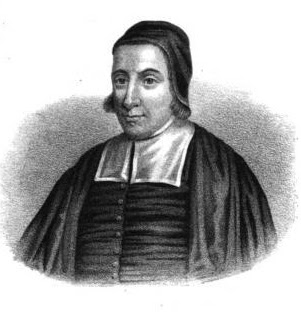
John Eilas (1744-1841)
Hanserd Knollys (1599-1691)


Chapter VII of the Westminster Confession of Faith (1646) and the Savoy Declaration (1658) is devoted to 'God's Covenant with Man' (see this tabular comparison). The two confessions are not identical at this point. The wording  is different here and there. Savoy omits quite a bit of Westminster's paragraph 5 and the whole of paragraph 6. But they have quite a lot in common. Both both the Presbyterians and Congregationalists were Paedobaptists, holding that the children of believers should be baptised. An essential element of Paedobaptist theology is that just as Abraham's offspring were to be circumcised, so the children of believers should not be denied the new covenant sign of baptism. 

That is why Westminster and Savoy say that the covenant of grace was 'differently administered' during the era of the law to what is now the case under the gospel (VII:5). In other words, the Abrahamic and Sinai covenants were administrations of the covenant of grace, as is the new covenant. Under all the various administrations the children of covenant members were to receive the sign of the covenant and either be circumcised (under the law) or baptised (under the gospel).  

The trouble with that is under the Abrahamic and Sinai covenants, simply being a descendant of Abraham according to the flesh did not make a person a true believer in the coming Messiah. Paul says as much in Romans 9:6-13. How, then could the Abrahamic and Sinai covenants be administrations of the covenant of grace, when, according to both Westminster and Savoy, the covenant of grace was between God and the elect, who would most certainly be saved?
the Covenant of Grace; wherein he freely offereth unto sinners life and salvation by Jesus Christ, requiring of them faith in him that they may be saved, and promising to give unto all those that are ordained unto life, his Holy Spirit, to make them willing and able to believe. (VII:3).

The framers of the Second London Baptist Confession (1689) denied that the Abrahamic and Sinai covenants were administrations of the covenant of grace. Rather, they were 'steps' under which the covenant promise of salvation was revealed until it was fully made known under the new covenant.

This covenant [of grace] is revealed in the gospel; first of all to Adam in the promise of salvation by the seed of the woman, and afterwards by farther steps, until the full discovery thereof was completed in the New Testament (VII:3). 

Accordingly, baptism is only for those who were ordained unto life and have been savingly engrafted into Christ, the evidence of which is their profession of repentance towards God and faith in the Lord Jesus Christ (Chapter XXIX 2LBCF). 

Now, eyebrows might be raised at the idea of 'Calvinistic Methodism', thinking that Methodists were Arminians like John Wesley. But George Whitefield was both a Calvinist and a Methodist. So too were his Welsh counterparts, Daniel Rowland and William Williams. Second generation Welsh Calvinistic Methodists left the Church of England and formed their own church grouping. Their leaders such as John Elias and Thomas Charles were very much Calvinist in doctrine and Methodist in spiritual vibrancy. Their confession of faith reflects that. 

What I want to highlight here is how the Confession of Faith of the Calvinistic Methodists (1823) resembles the Second London Baptist Confession more than it does Westminster or Savoy in its treatment of covenant theology. Chapter 13 is entitled, 'Of the Eternal Covenant of Grace'. The confession says that the promises of the covenant of grace are given to 'Christ and his seed' and under this covenant this 'seed' will receive eternal life. That could not be said of all Abraham's natural descendants and regretfully, neither is it true of all children of new covenant believers. The final paragraph of Chapter 13 says,

God in his own time reveals this covenant through the gospel to all his people, and, by bringing them to approve and embrace it, brings them into the bond of the covenant, and into actual possession in their own persons of its grace, gifts, and privileges. The covenant of grace was revealed by degrees, and under various dispensations; but the gospel dispensation is the last and most glorious. This covenant is free, sure, holy, advantageous, and eternal.

Note the way in which the penultimate sentence seems to echo the emphasis of the Second London Baptist Confession. Contrary to Westminster and Savoy, the covenant of grace is not said to be 'differently administered' over time, but 'revealed by degrees, and under various dispensations: but the gospel dispensation is the last and most glorious'. That is more or less the equivalent of the 2LBC's  'revealed... by farther steps, until the full discovery thereof was completed in the New Testament'. Quite how on this basis the Calvinistic Methodist fathers still went on to affirm infant baptism in Chapter 37 of the confession, I am at a loss to know. 

My point is that few would doubt that the early Welsh Calvinistic Methodist churches were part of the Reformed family. Their confession placed them in the mainstream of Presbyterian and Reformed thought. Particular Baptist teaching on the covenant of grace sprang up from within the Reformed churches, especially the Independents in the seventeenth century. But they saw with greater clarity that the Abrahamic and Sinai covenants could not simply be identified with the covenant of grace. They were 'covenants of promise' (Ephesians 2:12) in which the covenant of grace was progressively disclosed. 

All agree that the covenant of grace is with God and his elect people in Christ and made effective by the Spirit. The genius of the Particular Baptists was to follow the biblical logic of that position to say that  baptism should therefore only be administered to believers on profession of faith, who are then admitted to the membership of a local church. Doctrinally speaking, we are indeed Reformed Baptists. But that in itself is not sufficient, we also need something of the life and fire of the old Calvinistic Methodists. 

Monday, May 09, 2022

Ten Points on Reformed Baptist Federal Theology

1. God made a covenant of life with Adam, whom he appointed federal head of all humanity. This was a covenant of works, under which if Adam obeyed the Lord he and all in him would live for ever and enter God's Sabbath rest. If Adam disobeyed, he and all in him would die under God's judgement. (Gen 2-3, Rom 5:12-21, 2LBC 7:1).

2. God made a covenant of grace with his elect people, who were chosen in Christ for salvation before the foundation of the world and redeemed by his blood in the fullness of time. The covenant of grace is made effective by the power of the Spirit, (Ephesians 1:3-14).

3. The Abrahamic, Mosaic and Davidic covenants were not administrations of the covenant of grace. They were 'covenants of promise' (Ephesians 2:12) in which the covenant of grace was progressively revealed 'until the full discovery thereof was completed in the New Testament' (2LBC 7:3).

4. The old covenant (the collective name for the Abrahamic, Mosaic and Davidic covenants) was not a republication of the covenant of works. The law 'was added because of transgressions, until the offspring should come to whom the promise had been made'. (Galatians 3:19). The law also served as a rule of life for Israel, setting out their covenant obligations to the Lord. In her idolatrous disobedience Israel broke the covenant and brought upon herself its terrible curses, Leviticus 26:14-39. Unlike the covenant of works with Adam, for Israel there was a way back to God from the dark paths of sin, Leviticus 26:40-45. The Lord's deliverance of his people from captivity was typical of the greater exodus accomplished by the redeeming work of Christ (Jeremiah 23:7-8, Luke 9:31, Colossians 1:12-14).

5. Abraham was the federal head of the Abrahamic covenant in whom blessing was received (Genesis 12:2-3, 17:1-8). Moses was the mediator of the Sinai covenant (Exodus 20:18-21, 33:12-17), of which David and his royal line served as federal heads. As went the king, so went the people for good or ill, (1 Kings 9:4-9).

6. While the old covenant foreshadowed the covenant of grace, it was only in the new covenant that the covenant of grace was fully enacted. (Jeremiah 31:31-34, Colossians 2:16-17, Hebrews 8, 9:15-22). Christ is both mediator and federal head of the new covenant, (1 Timothy 2:5-6, Romans 5:12-21).

7. During the Old Testament period people were saved by faith in the Christ who was yet to appear as mediator of a new and better covenant. (Hebrews 8:6, 9:15). Under the new covenant people are saved by faith in Christ who has come and accomplished the work of our redemption (Galatians 2:16, Ephesians 2:8).

8. The old covenant was with Abraham and his offspring, which is why all males descended from the patriarch were circumcised. But not all who belonged to Israel through descent from Abraham and circumcision believed and were saved (Romans 9:6, 27). Only a godly remnant knew 'circumcision of the heart' of which circumcision in the flesh was a sign (Deuteronomy 30:6, Romans 2:28-29).

9. As the historical enactment of the covenant of grace the new covenant is between God and the elect in Christ. The law is written on the hearts all new covenant people of God by the Spirit of Christ (Jeremiah 31:33, 2 Corinthians 3:3). All who believe in Jesus belong to the Israel of God, whether Jew or Gentile. Baptism is the sign that believers have been savingly united to Christ by the Spirit. (Galatians 3:27-29, 6:16). That is why according to the New Testament baptism invariably follows repentance and faith, and is linked to church membership. (Acts 2:38-39, 41-42).

10. As federal head of the new covenant, Jesus takes us not back to the beginning, but to the end of the road that Adam had to walk. (Herman Bavinck). In fact, we receive more in Christ than we ever would have had in Adam. For the riches of God's grace and the depths of his glory are  fully revealed only in Jesus, the last Adam, Romans 5:21, 1 Corinthians 15:42-49, Ephesians 1:7-10, Colossians 1:27. 

Friday, December 18, 2020

Confessional Christianity, an antidote to evangelical biblicism


In his review of Canon, Covenant and Christology: Rethinking Jesus and the Scriptures of Israel by Matthew Barrett, Robert Strivens stated, "as evangelicals, we must cease to be mere biblicists and become faithful exponents of Scripture deeply rooted in a well-rounded dogmatic theology." I very much agree and think this is one of the pressing issues of our time. 

I'm sure that a naive biblicism that is uniformed by the theological heritage of the church is one of the reasons why evangelicals have got themselves into such a mess with the doctrine of God. Some advocates of the eternal submission of the Son make 'will' a property of the persons of the Trinity, rather than the divine being. But hang on a minute. If 'will' is a property of persons, rather than being, and the incarnate Son has two wills, is he therefore two persons, divine and human? According to classic Christology, the incarnate Son is one person with two natures, with a will appropriate to each nature, divine and human.

One of the reasons for subscribing to an elaborate confession of faith such as the Second London Baptist Confession is that our forebears were self-consciously Reformed Catholics. Their confessions bear the imprint of the great creedal heritage of the church. Subscribe to them and you subscribe to Nicaea and Chalcedon and identify with an Augustinian account of salvation by sovereign grace. 

But they didn't stop there. They were Reformed Catholics, who sought to reform church doctrine and life in the light of our supreme authority, which is the Holy Spirit speaking in the Scriptures. Hence the Particular Baptists set out their own distinctive views on the covenants, the church and baptism, while holding to the Catholic creeds and the solas of the Reformation. 

Many contemporary evangelical doctrinal statements adopt a minimalist approach that fails sufficiently to root the church in the Great Tradition of theological orthodoxy. Neither do they set out why Independent Evangelical or Baptist churches operate as they do in the light of clear biblical principles. 

The older confessions provide us with a dogmatic framework in which the key teachings of Scripture are set out in a coherent and systematic way. They are an aid to interpreting the Bible in the light of theological reflection of the church over many centuries. Familiarity with the historic creeds and confessions of faith  can help save us from many a doctrinal blunder. 

That is not to say that the confessions are to be regarded as infallible, or unimprovable. The Westminster Confession was revised by the Independents in their Savoy Declaration and again by Particular Baptists in the Second London Baptist Confession. But we should think long and hard before adopting an interpretation of Scripture that is out of synch with the confession of faith we have pledged to uphold. 

That is especially the case when it comes to what they have to say on doctrines of first importance, like the doctrine of God and of Christ the Mediator. According to the 1689 God's will is a property of his being (Chapter 2:1), not the three persons (Chapter 2:3), see here. With that in mind, the Father, Son and Holy Spirit are not distinguished in terms of one person submitting their will to that of another, but "by several peculiar, relative properties, and personal relations". 

In other words that "the Father is of none neither begotten nor proceeding, the Son is Eternally begotten of the Father, the holy Spirit proceeding from the Father and the Son". There is an order in the Trinity, but no hierarchy of will. How could that be when will is a property of the divine being, which is wholly shared by the three persons? 

Making 'will' a property of persons plays havoc with the doctrine of Christ. As pointed out earlier, we confess that the Lord Jesus has two wills. The incarnate Son is not two persons, however. That would be Nestorianism. The confession rightly affirms that the incarnate Son is a divine person with a human nature, Chapter 8:2

Prominent Evangelicals in the US and UK have strayed from this historic teaching, holding that the Son eternally submitted his will to that of the Father. They have often done so using naively biblicist arguments in which the relationship of the incarnate Son to the Father in the economy of redemption is read back univocally into the ontological Trinity. It is enough to say that the missions of the Trinity reflect the eternal relations, without positing a plurality of wills in God. 

A more rigorous confessionalism would have helped prevent the theological confusion that is apparent in evangelical circles. Elders (pastors among them) and deacons should be expected to subscribe to a confession like the 1689. A more basic doctrinal statement such as the FIEC Doctrinal Basis may be required of church members, but the officers should ensure that church teaching and life is in line with a more wide-ranging and detailed confession of faith.

The biggest divide in evangelicalism is not between those who adopt traditional or progressive worship styles, or lockdown defiers and lockdown compliers; it is between confessional Reformed Catholics and doctrinal minimalists. We see further when we stand on the shoulders of giants. Time-honoured terms such as 'person', 'relations', 'being' and 'will' have meanings that were carefully defined in response to doctrinal error. Heretics could also quote the Bible. A simplistic biblicism was not sufficient to combat heresy. The teaching of Scripture needed to be explained and defended using non-biblical terminology. Hence the precise and exact language found in the creeds and confessions of old. 

When we step off the shoulders of the theological giants we become short sighted. Those who ignore or redefine key theological terms cannot always see the consequences of their doctrinal missteps. Making 'will' a property of the persons rather than the divine being makes for a subordinationist Trinity and an incoherent Christology. This is just one example of why we should strive to become "faithful exponents of Scripture who are rooted in a well-rounded dogmatic theology." Let us 'hold fast our confession, faithful to the end'.