Pages

Thursday, August 30, 2012

Anselm on faith seeking understanding of God's justice and mercy

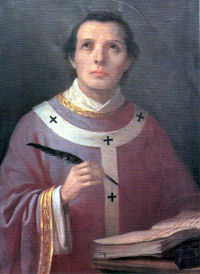
In fits and starts I've been reading my way through Anselm's Proslogion. I finished it yesterday. In this work Anselm sought to put forward a convincing argument for the existence of God. Although he deploys rational arguments for God's existence, he is well aware that faith is indispensable for the right understanding of God and his ways. "I do not seek to understand so that I may believe; but I believe so that I may understand." (Anselm of Canterbury: The Major Works, OUP, 2008,  p. 87). 

The Proslogion is an exercise of 'holy reason', faith seeking understanding. Anselm begins by rousing his mind to the contemplation of God and prays, "Come, then Lord my God, teach me where and how to seek You" (p. 85). Something like Augustine's Confessions, the work is carried out in dialogue with God and is interspersed with frequent prayer. 

Unlike the earlier Monologion, wher"nothing whatever be argued on the basis of the authority of Scripture" (see here), Anselm frequently appeals to the Bible at various points in the Proslogion. That said, his use of Scripture tends to be allusive and devotional rather than anything else. Most of what he has to say is biblical in content, but it is not explicitly rooted in reflection on God's self-revelation in Holy Scripture. More specifically, the work is not sufficiently shaped by the Bible's unfolding drama of God's redemptive action in Christ. I'll return to that point in a moment. 

Anselm's key argument for the existence of God is that he is "something-than-which-nothing-greater-can-be-thought" (p. 87). Even the atheistic fool who says in his heart "there is no God" (Psalm 14:1, 53:1) has an idea in his mind of One who is "something-than-which-nothing-greater-can-be-thought", otherwise why would he deny that such a being existed? And if God exists in the mind, then says Anselm, he must also exist in reality, which is greater than existing only in the mind. If God is truly "something-than-which-nothing-greater-can-be-thought" then he must exist both in the mind and in reality (p. 87-88). That's basically it, anyway. 

Anselm goes on to work this out in detail, showing that God is the perfect being, eternal, all powerful, just and good, who dwells in unapproachable light. For now I simply want to focus on two aspects of the Proslogion: Anselm's construction of the relationship between the justice and mercy of God and his account of the doctrine of the Trinity. I suggest that in both cases the theologian's treatment of these subjects is suffers from a lack of orientation to the drama of redemption. 

Anselm contemplates "How the all-just and supremely just One spares the wicked and justly has mercy on the wicked" (p. 91-94). After some discussion of this point, the theologian attempts to resolve this conundrum by appealing to the sovereign will of God, "For that alone is just which You will, and that is not just which You do not will. Thus, then your mercy is derived from your justice since it is just that You are so good and since it is just that You are so good that You are good even in forgiving." (P. 94).

Anselm's proposal is not altogether satisfactory for a couple of reasons. He seems to come perilously close to 'divine command theory', i.e. the view that what is good is good simply because God wills it so. For example, God has decreed that telling the truth is good, but he could conceivably have decreed that lying is good. That would make God's will capricious and goodness arbitrary. It is better and more biblical to think of God's will as expressive of who he is as a good and just Deity. In other words, what he wills is good because he could not have chosen to do otherwise and be consistent with himself. Contrary to what Anselm appears to be saying here ('that alone is just which You will'), justice is not the product of the divine will, but is expressive of God's character.

The theologian returns to this theme is his great treatise, Why God Became Man. He discusses whether it would have been fitting for God to forgive sin out of mercy alone without requiring restitution. Boso, Anselm's interlocutor appeals to a form of 'divine command theory' to argue that God is free to forgive without restitution if he so wills, as whatever he wishes is right and proper (p. 285). Anselm objects to this and finds himself having to qualify his own words in the Proslogion,
A statement that, 'What God wills is just and what he does not will is unjust', is not to be understood as meaning that, 'If God wishes anything whatsoever that is unfitting, it is just since it is he who wills it....[I]t does not belong to his freedom and benevolence or will to release unpunished a sinner who has not repaid to God what he has taken away from him. (p. 285-286).
Anselm has to clarify what he said in his earlier work to justify his thesis that God became man in Christ because it was only on the basis of his atoning work that sins could be justly forgiven by God. Despite the impression given in the Proslogion, he is not, in fact a 'divine command theorist' after all. But that leaves us with another question regarding Anselm's handling of the relationship between God's mercy and justice in the Proslogion. Why should God's mercy be 'derived' from his justice? Is God good because he is just, or is he just because he is good?

The Bible is clear that the Lord our God is righteous and just in all his ways (Deuteronomy 32:4, Psalm 145:17). He always acts in a way that is consistent with himself. In relation to human beings that means God will justify the righteous and condemn the wicked. As all have sinned and fallen short of the glory of God, we all stand condemned before him, and the wages of sin is death. On the basis of justice alone God cannot save us, unless we resort to some kind of  'divine command theory', where whatever he wills is therefore just. If as Anselm suggests, God's mercy is the product of his justice, then words have little meaning, because strictly in terms of in justice sinners deserve no mercy.

Anselm is wrestling with the problem, "How the all-just and supremely just One spares the wicked and justly has mercy on the wicked". This cannot be resolved simply by appeal to the divine will or by speculation on which of the divine attributes is derived from the other. If God wills to spare the wicked that is an act of sheer mercy, but the demands of his justice must be satisfied.  This apparent dilemma can only be resolved by allowing the drama of redemption to shape our thelogy. In other words, the Proslogion needs to factor in Why God Became Man. There is nothing about the Cross of Jesus in the former work. Yet it is on the basis of  Jesus' substitutionary death that God graciously and justly justifies the ungodly (Romans 3:24, 4:5). That is how the all-just and supremely just One spares the wicked and justly has  mercy on the wicked; "Christ died for our sins, the just for the unjust to bring us to God", (1 Peter 3:18).

The cross of Jesus is the supreme revelation of the One who is "something-than-which-nothing-greater-can-be-thought". God's perfect being is disclosed in his redemptive act. "The Word became flesh and dwelt among us, and we beheld his glory" (John 1:14). He is God with us as one of us. Jesus stooped to take the burden of our guilt at Calvary. Such things angels desire to look into and they should never cease to astound us and leave us gasping with amazement. The drama of redemption is so gloriously divine. The God of the Gospel is not simply "something-than-which-nothing-greater-can-be-thought". He is far greater-than-we-ever-could-have-thought, 1 Corinthians 2:9. 

Well, I'll leave it there for now and return to Anselm's account of the Trinity in the Proslogion in another post.

Wednesday, August 22, 2012

More than Gold


We all no doubt hoped that Team GB would perform well in the Olympics. But who’d have thought that we would win 29 gold medals and end up third in the medal table, just behind the sporting superpowers of China and America? 

The London Olympics was a great sporting spectacle, in the words of IOC President, Jacques Rogge, a “happy and glorious games”. Who could forget witnessing (albeit on the telly) Jessica Ennis’ triumph in the heptathlon, or Mo Farrow’s double gold in the 10,000 and 5,000 metres, or Usain Bolt winning his three gold medals? Not to mention the exploits of Bradley Wiggins, Chris Hoy, and our own Wiltshire golden boy, Ed McKeever.

The Opening Ceremony included the playing of Vangelis’ score from Chariots of Fire. The film featured the story of Eric Liddell winning the 400 metre race in the 1924 Paris Olympics. He was a 100 metre man really, but he famously withdrew from that event because the heats were on a Sunday. Liddell, a devout Christian believed that Sunday should be kept as a day of rest and worship. Inspired by the bible text, “for those who honour me I will honour” (1 Samuel 2:30), the athlete not only won the gold medal, but broke the world record.

What is not so well know is that after his sporting success Liddell became a missionary in China. Someone once asked him if he regretted giving up athletics for the mission field. He replied, "It's natural for a chap to think over all that sometimes, but I'm glad I'm at the work I'm engaged in now. A fellow's life counts for far more at this than the other."

But this was to be a costly commitment. When Japan invaded China in World War II, Liddell was held in an internment camp, where conditions were harsh. The former athlete gave himself to helping those in need. In a prisoner exchange negotiated between the British and Japanese, Liddell was given an opportunity to leave he camp, but he gave up his place to a pregnant woman. Shortly afterwards he died of a brain tumour. His condition was probably exacerbated overwork and malnutrition.

Liddell’s act of costly sacrifice reminds us of the Lord Jesus Christ who laid down his life to bring us back to God. For Eric Liddell the joy of knowing and serving Jesus was worth more than gold. 

* For September's News & Views, West Lavingon Parish Magazine. 

Monday, August 20, 2012

Aber 2012 report

Conrad Mbewe
So, that was Aber 2012. Another year, another rich time of ministry and fellowship for which to thank God. 

On the Sunday we heard two messages by Geoff Thomas on the mortification of sin. Helpful stuff, rooted in sound theology, well structured and searchingly applied. Not without humour too, especially the preacher's impression Usain Bolt's 'lightning' gesture. 

Conrad Mbewe gave four stirring expositions of 1 Timothy 3:16 (Tuesday-Friday). Some African preachers tend to be rather anecdotal rather than textual and theological in style. Not Mbewe. His preaching was characterised by a fine mix of exegetical insight, theological clarity and doxological passion. His final sermon on Christ being 'believed on in the nations and received up into glory' raised us to the heights. How we sang, Great is the gospel of our glorious God!

The evening sessions were pretty good too. Aber veteran Neville Rees kicked things off on Monday evening with a well-delivered evangelistic message on Mark 5:15. All singing, all dancing Art Azurdia III (no wonder he's lost weight) gave two messages on Matthew 5:10-12 (Tuesday) and Matthew 5:13 (Thursday) respectively. What he had to say on facing persecution and being the 'salt of the earth' was timely and challenging. Lindsay Brown spoke on Psalm 73 (Wednesday). His sermon was full of anecdotes and stories, maybe a few too many, but he succeeded in explaining and applying the main message of the psalm in  pastorally helpful way. Brian Edwards brought things to a fitting conclusion on Friday night with a panoramic sermon on Revelation 21:22. Great stuff, despite his sub-Reformed counsel that unbelievers should ask God to write their names in the Lamb's Book of life, only then to find that he already had. As Calvin insisted, Christ is the 'mirror of our election'. We can only know that our names are written in the Book of Life once we have believed in Jesus. That Edwards had us sing two hymns from 'his' book, Praise! seemed a little indulgent, but they were great hymns none the less (numbers 906 & 968 in P!). 

Aber is a 'no frills' conference that thrives on the powerful proclamation of the Word, the heartfelt singing of God's praises and warm fellowship between friends old and new. All is grounded in a deep spirit of prayerful dependence upon the Lord. Aside from the main meetings in Aber Uni's Great Hall there was  full programme of 'extras' for people of all ages, young and old. As in previous years open air witness meetings took place on Sunday and Tuesday afternoons at the seafront, with an extra session on Thursday. Encouragingly, a man who stopped to ask questions at Tuesday's open air came along to the evening meetings in the Great Hall.  There was even a 'Pastors' Wives Lunch', which Sarah attended and enjoyed, especially the free chocolate.

But there is nothing flash or glitzy about Aber. The only gaudy and outlandish things about the conference were the brightly coloured shirts sported by Geoff Thomas as he attended the main meetings. If you are after 'preaching pure and simple' that will do your soul good, then Aber's for you. Next year's dates are 10-17 August 2013, main  speaker Alistair Begg. 

You can order recordings of the week's ministry (DVD, CD & MP3 from EMW, here). 

Thursday, August 02, 2012

Hols & Aber 2012

Soon we'll be off on holiday for a couple of weeks. First we're heading to Carmarthen for a family break. Then it's the Aber Conference.  Reading-wise I'm hoping to finish Dickens' A Tale of Two Cities and make a start on Millennium by Tom Holland. Also, I recently received a review copy of Paul Brown's biography of Earnest Kevan (Banner of Truth). That spurred me on to read Kevan's The Grace of Law (Soli Deo Gloria), which has been gathering dust for far too long. 

Monday, July 30, 2012

Bitesize Biographies: Francis Schaeffer by Mostyn Roberts

Bitesize Biographies: Francis Schaeffer,
Mostyn Roberts, EP Books, 2012, 144pp

As a young believer I would often make my way to the Evangelical Movement of Wales’ Christian Bookshop that sat in Wyndham Arcade, Cardiff (now closed). That was when Amazon was simply the name of a  river and books had to be bought from retail outlets in shopping centres. The old EMW bookshop was a like a lush, palm strewn oasis to my knowledge-thirsty soul. Many of the books that helped shaped my developing theological outlook were bought there. It was from that shop I purchased The Complete Works of Francis Schaeffer. I can't remember what possessed me to invest in Schaeffer. Maybe it was reading Christopher Catherwood's Five Evangelical Leaders (Hodder and Stoughton) that put me on to him.  Francis Schaeffer was one of the 'Big Five' alongside Martyn Lloyd-Jones, John Stott, J. I. Packer and Billy Graham. 

Anyway, in my lunch breaks at British Steel Orb Works, Newport I began to make my way through the five brightly coloured volumes. Volume 1 contained the seminal trilogy, The God Who Is There, Escape From Reason and He Is There and He Is Not Silent. In these writings Francis Schaeffer offered a penetrating and far-sighted analysis of Western culture, exposing trends in philosophy, science and the arts to the scrutiny of biblical truth. His apologetic method involved giving honest answers to honest questions and showing the absurdity of unbelief when taken to its logical conclusion.

At a time when Evangelicals tended to be rather pietistic, with little interest in politics, the arts and culture, Schaeffer developed a rigorously biblical worldview that enabled him to engage with the world with critical, yet gracious honesty. He was no narrow-minded Fundamentalist, yet he robustly defended the inerrancy of the Bible and championed supernatural Christianity. Schaeffer was a stern critic of theological liberalism and the neo-orthodoxy alternative advocated by Karl Barth.

Those who know little of Schaeffer might think that he was a somewhat remote pointy-headed, goatee-bearded intellectual, who lacked knowledge of the real world. He did sport a goatee beard, but the rest of the caricature is deeply unfair. Roberts gives us an illuminating glimpse of the man behind the books and films. Amongst other things, Schaeffer experienced the stresses and strains of married life, a baby daughter’s exploding nappy and car crashes. Sometimes, much to his irritation, all at the same time.

Schaeffer’s life was dedicated to ‘speaking the truth in love’. But this involved more than words. He endeavoured to live out the truth by trusting in God and caring for other people. Francis and his wife, Edith pioneered work among children. They were interested in reaching the ordinary man and woman for Christ as well as academic types.  L’Abri, where their work was based in Switzerland was a not only a place for study and theological discussion, it was also a refuge for drug addicts and others whose lives had been broken by the destructive power of sin.

Mostyn Roberts, (who blogs at Harp from the Willows), has given us an insightful and gripping biography of Schaeffer, who he describes as a ‘pastor and evangelist’, rather than a ‘Christian philosopher’. He offers a well-judged account of Schaeffer’s thought. The writer is honest about his subject’s faults and failings, while appreciative of his achievements as a Bible teacher and apologist for the Christian faith. He shows us why today’s Evangelicals need to listen afresh to what Francis Schaeffer had to say.

Sadly, my copy of The Complete Works of Francis Schaeffer isn’t so complete. Years ago I leant Volume 1 to a mate’s girlfriend and haven’t seen it since. I hope she read it and found it helpful, but every time I glance at the set I pine for that missing book, containing as it does the key trilogy mentioned above. Never mind. The brightly coloured volumes have faded with time, but Schaeffer’s message still endures: 'God is there and he is not silent'.

* Reviewed for Evangelical Times

Monday, July 23, 2012

Jacob's age

How old are you, Jacob?

Only one hundred and thirty.

My age is but a passing shadow,
the years of my life have been few.
My fathers Abraham and Isaac 
were old men and full of days. 
Soon I shall be gathered to them. 

I have seen evil along life's way,
a brother's murderous intent,
an uncle's devious schemes,
the bickering of jealous wives,
Rachel buried, Joseph lost.

All things seemed against me,
but now I have embraced my
beast-torn son I shall die in peace.
God turned all evil to good
to save many people alive.

I am a stranger and pilgrim
and my journey nears its end.
Bury me in the land of my fathers,
the dust dry Canaan that will 
one day flow with milk and honey.

Tuesday, July 17, 2012

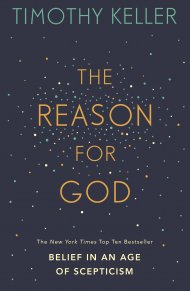
The Reason for God by Timothy Keller

The Reason for God: Belief in an age of scepticism,
Timothy Keller, Hodder & Stoughton, 2008, 293pp

OK, let's face it, Westbury isn't exactly Manhattan. No Wall Street, no skyscrapers, no yellow taxi cabs. And no New Yorkers either. Not that I know of, anyway. So, why read this book by Manhattan pastor, Tim Keller? After all, it's designed to give trendy New York postmodern types a reason to believe in God. Like that's going to help with my ministry and witness in this small Wiltshire town. Knowing that, why did I bother? 

To be honest, one reason for reading The Reason for God is that I've heard a fair bit about Tim Keller and his influential ministry and I wanted to get acquainted with his writings. I don't know whether this book is a good place to start, but there we are. I was going through a bit of an apologetics phase in my reading when I bought it last summer, so this one kind of fitted the bill for me personally. 

More substantially, you don't have to be a metropolitan sophisticate to voice some of the doubts and objections to the Christian faith that Keller attempts to deal with here. Almost every time I engage a non-believer in conversation one or more of of the issues discussed in Part I of this book comes to the surface. Here are some of the chapter headings, There Can't Be Just One True Religion, How Could a Good God Allow Suffering?, How Can a  Loving God Send People to Hell? etc. If you haven't heard questions like that lately, could be that you are lacking somewhat on the personal witness front.

Now, I'm not going to offer an in-depth chapter-by-chapter review here. Life's too short, as is the attention span of the average blog reader. I'll maybe say some stuff about Keller's general approach and make one or two more pointed and specific points and then wrap it up. Still with me?

Right then, the book begins as I say with Keller having a go at responding to six common objections to the Christian faith. I can't be bothered to list them all. The book has a "Click to LOOK INSIDE!" thing on Amazon. If you are that interested you can look 'em up for yourself. Anyway, beginning as he does, by allowing the sceptic to set the agenda, you might have thought that Keller is a card carrying evidentialist, who thinks he can argue people into the kingdom. Nah. You'd be wrong about that. The apologist is aware that the existence of God can't be proven in such a way that all nagging doubts are satisfied. Indeed, God has no need to prove himself to us. Even the most sceptical of sceptics know full well that he exists. The complex beauty of the universe and the voice of human conscience bear witness to the fact that God is there and he is not silent.

In terms of apologetic methodology, then Keller is a presuppositionalist rather than an evidentialist. That much becomes evident in Part II. His starting point is that only with faith in the living, triune God revealed in Holy Scripture can make sense of reality with all its wonder and absurdity. But that doesn't mean he is adverse to giving reasons for faith. The title of this book says it all. In fact it says too much, because Keller nowhere suggests that there is such a thing as THE reason for God, simply a number of telling clues that point to his existence. Nevertheless, the presuppositionalist still has to meet people where they are with all their doubts and questions and try to respond as best he can. As John Frame wrote in his entry on PRESUPPOSITIONAL APOLOGETICS in New Dictionary of Christian Apologetics (IVP, 2006. p. 575-578), 'presuppositionalists, like all apologists, have to answer objections." Keller attempts to do that in the opening six chapters. Also in Part II the preacher gives a reasoned defence of belief in God and the resurrection of Jesus from the dead.

Keller writes in an easy, conversational style. He eschews any head-on confrontation that would spook the easily frightened postmodern enquirer. This can sometimes lead him to soft peddle on areas where he might have taken a firmer stand, such as on creation and evolution, or gender roles in the Bible. His argument is, if people accept the basic truths of the Christian faith, then acceptance of these other issues will prove less problematic. Fair enough I suppose, but he might have done a little more to show that there is a good case to be made in favour of biblical creation and to explain what the Bible means by male headship in family and church life. 

Now for the pointed points bit. The thing that bothered me most about the book is Keller's treatment of hell and his handling of substitutionary atonement. He believes in both aright, but tends to over-psycologize these biblical doctrines. Hell is described as a 'prison of self-centredness' (p. 79). I'm sure he's right there, but more needed to be said about God's just wrath upon the wicked in hell. That said, Keller clearly shows that it is not inconsistent for a loving God to punish sinners in hell.

When it comes to the Cross, Keller turns to the the human act of forgiveness to help explain why God requires atonement for sin to be forgiven. Forgiveness on a human level involves costly suffering, and so it is with God. That works fine as a sermon illustration, but it lacks the necessary theological clout for developing a biblically rigorous account of substitutionary atonement. Don't get me wrong. Keller is no Steve Chalke, who infamously said that penal substitutionary atonement is tantamount to 'cosmic child abuse'. In fact, the writer distances himself from any such notion and is clear that Christ died bearing the penalty of our sin upon the cross. He helpfully quotes John Stott, "The essence of sin is we human beings substituting ourselves for God, while the essence of salvation is God substituting himself for us." (Author's italics. p. 195). But still, too much weight is placed on the human psychological model of forgiveness for my liking. 

But the book ends on a high note. There is a beautiful chapter on the Trinity, The Dance of God, followed by an epilogue pondering the question, Where Do We Go From Here. Often that's where we get to the 'sinners' prayer' bit. You know, 'pray this prayer and you'll get saved'. But Keller adopts a more thoughtful and challenging stance, urging his readers to examine their motives and count the cost of following Jesus. He also makes it plain that becoming a Christian involves committing to a church community. 

In The Reason for God, Keller has endeavoured to engage the culture with the gospel. This is only right. We have to try and understand the times, speak to people where they are and show how the good news of Jesus relates to them. Calvin wanted to be a culturally engaged preacher. He complained, "Many people would like me to preach with my eyes closed, not considering where I live, in  what locale, or in what time." (Cited in Engaging with Calvin, Edited by Mark D. Thompson, IVP, 2009, p. 15). The danger is that aspects of the gospel that are regarded as culturally untenable are downplayed in order to make the faith appealing. Keller has largely avoided this danger, but not altogether. His psychological rather than theological approach to the doctrines of hell and penal substitution are perhaps cases in point. Nevertheless, there is certainly enough here to make the sceptic think again about the Christian faith. For as Keller shows, it is the Christian message that best makes sense of the grandeur and grime of reality. Only the Christian gospel has an answer to the problem of sin. Christ was crucified in the place of sinners. He rose again from the dead. Jesus brings human beings into the perichoretic dance that is fellowship and communion with the triune God. The people of Westbury just as much as Manhattan need to hear of that. 

Monday, July 16, 2012

Graham Harrison on Engaging with Lloyd-Jones: Round Two


Here Harrison gets to grips with "1966 And All That". A taster:
[Jim] Packer was to complain that Lloyd-Jones’ 1966 call was a ‘campaign of words without plans.’ (p.272). This position was elaborated years later by Carl Trueman who complained that Lloyd-Jones’ vague alternative to Anglicanism was ‘a non-ecclesiastical, non-confessional disaster.’ (p.272). Presumably he means that the Doctor had not produced a Presbyterian blueprint on which the forthcoming seceders could structure their theology. This is interesting as it betrays either an ignorance or, more likely, a rejection of Lloyd-Jones’ often argued distinction between the primaries and secondaries in the pecking order of evangelical doctrinal priorities. It is well known that into the latter category he was willing to place matters of church government, Independency, Presbyterianism and even Episcopacy. Important as they were they simply did not compare with the fundamental issues that were and still are at stake in a situation which calls into question the very nature of the gospel.
I think Harrison hits the nail on the head. Simply because Lloyd-Jones did not propose the post-succession restructuring of Evangelicalism along Episcopal or Presbyterian lines does not mean that he he had no concern for ecclesiology. On the contrary, what he wanted was a union of Evangelical churches, although those churches might have had differing patterns of church government. 

Thursday, July 12, 2012

How to make friends and influence people


Can't see why, but reportedly, some of our black pudding eating friends from "The North" have taken offence at a couple of my recent posts (here and here). Eh-up, chuck, have I become your enemy by telling you the truth? 

Also, I may have given the impression that with my lurking phobia of anywhere much north of Bristol that I'm rapidly becoming a kind of Wessex-Welsh hermit. It'll be 'Wash and Stay In' rather than 'Wash and Go' shampoo for me from now on. 

Anyway, with this in mind, out of the blue I received an invitation to preach in Wolverhampton sometime in 2013. From a  reader of this blog. Good eh? Diss people and they offer you a gig. 

So, I want to put it on record that I think that California is a dump and I'd never want to go there. Ever. 

No harm in trying. 

Tuesday, July 10, 2012

Running the race


Apparently, a certain sporting event is due to take place in our country this July and August. Something to do with interlinked coloured rings, flaming torches, gold medals etc. I think its called the Olympic Games. Some of the events in the modern games, like running, jumping and throwing stuff would not have been out of place in the original Olympics. But I’m not sure that the Spartan and Athenian competitors of yesteryear went in for synchronised swimming. How would that have helped at Thermopylae or the Battle of Marathon?

The biggest event of the modern Olympiad is undoubtedly the men’s 100 metre race. Will Usain Bolt manage to nonchalantly chalk up another record breaking win? The Jamaican makes it seem so effortless, but he must put in hours of hard training to be the undisputed Fastest Man on Earth.

I can’t be sure about this, but I think that the apostle Paul was a bit of an athletics fan. His writings in the New Testament make reference wrestling and running. He admired the athletes’ single-minded dedication, Everyone who competes in the games goes into strict training. They do it to get a crown that will not last; but we do it to get a crown that will last forever.” (1 Corinthians 9:25).

Paul viewed himself as a spiritual athlete, who had been called to run the race of faith. Following Jesus demands self-denial and perseverance. The apostle kept on running to the end. He maintained a steady gaze on the prize that was set before him. Some of the last words he wrote reflect this,
I have fought the good fight, I have finished the race, I have kept the faith. Now there is in store for me the crown of righteousness, which the Lord, the righteous Judge, will award to me on that day —and not only to me, but also to all who have longed for his appearing. (2 Timothy 4:7-8).
Are you running the race? 

* For the July/August edition of News & Views, West Lavington parish magazine.