Pages

Showing posts with label Church. Show all posts

Thursday, July 01, 2021

Methodism: 'an alien place for conservative evangelicals'

As a boy I used to attend the local Wesleyan Methodist Chapel Sunday School. I believe the work has since closed, but when I was a kid a good number of children used to attend 'Aunty Betty's' Sunday School meetings. I can't recall much of what we were taught, but the lessons were Scripture-focussed. Bible stories mainly, rather than clear presentations of the gospel. I have no lingering impression of the Way of Salvation ever being explained to the children. The Christmas Nativity Play was an annual highlight, as parents would also attend. I have a vague recollection of being a shepherd; decked out in a dressing gown and with a tea towel on my head that was kept in place by one of those snake-buckle belts that were all the rage in the 1970s. 

So much for my youthful brush with Methodism. Todays' Methodist Church is a far cry from anything 'Aunty Betty' would have recognised, let alone John Wesley. Yesterday The Times newspaper reported Methodists to allow same-sex weddings. Members of the Methodist Conference voted on a motion that marriage could be defined as a union between "two people", rather than only between "one man and one woman". The vote to redefine marriage passed with 254 in favour to only 46 against. Methodists leaders expressed concern that a significant minority of 'traditionalists' might leave the grouping over this matter. Opponents of same-sex marriage were assured that there were safeguards in place that would allow them to opt out of performing same-sex weddings.  

One evangelical minister responded, "There's a real sense that the Church has become an increasingly alien place to be a conservative evangelical, and there is a sense that the Church is on a direction of travel which many over the course of this next year or two will probably feel unable to sustain". (See this report in Christian Today). A request that evangelicals be allowed to leave Methodism with their church buildings and assets was quite predictably rejected. Evangelicals are none the less weighing up their options.

Methodism was born of the 18th century Evangelical Revival. Methodism had two main branches, those who followed the Calvinistic teaching of George Whitefield and others who came under the influence of the Arminian John Wesley. The Methodist Church of today had its genesis in Wesleyan Methodism.  Whitefield and Wesley had their doctrinal disagreements, but they were united in the basic elements of evangelical belief. The historian David Bebbington has identified four defining characteristics of evangelicalism
  • Conversionism: the belief that lives need to be transformed through a “born-again” experience and a life long process of following Jesus
  • Activism: the expression and demonstration of the gospel in missionary and social reform efforts
  • Biblicism: a high regard for and obedience to the Bible as the ultimate authority
  • Crucicentrism: a stress on the sacrifice of Jesus Christ on the cross as making possible the redemption of humanity
The vote of the Methodist Conference to allow same-sex weddings didn't come from nowhere. In his Wesley and Men Who Followed (2003, Banner of Truth Trust), Iain H. Murray tells the story of how Methodism gradually drifted away from its evangelical origins. Certainly 'Biblicism' as defined by Bebbington is no longer the default position of the Methodist Church.  John Wesley was ready to be called a 'Bible bigot'. Many of today's Methodists would probably run a mile to get away from any such label. But that is nothing new. In 1965 Donald Soper was president of the Methodist Conference. Far from being a 'Man of One Book', he held that the Scriptures 'represent an incubus' and proposed a one-year ban on Bible reading. 

Around the same time Leslie Weatherhead argued that, 'William Temple was just bas inspired as Paul and T. S. Eliot more inspired than the Song of Solomon'. Weatherhead was especially opposed to the deity of Christ and his substitutionary atonement. Commenting on the text, 'Without the shedding of blood there is no forgiveness of sins' (Hebrews 9:22), the Methodist leader countered, 'In our modern view this is simply not true.' Old fashioned Methodists were left asking, 'Was John Wesley deceived? have our hymnwriters been deceived in their immortal songs? Was Saul of Tarsus deceived? Have we all been deceived?' (See Wesley and Men Who Followed, p. 257-258). 

In his 1966 address, Evangelical Unity: An Appeal. D. Martyn Lloyd-Jones asked, 'Are we content, as evangelicals, to go on being nothing but an evangelical wing of a church?' At least since the 1960's evangelicals have been a minority group within the Methodism. Liberal thinking that is happy to accommodate itself to contemporary opinion has prevailed. The overwhelming vote in favour of redefining marriage is merely a symptom of a deeper doctrinal and spiritual malaise. The leadership of the Methodist Church has long sold the pass when it comes to the authority of Scripture and basic gospel truths such as the deity of Christ and his penal substitutionary death. How can evangelicals continue stand shoulder to shoulder with leaders who have departed from the gospel? 

Yes, 'traditionalists' within Methodism may be granted an 'opt out' when it comes to performing same-sex weddings. At least for now. But wouldn't it be better for people who are committed to the gospel to opt out altogether from a church grouping that takes its lead from the spirit of the age, rather than the authority of the Holy Spirit speaking in the Scriptures? Separation will be costly, but separation need not mean isolation for evangelical Methodists. The call is for them to come out and come together with other gospel churches who stand for the truth in these days of compromise and confusion.  

Monday, February 25, 2019

Evangelical 'Momentum' within the Church of England

D. M. Lloyd-Jones, 1966
In an article in the Church Times, Angela Tilby issued a wake-up call to the Church of England. Apparently, 'Momentum' is infiltrating Anglicanism. Not that kind of 'Momentum'. She wasn't worried that the good old CofE was going to be taken over by an influx of Marxtist-Lenninists brandishing the Morning Star and singing 'Oh, Jeremy Corbyn', rather than 'All Things Bright and Beautiful'. Maybe she wouldn't have minded that too much. 

No, the worrying thing is that people who actually believe the Bible and possibly even a good chunk of the 39 Articles of Religion are in danger of  imposing themselves upon the Church of England. Whatever next? As Tilby says, "It just seems wrong to insist that only those who claim to have a personal relationship with Jesus are real Christians, and that their priority should be about converting others." Crazy, like. You wouldn't find the great theologians of the Church spouting such nonsense; Athanasius, Augustine, and such. Let alone John Calvin and the Reformer Bishops of the Church of England; Latimer and Ridley. Pesky Evangelicals. 

It may even be that, "what was once a well-tolerated but distinctive ideology of faith has become the accepted norm." It was no doubt very kind of non-Evangelicals to be so tolerant towards people who preach the gospel, but heaven forfend that their 'ideology' should become the norm. Evangelicals should know their place and content themselves with being a 'wing' of the Church alongside the other wings, rather than trying to take the place over. It's not as if the other 'wings' would ever try and do that. 

The thought of an Evangelical 'Momentum' sweeping through the CofE, making it do evangelism and stuff, is giving Angela Tilby an anxiety attack. Her response illustrates rather perfectly the problem that faces Evangelical Anglicans. They must stay in their Evangelical box, keep paying into the coffers and stop trying to remake the Church in their own image. But can Evangelicals content themselves with being a well tolerated 'wing' of a Church that has more 'wings' than KFC has of the chicken variety? The Liberal 'wing', Anglo-Catholic, Nondescript Mainstream, LGBT+ inclusive, and so on. 

The thing that puts the Evangel into Evangelicals is the gospel of salvation by faith alone, through grace alone in Christ alone, to the glory of God alone. The preaching of this message is what constitutes the church as "a congregation of faithful men, in the which the pure Word of God is preached, and the Sacraments be duly ministered according to Christ's ordinance"  (Article XIX). Those who do not preach this message or sit under its proclamation are not the church in any meaningful sense of the word. Evangelicals who remain in theologically mixed denominations like the CofE must therefore either work to reform them, or leave. 

Angela Tilby laments, "Nowhere in today’s report is there any theological reflection on the nature of the current church decline." But any theological reflection must begin with God, take his self-revelation in Holy Scripture seriously and deal with the questions, 'What is a Christian?' and 'What is the Church?'. Michael Sadgrove Tweeted an appreciation of Tilby's article in which he said, '⁩ is not a network of gathered evangelising churches.' But that's exactly the problem. The church of the New Testament was a network of gathered evangelising churches. Read Acts.

Tilby casts the aspersion that Evangelicals are only interested in 'saving souls', and have little time for social justice. Who does she think led the campaign to abolish slavery, or agitated for better working conditions for ordinary men and women? The tradition of William Wilberforce and Lord Shaftesbury lives on among contemporary Evangelicals who work in disadvantaged communities. They run debt counselling services, organise food banks, serve as school governors, and help in countless other ways.

That said, Evangelicals might have something to learn from the Tilby's piece. At least in her perception they are theological lightweights and ecclesiological pragmatists. They talk in business-speak, “envision, equip, and enable . . .”. This is unfortunate. Evangelical Anglicanism has produced some very fine theologians such as J. I Packer and John Stott. Packer and Stott sought to root Evangelicalism in the great theological tradition of Puritanism, the Reformers and the Church Fathers. Alpha Course Evangelicals would do well to return to the 'Old Paths' to add theological weight to the movement. Yet even here, Packer and Stott were more comfortable than they should have been with Evangelicalism being regarded as a  'well-tolerated ideology' within the broader Anglican set-up. 

Serious questions need to be faced by Evangelicals within the theologically mixed denominations, 
Are we content, as evangelicals, to go on being nothing but an evangelical wing, making our protests, exerting our influence, hoping that we can gradually infiltrate so that others may come to see the wrongness of their ideas and the correctness of ours? Are we content to go on doing that? (Knowing the Times, D. M. Lloyd-Jones, Banner of Truth Trust, 1989, p. 251). 
Martyn Lloyd-Jones issued that challenge in 1966 in his address under the auspices of the Evangelical Alliance, Evangelical Unity: An Appeal. What the preacher said still resonates today. If the gospel defines what it means to be a Christian and what it means to be the church, the church must be evangelical, or it is no church at all. On that basis, we cannot be content with being an 'evangelical wing'. Why remain in alliance with people who deny that being a Christian means having a personal relationship with Jesus? 

Angela Tilby clearly believes that Evangelicals are the problem in the CofE. This depite the fact that Evangelical churches tend to be the ones that are growing in a context of general decline. She in effect says to them (echoing the words of king Ahab to the prophet Elijah), "Is it you, troubler of Israel?" To which Elijah famously replied, "I have not troubled Israel, but you...because you have abandoned the commandments of the Lord." (1 Kings 18:17-18). Quite. 

Lloyd-Jones called upon Evangelicals to come together to bear united witness to the gospel. It is clear that their presence in the CofE is not welcome by Angela Tilby and other leading figures in the CofE. To them you are little better than what 'Momentum' ideological extremists are to the Labour Party. Why stay where you are not welcome? Come out and come together with all who proclaim the gospel of Jesus. 

Friday, September 23, 2016

Biblical Church Revitalization: Solutions for Dying & Divided Churches by Brian Croft

Christian Focus, 2016, 133pp

There has been a lot of emphasis on church planting in recent years, and rightly so. Where villages, towns, or areas of cities are without a gospel church, planting one there is a vital means of discipling believers in the locality and reaching the community for Christ.

But what of places where there already is a gospel church, but the work is in danger of fizzling out? That is where church revitalisation comes in. Which, I would venture to suggest in an urgent priority for many churches in the UK at this time.

Churches may be in need of revitalisation for a number of reasons. Brian Croft's book is directed at helping pastors turn around churches that have become badly dysfunctional in the way they are run, and as a result have become spiritually stunted and inward looking.

Croft was called to  Southern Baptist Church in the USA that had a reputation for chewing up and spitting out pastor after pastor. By the grace of God the situation was transformed and the church is now in a much more healthy place.

The writer does not offer a 'silver bullet' formula for breathing new life into moribund churches. He acknowledges that ultimately only the power of God can do that. But the Lord is pleased to use the means laid down in the Scriptures. Pastors involved in church revitalisation need to be men who are dedicated to God-dependent prayer and the authoritative preaching of the Word. They must be willing to give loving pastoral care to believers who may have been left bruised and broken by their involvement in a difficult church. In some situations biblical patterns of authority and leadership may need to be recovered, such as the plurality of elders who share in the pastoral oversight of the flock. Somewhat confusingly, but for reasons he explains, Croft speaks of the 'plurality of pastors'. 

The book offers a healthy dose of realism. Some of the examples Croft gives of just how bad things were in the early days of his pastorate are hair raising. Plots were hatched to oust him. Some church members were bitterly critical of his ministry.  But as he prayerfully persevered, things began to change. 

Croft emphasises that men involved in church revitalisation work don't need to be super-pastors. The Lord is pleased to use broken people to turn around broken churches. But pastors in difficult situations are going to need spiritual resilience, grit and determination if they are going to stay around for long enough to see the Lord work to turn the church around. 

The writer acknowledges that mistakes were made along the way and patience was needed on both sides. I'm not sure that he acted wisely when he saw off an opponent with a threat to block his future ministry prospects unless he backed down from causing trouble in a members' meeting. To my mind, a man with such an ungracious attitude was an unsuitable candidate for church ministry full stop. The person in question should have been blocked from ministry as a matter of principle, unless a change of heart was in evidence. It's a reminder that no pastor gets it right every time. Especially when fighting on all fronts it isn't always easy to pick our battles. Thankfully, it it Christ's church, not ours and he is able to overrule our blunders.  

Aspiring pastors considering a call to a 'challenging' church will be able to do so with their eyes open having read this book. They will find encouragement here to look to Lord in their struggles, knowing that his strength is made perfect in weakness. That said, no book can fully prepare a man for the sometimes harsh reality of the ministry. In a way all pastoral ministry is church revitalisation work, and brings with it suffering and trials, as well as great joys. 

This volume on church revitalisation will not provide answer for every ailing fellowship. Some may be dying because they have become inward looking and out of touch with their local communities. Others may be making every endevour to reach out, but, as yet have seen little discernible fruit. Croft does not address those kinds of scenarios. 

But as this book shows, difficult churches should not simply be written off. Dry bones can live by power of God's Word and Spirit.

The text could have done with a bit of de-Americanisation for the UK market. E.g. I was surprised to learn that Southern Baptist Churches are unique in having a congregational form of church government. That will come as news to FIEC and Grace Baptist Churches in the UK, to say no more.

None the less... 

A good one for men who are training for pastoral ministry.

An encouragement to brave souls battling it out to revitalise a dying and divided church. 

*Reviewed for Evangelical Times

Sunday, July 10, 2016

Growing Smaller Churches

We're looking forward to hosting a Grace Baptist Partnership 'Growing Smaller Churches' Regional Day Conference on Thursday 14 July at Providence Baptist Chapel.

Programme for the day:

11.00-11.50  Introduction
                   Nigel Hoad - ‘Evangelism in a smaller church’
11.50-12.10  Break
12.10-1.00    Barry King  - ‘Leadership in a smaller church’
1.00-2.00      Lunch
2.00-2.50     Jim Sayers - ‘Mission and the smaller church’
2.50-3.10     Break
3.10-4.00     Q&A and Close

See here for more info and to book a place. 

Tuesday, September 29, 2015

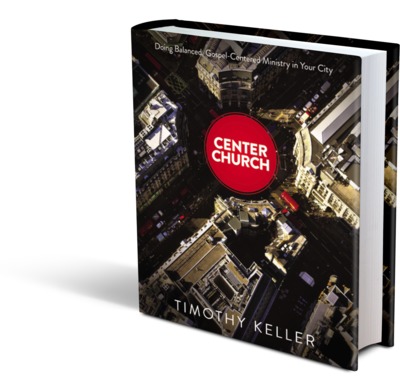
Center Church by Timothy Keller

Center Church: Doing Balanced, Gospel-Centered Ministry in your City,
by Timothy Keller, Zondervan, Kindle Edition

You've got your fundies on the one hand; right on many things, but also a bit repulsive. Not being very into engaging the culture and that. And then you've got your liberals on the other; wrong on most things, but also quite nice. They don't so much want to engage the culture, as have it tell the church what to believe about stuff. Someone's got to. Between these two extremes is Keller's 'Church of the Third Way', or 'Center Church' as he persists in calling it. Look, I know it's 'Centre', not 'Center', but I'm contextualising my spelling as it's an American book I'm reviewing and spelling isn't their strong point across The Pond. OK?

Anyhow, a 'Center Church' is thoroughly evangelical when it comes to believing and proclaiming the gospel, but is also culturally engaged and socially active. The 'Center Church' vision is especially apt for big cities like New York, where Keller ministers, but other global cities such as London, Paris, or Mexico City would fit the bill. I serve town and village churches. There isn't much resemblance between New York and Westbury. or West Lavngton and Manhattan. We don't have sky scrapers, yellow taxis, or Woody Allen, and they don't have a massive White Horse carved into a hillside. As far as I know, anyway. Despite these drawbacks, there is enough in Keller's work to provide food for thought for those who, like me, are involved in small town-based ministries.

The book begins with a clear, compelling and unambiguous statement of the Gospel that the church has been called to perform and proclaim. Only the gospel can tear down our idols and reconnect us with the one true and living God who is Father, Son and Holy Spirit. Keller is careful to distance himself from those who are so concerned to promote social activism that they neglect or even reject evangelism and disciple making. Above all else church exists to fulfill the Great Commission. That is done as the 'scattered church' goes out into the world, bearing witness to the gospel in everyday life. But Keller also emphasises the importance of gospel preaching in the context of the 'gathered church'. Old Testament revelation held out the expectation that the nations would come to know the Lord as Israel declared his praises. In the New Testament we have indications that non-believers were present in church meetings and that the Word had a saving impact on their lives, 1 Corinthians 14:24-25.

Keller has a lot to say on engaging the culture. While the gospel doesn't change, that essential message needs to be communicated in culturally appropriate ways. We see glimpses of that in the New Testament. Paul's approach in Acts 13 was quite different to the way he went about things in Acts 17. In the USA and UK the culture is increasingly 'post-Christian' and the church cannot simply assume that non-believers are familiar with the basic elements of the Christian faith. 'Defeater beliefs' that stand in the way of faith need to be challenged in a winsome and persuasive way. Do we preachers work hard enough at relating the eternal Word to the concerns and issues of our own day and age? As we marshal arguments for the gospel in our preaching will will not only speak to any non-Christians in our congregations, we will also help our people to be more effective in giving a reason for their hope in personal witness.

We preachers are often quite negative when it comes to speaking about the culture. It's all, 'things are getting worse and worse. Have nothing to do with it'. I've even heard preachers say with some pride, 'We don't compromise by trying to be contemporary.' But that's just silly. Being a bit quaint and old fashioned is not a litmus test of faithfulness to the gospel.  Keller's approach is helpful here. Rather than blanket negativity, he suggests that in any culture there are aspects that the gospel confirms, completes and contradicts.

The gospel confirms the unique value of each individual human being. Our culture by and large (under the influence of Christian teaching no doubt) agrees with that. Hence legislation that outlaws discrimination on the grounds of gender, race or disability. In our culture people are questing for meaning and purpose in life. Some do so through pleasure seeking, others by steadfastly pursuing their careers. But it's only the gospel that can provide complete fulfillment and satisfaction by reconciling us to God. Sadly there are things in our culture that the gospel contradicts. Abortion, for example. And when that is the case, the task of the church is to announce God's shuddering, "No!" and call for repentance.

But by God's 'common grace' the culture isn't all bad and Christians are called to engage with it through artistic pursuits, in the workplace, and by getting involved in their local communities. If all preachers ever do is denounce the culture, that will lead to Christians disengaging from life in the world, rather than seeking to be salt and light in it. The church should help believers understand what it means to put their faith into practice in the whole of their lives. Preachers should apply what the Bible says not only to the life of the gathered church, but every area of life. It's only right that churches and individual Christians should seek to build bridges to their local communities by running parent and toddler groups, contributing to food banks, supporting the sick and troubled, getting involved as school governors, and so on. It's not a matter of either evangelism, or seeking the well-being of the community, but gospel faith working by love.

I reflect on what Keller has to say on the interplay between faith and culture as it touches on the 'Two Kingdoms' view in another post.

The writer has some helpful things to say on every member ministry and what that looks like in practice for both the 'gathered church ' and 'scattered church', or 'organisational church' and 'organic church', as he puts it. His preferred method of reaching cities for Christ is church planting. I'm fully behind church planting ventures. As a fellowship we support the Grace Baptist Partnership. But such strategy isn't necessarily viable for small town churches, let alone village works. In those cases it's more a matter of revitalising existing local churches and reconnecting them with their local communities.

Keller's constant attempt to grab the middle ground can grate a little, You can grow tired of, 'On the one hand this extreme, and on the other that, but the Centre Church will position itself slap bang in the middle'. Some of the stuff he has to say is more relevant to a big city church with an arty, white collar membership. That isn't my lot. But there is thought provoking stuff here that caused me to reflect on my own practice and that of the churches I serve. Two big questions: How effective are we engaging the culture with the gospel in ways that confirm, complete and contradict it as appropriate? And how can we ensure that the 'organisational church' with its leadership structures, meetings and activities is equipping the 'organic church' to serve and bear witness to Jesus in today's world?

Thursday, April 10, 2014

David Cameron on Jesus and the Big Society


Tony Blair's Spin Doctor-in-Chief, Alistair Campbell famously batted away a journalist's question concerning the faith of the former Prime Minister by saying, "We don't do God." His curt response was taken by many commentators as a symptom of our secular age, where faith and public life just don't mix. Well, the current Prime Minister has taken it upon himself to mix them up and "do God" in a big way. In a recent speech to Christian leaders in Downing Street David Cameron claimed that, “Jesus invented the big society 2,000 years ago. I just want to see more of it.” (See here and here)He went on to use the language of "evangelism" in relation to the activities of the State and spoke of his enjoyment of Church-going, which gives him "a little bit of peace and hopefully a little bit of guidance.” Fair enough, I suppose. 

Being a Christian and that. you might expect that I'd be inclined to applaud  the PM's remarks. Not quite. Call me curmudgeonly old contratian if you like, but you're not going to get anything more enthusiastic from me than the sound of one hand clapping. Why so churlish? For starters, I'm inclined to be a tad cynical concerning Cameron's paean to "Christian Britain". Might it have something to do with wooing disillusioned Christian Tory voters back to the fold? Could be. After all, it is widely reported that many are shifting their allegiance to Ukip in the wake of the introduction of gay marriage by Cameron's government. Besides, what on earth did the PM mean by, “Jesus invented the big society 2,000 years ago. I just want to see more of it”? Was he conflating the 'big society' with the kingdom of God, and was he proposing to ensure that there will be 'more of it' by harnessing the power of the State? Christendom redux. Who does Cameron think he is, Charlemagne the Great?

But my main beef is with David Cameron using the language of evangelism in relation to the work of government. He is quoted as saying, "Of course I see my number one role and responsibility as sorting out the economy and turning the economy round... Aside from that there are some really big things that this government is doing which are about that improving state of the world and evangelism.” Uh? Since when has it been the business of government to do evangelism? Evangelism in the New Testament sense of the word means to herald the good news of Christ crucified and risen for the salvation of the world. Correct me if I'm wrong, but isn't that the mission of the Church rather than the State? The State can and should use it's power to free up the Church to get on with its task. Paul encouraged Christians to pray for rulers to that end, 1 Timothy 2:1-7. What Cameron had to say on using overseas aid to help alleviate the plight of persecuted Christians should certainly be welcomed in that light. That's why one hand is clapping. But to speak of the government doing evangelism is another thing altogether. 

Church and State have quite different roles and a clear distinction should be made between the two institutions. The State has been ordained by God to restrain evil and promote the wellbeing of society (Romans 13:1-7). The Church has been called to carry out her Great Commission from the Lord Jesus to preach the gospel and make disciples for Christ from all peoples (Matthew 28:18-20). But the Church should not expect or desire that the State will proclaim the gospel. Fix the economy. Reform the Heath Service. Pass better laws. Yes to all those things. But evangelism? No. The cause of the gospel is always harmed when harnessed to the power of the State. Look what happened when Missionaries cosied up to Empire Builders in the Victorian era. We need to remember the Church fulfills her Christ-ordained task, 'Not by might, nor by power, but by my Spirit says the Lord of hosts'. (Zechariah 4:6). 

That is not to argue for a secular State where faith-based values are denied a voice in the public square. Such secularism is not neutrality, but the privileging of atheism. Believers are called to 'seek the peace of the city' (Jeremiah 29:7) by bringing God's word to bear on the issues of the day and living as whole life disciples of Jesus. Rather than having a 'Charlemagne complex' maybe that's what Cameron meant by "Jesus invented the big society". Jesus called his followers to salt and light in the world, Matthew 5:13-16. Inspired by their faith believers have often worked for the good of their fellow citizens. The Good Samaritan and all that. Think of Wilberforce and Shaftesbury in the world of politics, Christians helping their communities by setting up food banks, serving as school governors, or what have you. If Cameron wants to carve out a bigger role for faith-based organisations in Britain, that is all to the good. But that is not to say that we wish the State to join us in doing the work of evangelism. Christians having a beneficial effect on society is not the gospel. It is a consequence of the gospel that calls believers to a life of love and service.

Still, the 'big society' that Jesus 'invented' was not a Christianised State, but the people of God gathered out of all nations, redeemed by his blood and transformed by his resurrection power. No political party may lay claim to God's 'big society', not Conservative, Labour, Lib Dem or Ukip. It's way too big for that,
I looked, and behold, a great multitude that no one could number, from every nation, from all tribes and peoples and languages, standing before the throne and before the Lamb, clothed in white robes, with palm branches in their hands, and crying out with a loud voice, “Salvation belongs to our God who sits on the throne, and to the Lamb!” (Revelation 7:9-10) 

Wednesday, November 28, 2012

Procrastination without hurrying for any

I realise that the women bishops thing was last week's news and that a week is quite a long time in the fast moving world of blog-land. But it's taken until today for me to muster the motivation to write something about the affair. Even now I can hardly be bothered. I mean, I'm not an Anglican and I don't believe in diocesan bishops, whether male or female. Bishops or overseers are simply elders of local congregations. They are not mitre wearing, crook wielding princes of the church. And according to the Bible, elders are male and that's that. It's not really my concern as a Reformed Baptist that the ordination of women bishops failed to attract enough support in each of the Church of England's electoral collages. 

So, why am I writing about this now? It's because this issue has highlighted the anomaly of us having an Established Church. In the wake of the no vote, or at least the not enough yeses vote, outraged MPs have weighed in, demanding that the CofE gets its house in order and fast track the ordination of women bishops. Some mutter darkly that the State Church should not be exempt from equality legislation. David Cameron has demanded that the Church of England, "get with the programme", whatever that means. The fact that half of the opponents to women bishops were women rather than crusty old male chauvinists (see here) doesn't seem to figure. 

The trouble is that as the Established Church, with bishops in the House of Lords, the Church of England is vulnerable to such Erastian pressure. Erastianism is the view that the Church is in effect the religious arm of the State and should jolly well do what it's told by its political masters. Henry VIII was an Erastian. So, it seems is David Cameron, although in a much nicer way. After all, not even the Tories are the 'nasty party' any more. 

I'm a Free Church man. I don't believe in the establishment principle. Church and State are distinct institutions, with very different roles and functions. What God hath separated man shall not join together. Robert Browneseceded from the Church of England in the 1580's over just this point. The Separatist wrote an influential book Reformation Without Tarrying for Any, arguing that the church should not wait for permission from the State to instigate reformation according to the Word of God. The treatise, which outraged the authorities, was in effect his death warrant. But by the same token, the church should not give in to pressure from the State to make changes to its biblically grounded teaching and practice. 

The fact that the Church of England is the Established Church complicates matters. If the Church has a say in the State, then the State will demand a say on what happens in the Church. But when it comes to making a decision on women bishops, I suggest that Anglican leaders man-up and resist the pressure from politicos rush things through. Procrastination without hurrying for any, if you like. That should give some time for an accommodation to be reached with opponents of the measure. However, there is one thing that cannot be delayed and that is the disestablishment of the Church of England that will free it from from political interference in the first place.

What Evangelicals are doing in the middle of this unholy muddle, though I can't quite understand. 

Monday, September 03, 2012

Only connect!


John Donne the seventeenth century preacher/poet famously wrote, “No man is an island entire of himself.” In a culture that prizes the rights of the individual over our responsibility to the community, Donne’s words need to be heard once more. Christians are not immune to the individualistic spirit of the age. We can see ourselves as consumers rather than servants. As such we are more interested in what we may get out of church life than what we might contribute by serving the Lord among his people. This attitude encourages a loose connection to the local church, or perhaps no meaningful connection at all. We have forgotten that the church of the New Testament was a connected church.

Connected to God in Christ

God unites us to Christ by his Spirit in order to bring the believer into fellowship and communion with the Trinity. Father, Son and Holy Spirit are one in divine being and glory. The three Persons dwell within each other in loving communicative action. God’s triune life is the model and dynamic for church life.[1]

This is the most important connection – union with God in Christ. Individuals need to be united to Christ and receive all the blessings of salvation in him. But on being personally united to Christ, we also become members of his body, the church, of which Jesus is head. Coming to him we become living stones in the temple in which God dwells by his Spirit. The Good Shepherd calls his sheep by name and gathers them into his flock. Apart from being connected to him we can do nothing.[2]

Connected to each other in local churches

We do not loose our personal identity when we are united to Christ and his people, but our identity as Christians is realised in the context of church life. Living stones find their niche in the temple. Body parts belong in a body, sheep in a flock.

All true Christians are joined to the invisible and universal church the moment they believe. But the Jesus has ordained that the ‘one holy catholic and apostolic church’ should find expression in gatherings of believers in particular localities[3]. Those who were converted and baptised on the Day of Pentecost were added to the church at Jerusalem[4].

By and large, the New Testament letters are not addressed to individuals, but to churches. They were written to be read to the gathered church[5]. Paul had a deep and abiding concern for local congregations. He wrote to establish churches in the gospel and warn against false teaching. He wanted the people of God to be united in their love for one another and in their witness to the world.

The means of grace are deployed in the context of the local church. The Word is preached and read, corporate prayer is offered to God, hymns and psalms are sung in praise of the Lord's name. Baptism and the Lord's Supper are administered. God has ordained all these things to enable his people to grow in grace and equip us for his service. With the wonders of modern technology people can stay at home and listen to sermons on the internet rather than go to church. But to take the Lord’s Supper, you have to meet with the gathered people of God to eat bread and drink wine together as Jesus commanded. It is an expression of our connectedness in the body of Christ, that “we though many are one bread and one body” (1 Corinthians 10:17). You can't download the Lord's Supper.

Connected to other local churches

With the publication of Engaging with Martyn Lloyd-Jones[6], fresh attention is being given to ‘the Doctor’s' call for Evangelical unity in 1966. Most tend to focus on the preacher’s controversial call for Evangelicals to come out of the theologically mixed denominations, but the burden of his 1966 address was not ‘come out’, but ‘come together’. He wanted Evangelicals to “stand together as churches, constantly together, working together, doing everything together, bearing our witness together.”[7] Many have heeded the call to separate, but have we realised Lloyd-Jones’ vision of local church-based Evangelical unity?

Readers of this newspaper will largely belong to fellowships that are not in Churches Together. Rightly so. The gospel must define the extent and limits of inter-church fellowship. But that doesn’t mean that instead we should subscribe to an isolationist Churches Not Together mentality. On biblical grounds I believe in the independency of each local church. But I don’t think that independency, properly understood precludes a measure of interdependency and connectedness[8]. Read Paul’s greeting to the church at Rome in Romans 16[9].

Many of our congregations will belong to a Grace Baptist fellowship of churches, the FIEC, an Evangelical Presbyterian grouping, or Affinity. That’s all well and good. But unless we work hard at fostering links between gospel churches in our locality, belonging to one or more of these groups will mean little more than a snazzy motif on our church notice boards.

In West Wiltshire a number of FIEC and Grace Baptist churches have been working together in holding open air preaching meetings in town centres. Within our larger FIEC area we have created three small clusters of churches to facilitate deeper fellowship between local congregations. It is still early days, but we have already seen some encouraging developments.  We want to stand together, pray together and work together for the advance of the gospel in our locality. 

Connected to the community

Jesus has charged each local congregation to play its part in fulfilling the Great Commission[10]. We cannot make disciples by keeping ourselves at a safe distance from non-Christians. We must go to where the people are and proclaim the word of life to them. Through literature distribution, door-to-door work, open air witness, children’s meetings, Christianity Explored courses and in other ways too let us endeavour to reach the lost with the good news of Jesus.

Beyond the organised activities of the church, every Christian is to be a witness to Christ in their daily lives. Believers can get involved in their communities by visiting residential homes for older folks, by becoming school governors, or simply by offering a helping hand to those in need.

When non-Christians come along to our meetings, let us make sure that their spiritual blindness is the only barrier to them understanding the gospel. We have been called to be the church in 21st century. That fact should be reflected in the Bible translation we use, the prayers we offer, the sermons we preach and the hymns we sing. By all means let us sing older hymns. They bear witness to the fact that the church is not a ‘here today, gone tomorrow’ fad. But we should not neglect the best contemporary hymns that show that our God is the God of today as well as yesterday.

Our churches must make every effort to connect with the local community for the gospel’s sake.

Connected to the nation

The New Testament teaches that Church and State are separate institutions with distinct roles and goals. That is one reason why the Free Churches do not believe in a national Established Church such as the Church of England. But that does not mean that the Church has no connection to the nation, or has no concern for the wellbeing of society. The church not to meddle in party politics, but part of making disciples is teaching Christians to be good citizens[11]. Believers like William Wilberforce and Lord Shaftesbury and Elizabeth Fry had a powerful impact on our national life. The clear stand of Christians on the issue of ‘Gay Marriage’ has made some government ministers openly question whether changing the law should be a priority.

Connected to the world

John Wesley famously said, “I look upon all the world as my parish”. The vision of the local church is to be wider than the neighbourhood, or even the nation. Our God-given task is to reach all peoples for Christ[12]. No single fellowship is large enough to do that all on its own. But our churches should have a lively, prayerful and financially generous interest in the cause of world mission. Mission societies don’t exist to do mission for the churches, but they enable local churches to pool their resources for the evangelisation of the world. Concern for mission can be fostered by devoting the midweek Prayer Meeting to prayer for the worldwide spread of the gospel on a regular basis. Operation World is a helpful resource for encouraging prayer for world mission. Preachers can incorporate the intercession for the nation that is featured on the Lord’s Day into their prayers. Let us pray, give, send and go that God’s salvation may be known among all nations.

Only connect!  

The New Testament church was a connected church. In the words of E. M. Forster’s novel, Howards End, “Only connect! Live in fragments no longer.” How connected are you?

* An edited version of this article appears in September's Evangelical Times


[1] See John 17:20-22, also 1 Corinthians 12:4-6 and Ephesians 4:4-6.
[2] Ephesians 1:22-23, 4:15-16, 1 Peter 2:4-5, Ephesians 2:19-22, John 10:11, 16, 27, John 15:1-8.
[3] 1 Corinthians 1:2, 1 Thessalonians 1:1 see also Romans 1:7 and Phippians 1:1.
[4] Acts 2:41.
[5] 1 Thessalonians 5:27, Colossians 4:16.
[6] Engaging with Martyn Lloyd-Jones, Edited by Andrew Atherstone and David Ceri Jones, IVP/Apollos, 2001.
[7] Knowing the Times, D. M. Lloyd-Jones, Banner of Truth Trust, 1989, p. 256.
[8] The Savoy Declaration of the Independents and the Second London Baptist Confession of Faith reject the Presbyterian connexion-based model of church life found in the Westminster Confession of Faith. But both documents have sections on the communion of the saints that finds expression beyond the confines of the local church. See Chapter 27 of the Second London Baptist Confession of Faith, 1689.
[9] Also note the close fellowship between the churches in Colosse, Laodicea and Hierapolis, Colossians 4:12-13.  
[10] Matthew 28:18-20.
[11] Jeremiah  29:7, Matthew 5:13-16, Romans 13:1-7, 1 Timothy 2:1-4.
[12] Genesis 12:3, Isaiah 49:6, Luke 24:46-47, Revelation 7:9-10. 

Monday, October 31, 2011

So, the church is for what, exactly?


What's happening? Serious minded media types are giving attention to the true mission of the church. Usually it's like 'the church is so out of date' or 'the church is pointless' or 'the church is evil', but suddenly the church has an important task. It is actually for something. Nice, eh? Guardian editor Alan Rusbridger said so, here and Hugo Rifkind of The Times said so here (sadly you'll need to be a Times subscriber to follow the last link). Apparently, the mission of the church is to stick up for 'pious idealistic impracticalities'. At least according to Rifkind, a self-confessed 'contented agnostic'. 

You see, the argument runs,  if Jesus was around today (let's forget for a moment that according to the witness of Scripture he rose from the dead and therefore is still 'around today'), he would be on the side of the anti-capitalist protesters camped outside St. Paul's. That's what the church is for. I mean, didn't Jesus overthrow the tables of the money changers in the temple? They were the unacceptable face of first century capitalism and he sure showed them what for. And didn't Jesus say stuff like, "you cannot serve God and mammon"? So, What Would Jesus Do? He'd protest against the City fat cats with their obscene bonuses. He'd pitch his tent outside of St. Paul's with the rest of them - and probably spend the night there too.

I defend the right right to protest, but  since when did that include the right to set up camp in public places? Is camping now a radical antiestablishment act? That's news to me, and I was a boy Scout. Now, let's be honest and admit that the church authorities at St. Paul's haven't exactly covered themselves in glory in their response to the militants from Millets. It was silly to shut the doors of the cathedral for the first time since the Blitz for 'health and safety' reasons. Were they afraid that a worshipper, or worse, a paying tourist might trip over a guy rope or something? What would the real St Paul have thought of that? Health and safety. Have the assembled clergy never read 2 Corinthians 11, where Paul lists the dangers he faced in his apostolic ministry? He was flogged, mobbed, shipwrecked and stoned. Stumbling over a tent isn't included in his inventory of sufferings. Hardly being fed to the lions is it? The trouble is that if the ecclesiastics get tough and call in the cops to forcibly remove the tented agitants, that doesn't seem like a Christian thing to do. Whatever happened to "love thy neighbour" etc?

But in reality this whole debacle is a distraction from the main task of the church. As I noted earlier, Jesus' cleansing of the temple is often cited in favour of the anti-capitalist demonstrators. That is misguided. When Jesus drove the money changers from the temple courts, it wasn't because he was a kindly proto-Keynsian rather than a hard nosed lassiez faire capitalist. His motivation was rather different. The money changers were doing an OK thing in the wrong place. You see, they had set up their Bureau de Changes in the Court of the Gentiles. An area of the temple that was meant for non-Jews to come and worship the God of Israel had been turned into a busy shopping mall. That is what outraged Jesus. Look at Mark 11:15-19, especially Mark  11:17, where Jesus quotes a combination Isaiah 56:7 and Jeremiah 7:11.

The temple was meant to act as a magnet for the nations, to draw all people to call upon the name of Yahweh. Note Solomon's prayer at the dedication of the original temple, 1 Kings 8:41-43. The prophets looked forward to the day when the  nations would stream to Jerusalem to seek the Lord, Zechariah 8:20-23. What Jesus encountered in the temple was a travesty of this hope. Indeed in his judgement the temple and its ministry has become so irredeemably corrupt that it would be swept into oblivion, Mark 13:1-2. That's what happened in 70AD when it was destroyed by the Romans.

The new temple is the people of God, united to Christ and filled with the Holy Spirit, Ephesians 2:19-22, 1 Peter 2:4-5, 9-10. The task of the church is to proclaim the good news of salvation to the nations, Luke 24:46-49. The worldwide church of God  is not a commercial venture. It's calling is to be a house of prayer for all peoples. Admittedly St Paul's with its £14.50 entrance fee and gift shop probably isn't the best example of this. But still, the main mission of the church is not to act as a cheerleader for a band of well meaning protesters with their ill-defined anti-capitalist agenda. The church is not a political or economic pressure group. Its God-given purpose is to make disciples of Jesus, Matthew 28:18-20. 

Am I saying that the church doesn't give a fig about social justice? Hardly. There is something deeply wrong with our economic system when hedge funds are allowed to asset strip old folks' homes. Amos had a thing or two to say about the rich plundering the poor, (Amos 2:6-8), not to mention James, (James 5:1-6). Christians like William Wilberforce and Lord Shaftesbury worked tirelessly on behalf of the poor and the oppressed. They were not concerned with 'pious idealistic impracticalities', but made a real difference to the lives of ill used and vulnerable people. Christians are doing the same today.

The key task of the church is to preach the good news of Jesus Christ to all people and demonstrate the reality of Christian love by offering practical help to those in need. That's what the church is for. I'm afraid that championing the cause of anti-capitalist campers has very little to do with it. 

Monday, July 26, 2010

The State has no right to act as if it were the head of the Church (2)

How should we configure the relationship between the church as subject to the Lordship of Christ and the State? Both are God-ordained institutions, but they have different roles. The task of the Church is to preach the gospel to the world and disciple believers. The function of the State is to govern the nation, upholding the rule of law using force if necessary. Here in the UK we are in the biblically anomalous position of having an Established Church. The Church of England is in effect the religious arm of the State. The Prime Minister appoints senior Anglican clergy including the Archbishop of Canterbury and Church of England Bishops sit in the House of Lords. As Free Church people we might like to see that position changed and the Church of England disestablished. But disestablishment does not mean that Church has nothing to say to the State. Hardline secularists might insist that faith-based values have no place in public life. But if Christ is Lord at all, he is Lord of all. As Abraham Kuyper famously said,

there is not one square inch in the whole domain of our human existence over which Christ, who is sovereign over all does not cry out, ‘Mine!’.
Now, we are not saying that Christians should have the right to impose their faith or morality on non-Christians. But we refuse to retreat into religious ghettos. Jesus called us to be salt and light. Jeremiah wrote to the exiles in Babylon saying, Jeremiah 29:7. Church and State are distinct institutions, but Christians should be actively involved in public life. We have a biblical mandate to endeavour to influence and shape government legislation for the common good, Proverbs 14:34. The work of individual Christians such as William Wilberforce and Lord Shaftesbury have had a beneficial impact on our country. So also the efforts of organisations like the Christian Institute.

Part of the problem we are facing is a shift in public morality away from virtue towards rights. Rather that Sate promoting the good (Romans 13), i.e. marriage as basis of family life, now we are in the realm of rights. The role of the State is to balance the competing rights of vested interest groups. Thus homosexuals demand the right to adopt children and the State accords them that right at the expense of the right of Christian adoption agencies to only allocate children to heterosexual couples. In this case the good of the child is not the utmost concern. That would involve the child being brought up in a loving, stable home with married adoptive parents. No, the main thing is the so-called right of gay couples to adopt.

Political Guru Philip Blond has argued that if we are to fix broken Britain then one thing we have to do is move away for moral relativism and a culture of 'rights'. We need to recover the idea of the common good. The collapse of virtue in society has led to the state having an ever more intrusive role, policing a society that is increasingly out of control. The recent proliferation of CCTV cameras bears witness to this fact. Christians should be actively bringing biblical values to bear upon public life in order to help shape a society that is based on virtue rather than rights. Our song is not “stand up for your rights” (Bob Marley), but “stand up for your love” (U2).

So, we will not withdraw from the public square. We acknowledge Jesus’ lordship over the whole of life. But we will not allow the State to dictate the teaching of the Church. Christ alone is our head.

Friday, July 23, 2010

The State has no right to act as if it were the head of the Church (1)


The Pharisees were out to ambush Jesus. The killer questions was, “Is it lawful to pay taxes to Caesar or nor?” The dilemma for Jesus was this. If he said, “Of course not, Caesar is a tyrannical Gentile dog.” Then the Pharisees would have reported him to Pilate as a dangerous subversive. However, if he said, “Yes, of course, Israel is part of the Roman Empire and we should pay our dues.” then they would have denounced him as unpatriotic and disloyal to God’s own people, the Jews. Famously Jesus answered their question by saying, Matthew 22:21. The trouble is that Caesar can sometimes demand that which belongs to God. Early Christians were thrown to the lions for not confessing that Caesar is Lord. Obviously we are not in a situation where the head of state demands our worship. Ours is a different and more subtle challenge. Recent decades have witnessed systematic dismantling of the Christian heritage of our country. We are living in an increasingly secular society where the authorities have little patience with faith-based values. But we cannot give to Caesar that which belongs to God alone

Christian adoption agencies have been forced to close because they refuse to place children with homosexual couples. Christian registrars have been sacked for declining to officiate at Civil Partnerships. Gary McFarlane, a Christian marriage guidance counsellor was dismissed because he asked to be exempted from counselling homosexual couples. His appeal against his dismissal was rejected by Lord Justice Laws because his views were "held purely on religious grounds". They therefore could not be justified and would be "irrational, as preferring the subjective over the objective ... divisive, capricious and arbitrary". The cases I’ve mentioned have affected individual believers, but the Church itself has recently faced challenges in this area. It was only with some difficulty that amendments were made to the Equality Bill that otherwise would have forced Churches to hire people whose beliefs and lifestyle are not on accordance with the teaching of Scripture. That happened under the previous government. But before the General Election David Cameron said in an interview,

I don't want to get into a huge row with the Archbishop here... but the Church has to do some of the things that the Conservative Party has been through – sorting this issue out and recognising that full equality is a bottom-line, full essential… if our Lord Jesus was around today he would very much be backing a strong agenda on equality and equal rights, and not judging people on their sexuality.
Recently David Cameron signalled his support for the appointment openly homosexual Jeffrey John as Bishop of Southwark, although the appointment was rejected in the end.

Once again the issue is: Who is the head of the Church? Can the Church simply change its beliefs and practices and undergo a process of reinvention something like a political party in order to adapt to perceived public opinion? The challenge of intolerant secularism is akin to the challenge faced by the German Churches in the 1930’s. In their Barmen Declaration the Confessing Church stated,

8.11 Jesus Christ, as he is attested for us in Holy Scripture, is the one Word of God which we have to hear and which we have to trust and obey in life and in death.
And
8.17 The Christian Church is the congregation of the brethren in which Jesus Christ acts presently as the Lord in Word and sacrament through the Holy Spirit. As the Church of pardoned sinners, it has to testify in the midst of a sinful world, with its faith as with its obedience, with its message as with its order, that it is solely his property, and that it lives and wants to live solely from his comfort and from his direction in the expectation of his appearance.
The State has no right to try and impose its secular values on the Church and we must be prepared to resist this trend. As far as our beliefs and conduct are concerned the Church is subject to the sole headship of Christ. In the seventeenth century James VI of Scotland (who later became James I of England) attempted to impose his will on the Scottish Kirk. Andrew Melville told him where to get off in no uncertain terms,

Sirrah, ye are God's silly vassal; there are two kings and two kingdoms in Scotland: there is king James, the head of the commonwealth; and there is Christ Jesus, the king of the Church, whose subject James the Sixth is, and of whose kingdom he is not a king, not a lord, not a head, but a member.
Knowing what we do of James, if anything Melville was being a little generous in describing the king as a member of the Church in any meaningful sense. But similar sentiments might be aimed at our present Prime Minister in his attempt to tell the Church what she should teach and believe. Quoting the Barmen Declaration once more,

8.18 We reject the false doctrine, as though the Church were permitted to abandon the form of its message and order to its own pleasure or to changes in prevailing ideological and political convictions.
Jesus is our head and the Church is subject to his voice as expressed in Holy Scripture, which is our sufficient and authoritative guide in all matters of faith and conduct, 2 Timothy 3:16-17.

Thursday, July 22, 2010

Is the pope really head of the visible church?


In the Prime Ministerial Debates prior to the General Election, a question was asked that managed to unite Gordon Brow, Nick Clegg and David Cameron. It was this, given his stance on homosexual rights and abortion did the candidates welcome the Pope’s visit to the UK in September? All three politicians said that they welcomed the Pope’s visit. And all three agreed that he was wrong on gay rights and abortion. I think that they were unitedly wrong on both counts. It is not necessarily a good thing that the Pope is visiting the UK, although we agree with him on the issues raised by the questioner.

When he arrives in the UK for a four day official state visit, the Pope Benedict XVI will meet the Queen and the Archbishop of Canterbury, address a gathering of both Houses and Parliament and beatify Cardinal John Henry Newman. What should we make of all this? Hopefully it goes without saying that anti-papal bigotry is out of place. And I’m not sure that noisily protesting and waving placards is the best way to get out point over when the Pope arrives in our country. But when popemania hits the UK we might be given an opportunity to explain why we are not so enthusiastic concerning the arrival on our shores of Benedict XVI. I mean, not all Catholics are exactly over the moon about having the hardline Cardinal Ratzinger as the leader of their Church. When the Cardinal succeeded Pope John Paul II one American Roman Catholic complained, it "is like electing Rumsfeld after George Bush".

Now I realise that Evangelicals have largely lost interest in the controversy with Rome. We have other battles to fight such as the inerrancy of Scripture and the defence of our religious liberties, let alone the challenge of reaching the UK with the gospel. But we can’t get away from it that easily. In the face of a hostile secular society, Evangelicals are being increasingly drawn to Rome. After all, we are agreed on a good number of essential truths such as the Trinity and the virgin birth, sacrificial death and resurrection of Christ. In the States the Evangelicals and Catholics Together movement has been actively trying to resolve outstanding differences between Rome and Evangelicals. Many question whether the divisions of Reformation were justified. Also in the States the Manhattan Declaration committed leading Evangelicals and Catholics to speak out on the issues of marriage, abortion and freedom of religion. Fair enough, but the Declaration also implied that both parties proclaim the same gospel. The UK’s counterpart, the Westminster Declaration included the obligatory Roman Catholic signatory.

But the Reformation isn’t quite over yet. Many of the great doctrinal differences between Rome and Evangelicals are unresolved and one of them is, “Who is the head of the Church?” So, what exactly does the Roman Catholic Church say on this matter? I quote from the Catechism of the Catholic Church,

CRC 882: The Pope, Bishop of Rome and Peter's successor, "is the perpetual and visible source and foundation of the unity both of the bishops and of the whole company of the faithful. For the Roman Pontiff, by reason of his office as Vicar of Christ, and as pastor of the entire Church has full, supreme, and universal power over the whole Church, a power which he can always exercise unhindered.
This is a clear violation of biblical teaching. The blasphemous claim that the pope may exercise "unhindered power" over the Church is a direct challenge to the unique headship of Christ. The idea of the primacy of the Bishop Rome was unknown in the early centuries of Church history.

The New Testament knows nothing of hierarchical Church government with the pope lording it over cardinals, bishops, priests and people. Local Churches were led by their appointed elders. Elders served under the authority of the apostles. But all was in subjection to Christ, the one true head of the Church.

Our head, the Lord Jesus is Prophet, Priest and King.

His prophetic role is undermined by Roman Catholic teaching,

891: The Roman Pontiff, head of the college of bishops, enjoys this infallibility in virtue of his office, when, as supreme pastor and teacher of all the faithful - who confirms his brethren in the faith he proclaims by a definitive act a doctrine pertaining to faith or morals. . . .
As Prophet Christ continues to infallibly teach and guide the Church through the Holy Spirit speaking in the Scriptures. The Spirit enables the people of God to recognise the Bible as the Word of God and understand its contents. The ascended Christ has gifted the Church teachers with whose task it is to explain and apply the Bible to his people, Ephesians 4:11-12.

We need no other priest than Jesus, our great High Priest in the order of Melchizedek. He atoned for our sins once for all on the cross. He ever lives to make intercession for us. Roman Catholic teaching denies this saying,

893: The bishop is "the steward of the grace of the supreme priesthood," especially in the Eucharist which he offers personally or whose offering he assures through the priests, his co-workers.
Ministers are not priests who re-offer the sacrifice of Christ at the Mass. Christ's death atoned for sin once and for all, Hebrews 9:28. The only mediator between God and men is the Man Christ Jesus, 1 Timothy 2:5. In him all of God's people are constituted a royal priesthood, 1 Peter 2:9. We recognise no popes, bishops, clerical priests or any other supposed mediators between God and his people. Christ alone is sufficient for that task.

Jesus Christ is King of kings and Lord of lords. The exalted Jesus is head over all things for the church, Ephesians 1:22-23. He, not the pope has "universal power over the whole Church, a power which he can always exercise unhindered", Matthew 28:18-20.

We therefore resist Roman Catholic claims concerning the pope's headship over the visible Church. The Bishop of Rome is a usurper and therefore cannot be a focus of unity for all Christian Churches. Christ alone is head of the Church. It would be an act of disloyalty to our Saviour to recognise any other Lord and head of the Church but him.

To be continued...