Earlier this evening I interviewed Stuart Burgess, professor of Engineering Design at Bristol University. Among other things we discussed whether the Christian faith is compatible with science and whether it is possible for human beings to have personal knowledge of their Creator. I enjoyed our consersation. Hopefully you will too.
Showing posts with label apologetics. Show all posts
Showing posts with label apologetics. Show all posts
Sunday, September 27, 2020

Thursday, September 24, 2020
'Faith and Science: Harmony or Conflict?' An interview with Stuart Burgess

On Sunday 27 September at 6.00pm I will be interviewing Professor Stuart Burgess on 'Faith and Science: Harmony or Conflict?'. The interview will be livestreamed here on our Church Facebook page.
Stuart Burgess is a professor of Engineering Design at Bristol University. He has worked for the European Space Agency on spacecraft design and also worked for the British Olympic Cycling Team, designing the chain transmission for the Rio and Tokyo Olympics. He has published over 170 scientific papers on the science of design in engineering and nature and received several national awards including the 2019 IMechE Clayton Prize for the biggest contribution to mechanical engineering science in the UK.
Monday, August 24, 2020
Can Science Explain Everything? by John C. Lennox

The Good Book Company, 2019, 127pp
I forgot to review this book when I read it sometime last year. Not sure why it slipped through the net. I think I quoted from it in a sermon shortly after reading it and a member of the congregation expressed an interest, so I lent it to them. When they returned the book the moment had passed and I simply popped it on a bookshelf, unreviewed.
I bought the title having watched a discussion between John Lennox and Peter Atkins chaired by Justin Brierley on Premier Radio. Here it is. Lennox came to my attention more recently when I noted that he's one of the speakers on Sing! Global, hosted by the Gettys. On seeing a promo clip I was pretty sure I'd read one of Lennox's books and tried searching my blog for the review to see what I thought about it. Nothing. The one that got away.
So, here's a review of a book I only vaguely remember reading and haven't gone to the trouble of re-reading, just a brief skim through. In my sermon I believe I quoted the bit where Lennox recalls a conversation he had with a senior academic when he was a student. The professor told him that if he wanted to get on in the scientific world he would have to abandon his Christian faith. Lennox responded that atheism had nothing better to offer than his faith, so he would maintain his beliefs.
Some people like to suggest that scientists observe the world with chilly detachment. From their Olympian heights they hand down definitive explanations of how the universe originated and operates. The explanations proceed on the basis of physical laws of cause and effect. Everything can be accounted for on that level. Even if some stuff can't be scientifically explained at the moment, one day it will. God doesn't get a look in. The Bible, a book of primitive mythology has nothing to say to the world of science, which is based on observation and reason, not faith.
And what about Galileo? He turns up in chapter 1, Can you be a scientist and believe in God? Hint, yes. Science certainly offers explanations of how the material universe works that are cogent on one level, but meaning and purpose in the universe isn't exhausted once the equations have been reeled out. Lennox uses the illustration of a boiling kettle. At a scientific level the water is boiling because the electrical element in the kettle has heated the H20 to 100°c. That's good as far as it goes, but it would also be perfectly correct to say that the kettle is boiling because I fancy a cup of tea. To say that only scientific explanations count is reductionist 'nothing buttery'. (Not to be confused with Utterly Buttery).
The Bible may not deal in scientific theories, but its message reveals the purpose of life; that human beings were made to know, love and glorify their Creator. By way of contrast, Richard Dawkins views the world as devoid of ultimate purpose, seeing only "blind, pitiless indifference". If that's all atheists have to offer, no wonder Lennox couldn't be persuaded to abandon his faith in God.
Science has done a wonderful job in discovering the presence of natural laws such as gravitational force, but it cannot explain why those laws exist or how it is that we are able to understand their workings. Lennox exposes the logical flaw in Stephen Hawkin's argument that, "Because there is a law like gravity, the universe can and will create itself from nothing." (p. 37). So, because there is something (gravity), the universe must have created itself from nothing? OK. And anyway, laws do not create, they simply describe how created stuff operates.
Self-creation is self-contradictory. But if God made everything, who made God? Lennox addresses that one too. God is by definition outside of the world of material causation. He is an infinite and eternal being, without beginning or end. Science depends on the universe working in orderly and predictable ways and assumes that human beings are able to decipher the laws of nature, That makes perfect sense if God created the world in his wisdom and to display his goodness. That we are able to make sense of things also makes sense if we were created in the image of God. Which is why the scientific method arose in a context where the Christian faith was the prevailing worldview. The scientific method in itself gives no rationale for the scientific method.
Yes, but what about the scientific claim that the universe is 13.8 billion years old, rather than a mere thousands of years old as the Book of Genesis seems to claim. Lennox distances himself from 6 x 24 hour creationists, saying that their view is a 'particular interpretation' of Genesis 1, one that he doesn't hold to himself. He advances a 'gap theory' position, which isn't especially convincing either. I'll return to the length of the creation days in my forthcoming review of Interpreting Eden, by Vern Poythress.
Anyway, the Christian belief isn't ultimately a worldview that is worth holding to because of its explanatory power. The faith is founded upon the historic claim that in Jesus God became man to die for our sins on the cross and that he rose bodily from the grave. As the author shows in chapter 8, if that claim isn't true, Christianity can be disproved and dismissed as false. But it is true and the New Testament provides compelling evidence for us to believe that Jesus lives.
Here's where it gets personal. We must believe in order to understand. By faith in Jesus we are reconciled to God, experience the forgiveness of sin and know the hope of everlasting life. Science can't explain everything. The ultimate purpose of life is disclosed in Christ, though whom and for whom God created all things.
People who have fallen for the oft-repeated claim that 'science has disproved God' would do well to give this book a read. Christians studying the natural sciences in an atheistic environment will find reassurance here that their their faith is not incompatible with science. In writing Can Science Explain Everything? John Lennox has provided a handy apologetic tool that will enable believers to give a reason for their hope in a sceptical age.
There. done it.
Thursday, November 03, 2016
Inventing the Universe by Alister McGrath

Hodder & Stoughton, 2016, 247pp
Many people believe that science has disproved the Christian faith, or at least that science and Christianity are in conflict, with science the hands-down winner. As a teenage atheist the author of this book would have pretty much agreed with that scenario. But then he began to have doubts. It dawned on him that while science has helped us understand the workings of the natural world, it cannot provide a framework for living a fulfilled and purposeful life. For that kind of thing we have to go beyond the confines of empirical research and scientific theory.
The likes of Richard Dawkins seek to perpetuate the conflict between science and faith, but as McGrath demonstrates, a more harmonious relationship between these two perspectives on life can be achieved. Christian thinkers believed that the rational world is capable of rational explanation because it was created by a wise and rational God. That very idea helped to give birth to modern science.
In calling in to question the conflict narrative beloved of the new atheists, McGrath explodes some of their dearest myths; Galileo vs the Church, Huxley vs Wilberforce and all that. The facts are quite different to the accounts trotted out by scientistic propagandists.
Reality is so big and complex that no one perspective on life can give us a glimpse of the whole. When both science and faith are allowed to contribute to our view of reality, a more richly textured picture emerges. Conflicts emerge when science tries to do the job of faith and visa versa. Science can explore the natural world and devise theories on how the world works, but it cannot provide answers to ultimate questions such as; 'Why does the universe exist?', 'What is the purpose of life?' and 'What is a well-lived life?' That is where faith comes in. But faith cannot tell us that the chemical composition of water is H2O, or provide an explanation of how traits are passed on via DNA. Science and faith are mutually enriching, with the former offering answers to 'How?' questions, and the latter to 'Why?' ones.
Sometimes the boundary between science and faith is not easy to discern. For, example, McGrath cites an experiment designed to prove the existence of the human soul by showing that bodies decreased in weight at death. The experiment was flawed. McGrath concludes that there is no such thing as the human soul, the idea of which he attributes more to Plato than the Christian faith. But if souls exist at all, they are spirit, not matter and are not therefore capable of being weighed. You don't have to be a card carrying Platonist to notice that the Bible speaks of the human spirit existing beyond death in some way, 2 Corinthians 5:8, Philippians 1:21, 23.
Rather than Christianity acting as an impediment to the scientific enterprise, it has on occasion provided a necessary corrective to the prevailing scientific viewpoint. Many scientists held to the 'steady state' view of the universe. Partly because if the universe has always existed, there is no need to invoke a Creator. However, the discovery of background radiation in the 1960's pointed to the afterglow of a 'big bang'. The universe had a beginning after all, just as the Christian faith had claimed for two thousand years.
The relationship between the Christian faith and Darwin's theory of evolution has been fraught with tensions. Some Christians have been strongly opposed to the theory, others have tried to reach an accommodation with an evolutionary account of origins. McGrath is in the second camp. Certainly the theory of evolution does not in itself disprove the existence of God, as some have claimed. Few would dispute that some form of evolutionary process helps account for the wide variety of plant and animal species we see today. Sticking points would be whether God created the original 'kinds' of Genesis 1:11-12, 1:20-21, 1:24-25, which then diversified into myriads of different species, and of course, the special creation of human beings depicted in Genesis 1:26-27. McGrath prefers Augustine's approach to Genesis 1 to that of modern day Creationists. He has little difficulty with the idea that human beings evolved from primates.
But as McGrath stresses repeatedly, even the most widely accepted scientific theories are subject to revision or even rejection as better understandings of the facts are achieved. The shift from the 'steady state' to the 'big bang' account of origins is a case in point. On the other hand, theology sometimes needs to correct its understanding of the Bible in the light of scientific developments. Galileo's discovery that the solar system is heliocentric brought into question the church's overdependence on Ptolemy's earth-centred astronomical model. In that case a model that was alien to the Bible had skewed how people understood its teaching.
What of the discrepancy between the the age of the universe as held by the scientific consensus, and what is apparently taught in the Bible? The Dutch Reformed theologian Herman Bavinck regarded the creation days of Genesis 1 as "workdays of God", or "the time in which God was at work creating", which he thought not likely to be the work of a few hours. Unlike the good Bishop Usher, who posited that God created the world in 4004 B.C, Bavinck admitted that the Bible does not provide exact data on the age of the earth. As McGrath points out, Bavinck's contemporary B. B. Warfield did not believe that the antiquity of man was a theological issue. What mattered for him was not the age, but the unity of the human race. Once more, science had called into question a common approach to reading the Bible in terms of the age of the universe, and theologians took that unto account.
Nevertheless, there are also times when theology needs to hold its ground against the scientific consensus, as with the insistence that the universe had a beginning. Bavinck argues,
As the science of divine and eternal things, theology must be patient until the science that contradicts it has made a deeper and broader study of its field and, as happens in most cases, corrects itself. In that matter theology upholds its dignity and honour more effectively than by constantly yielding and adapting itself to the opinions of the day.
Perhaps theologians need to exercise a little more patience before giving wholesale acceptance to a Darwinian account of the origin of human beings. The special creation of human life in God's image and the historic fall of man into sin are difficult to square with the theory of evolution. How can they be accounted for in evolutionary terms? Especially as the reality of human sinfulness is a key feature of McGrath's case.
Criticisms aside, the author makes some telling arguments against new atheist writers such as Richard Dawkins who claim that religion is the root of all evil. If only we could get rid of God in favour of science, they say, all would be well. As McGrath points out, things aren't quite so simple. Anti-God advocates of scientism fail to take into account that science can be harnessed for harmful ends, such as the production of napalm.
Besides, notions of good and evil make little sense if there is no God. And if there is no God, then the idea of the divine is but a human invention that has been used to justify all manner of bad stuff. In that case, it's not God's fault, but our own. Religion is the product of our twisted human hearts that are inclined towards evil. Just as the Christian account of human fallenness suggests. John Calvin taught that the heart is a 'factory of idols'. Man-made religion as opposed to the worship of the living God is always destructive and debasing. The fact that new atheists are so outraged at the the impact of 'bad religion' is a backhanded compliment to the standard of absolute good and righteousness may be ascribed to God alone.
Contrary to what is sometimes claimed, McGrath points out that science in itself cannot adjudicate on matters of good and evil. Such value judgments take us beyond the realms of empirical investigation or rationalistic theorising. Many of the moral principles that we hold most dear are not the product of atheistic humanism, but the Christian faith. Christianity posits that all human beings are of equal worth and value, and should therefore be treated with dignity and respect. Early adopters of Darwinism advocated eugenics. The survival of the fittest, and all that. Richard Dawkins recently took to Twitter to counsel a pregnant woman that she was morally obliged to abort her baby should it be discovered to have Downs Syndrome. Evidently we need to look above and beyond science for a sense of moral purpose.
Atheistic scientism is a form of reductionist 'nothing buttery' that offers an impoverished view of reality. The perspective offered by science needs to be supplemented by that of faith. Science has expanded our understanding of the vastness of the universe, in which the earth is but a tiny blue dot. When viewed in that way, human life can seem insignificant and worthless. Those with faith are also overawed by the magnitude of space, but we are assured that this is God's world and he cares for us,
When I look at your heavens, the work of your fingers,
the moon and the stars, which you have set in place,
4 what is man that you are mindful of him,
and the son of man that you care for him?
the moon and the stars, which you have set in place,
4 what is man that you are mindful of him,
and the son of man that you care for him?
(Psalm 8:3-4)
McGrath's work will challenge the thinking of those who have been influenced by Richard Dawkins and others. He exposes the inadequacy new atheism's take on science and proposes a more constructive engagement between science and faith. He doesn't so much set out to give a defense of the Christian faith, as offer his readers a compelling vision of the intellectual depth and coherence of the Christian worldview. Inventing the Universe will also prove stimulating for Christians as they reflect on the relationship between science and faith. Not all will agree with every point, I certainly didn't. Tensions between science and faith will always exist to a degree, as there is some crossover between the two perspectives on life. They offer differing origin narratives, which can only be reconciled with some difficulty, for example. But McGrath's main proposal that the 'maps' supplied by science and faith may be combined to provide a more richly textured account of reality is surely welcome. If taken on board it will help provide a way to move on from angry conflict to a more fruitful, engagement between science and the Christian faith.
Monday, July 30, 2012
Bitesize Biographies: Francis Schaeffer by Mostyn Roberts

Bitesize Biographies: Francis Schaeffer,
Mostyn Roberts, EP Books, 2012, 144pp
As a young believer I would often
make my way to the Evangelical Movement of Wales’ Christian Bookshop that sat in Wyndham
Arcade, Cardiff (now closed). That was when Amazon was simply the name of a river and books had to be bought from retail outlets in shopping centres. The old EMW bookshop was a like a lush, palm strewn oasis to my knowledge-thirsty soul. Many of the books that helped shaped my developing theological outlook were bought there. It was from that shop I purchased The Complete Works of Francis Schaeffer. I can't remember what possessed me to invest in Schaeffer. Maybe it was reading Christopher Catherwood's Five Evangelical Leaders (Hodder and Stoughton) that put me on to him.
Francis Schaeffer was one of the 'Big Five' alongside Martyn Lloyd-Jones, John Stott, J. I. Packer and Billy Graham.
Anyway, in my lunch breaks at British Steel Orb Works, Newport I began to make my way through the five brightly coloured volumes. Volume 1 contained the seminal trilogy, The God Who Is There, Escape From Reason and He Is There and He Is Not Silent. In these writings Francis Schaeffer offered a penetrating and far-sighted analysis of Western culture, exposing trends in philosophy, science and the arts to the scrutiny of biblical truth. His apologetic method involved giving honest answers to honest questions and showing the absurdity of unbelief when taken to its logical conclusion.
Anyway, in my lunch breaks at British Steel Orb Works, Newport I began to make my way through the five brightly coloured volumes. Volume 1 contained the seminal trilogy, The God Who Is There, Escape From Reason and He Is There and He Is Not Silent. In these writings Francis Schaeffer offered a penetrating and far-sighted analysis of Western culture, exposing trends in philosophy, science and the arts to the scrutiny of biblical truth. His apologetic method involved giving honest answers to honest questions and showing the absurdity of unbelief when taken to its logical conclusion.
At a time when Evangelicals
tended to be rather pietistic, with little interest in politics, the arts and
culture, Schaeffer developed a rigorously biblical worldview that enabled him
to engage with the world with critical, yet gracious honesty. He was no
narrow-minded Fundamentalist, yet he robustly defended the inerrancy of the
Bible and championed supernatural Christianity. Schaeffer was a stern critic of
theological liberalism and the neo-orthodoxy alternative advocated by Karl
Barth.
Those who know little of
Schaeffer might think that he was a somewhat remote pointy-headed,
goatee-bearded intellectual, who lacked knowledge of the real world. He did
sport a goatee beard, but the rest of the caricature is deeply unfair. Roberts
gives us an illuminating glimpse of the man behind the books and films. Amongst other things, Schaeffer experienced the stresses and strains of married life, a baby daughter’s exploding nappy and
car crashes. Sometimes, much to his irritation, all at the same time.
Schaeffer’s life was dedicated to
‘speaking the truth in love’. But this involved more than words. He endeavoured
to live out the truth by trusting in God and caring for other people. Francis
and his wife, Edith pioneered work among children. They were interested in
reaching the ordinary man and woman for Christ as well as academic types. L’Abri, where their work was based in
Switzerland was a not only a place for study and theological discussion, it was
also a refuge for drug addicts and others whose lives had been broken by the
destructive power of sin.
Mostyn Roberts, (who blogs at Harp from the Willows), has given us an insightful and gripping biography of Schaeffer, who he describes as a ‘pastor
and evangelist’, rather than a ‘Christian philosopher’. He offers a well-judged
account of Schaeffer’s thought. The writer is honest about his subject’s faults
and failings, while appreciative of his achievements as a Bible teacher and
apologist for the Christian faith. He shows us why today’s Evangelicals need to
listen afresh to what Francis Schaeffer had to say.
Sadly, my copy of The Complete Works of Francis Schaeffer isn’t
so complete. Years ago I leant Volume 1 to a mate’s girlfriend and haven’t seen
it since. I hope she read it and found it helpful, but every time I glance at
the set I pine for that missing book, containing as it does the key trilogy mentioned above. Never mind. The brightly coloured volumes have faded
with time, but Schaeffer’s message still endures: 'God is there and he is not
silent'.
* Reviewed for Evangelical Times.
Tuesday, July 17, 2012
The Reason for God by Timothy Keller
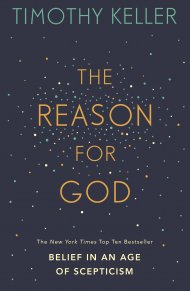
The Reason for God: Belief in an age of scepticism,
Timothy Keller, Hodder & Stoughton, 2008, 293pp
OK, let's face it, Westbury isn't exactly Manhattan. No Wall Street, no skyscrapers, no yellow taxi cabs. And no New Yorkers either. Not that I know of, anyway. So, why read this book by Manhattan pastor, Tim Keller? After all, it's designed to give trendy New York postmodern types a reason to believe in God. Like that's going to help with my ministry and witness in this small Wiltshire town. Knowing that, why did I bother?
To be honest, one reason for reading The Reason for God is that I've heard a fair bit about Tim Keller and his influential ministry and I wanted to get acquainted with his writings. I don't know whether this book is a good place to start, but there we are. I was going through a bit of an apologetics phase in my reading when I bought it last summer, so this one kind of fitted the bill for me personally.
More substantially, you don't have to be a metropolitan sophisticate to voice some of the doubts and objections to the Christian faith that Keller attempts to deal with here. Almost every time I engage a non-believer in conversation one or more of of the issues discussed in Part I of this book comes to the surface. Here are some of the chapter headings, There Can't Be Just One True Religion, How Could a Good God Allow Suffering?, How Can a Loving God Send People to Hell? etc. If you haven't heard questions like that lately, could be that you are lacking somewhat on the personal witness front.
Now, I'm not going to offer an in-depth chapter-by-chapter review here. Life's too short, as is the attention span of the average blog reader. I'll maybe say some stuff about Keller's general approach and make one or two more pointed and specific points and then wrap it up. Still with me?
Right then, the book begins as I say with Keller having a go at responding to six common objections to the Christian faith. I can't be bothered to list them all. The book has a "Click to LOOK INSIDE!" thing on Amazon. If you are that interested you can look 'em up for yourself. Anyway, beginning as he does, by allowing the sceptic to set the agenda, you might have thought that Keller is a card carrying evidentialist, who thinks he can argue people into the kingdom. Nah. You'd be wrong about that. The apologist is aware that the existence of God can't be proven in such a way that all nagging doubts are satisfied. Indeed, God has no need to prove himself to us. Even the most sceptical of sceptics know full well that he exists. The complex beauty of the universe and the voice of human conscience bear witness to the fact that God is there and he is not silent.
In terms of apologetic methodology, then Keller is a presuppositionalist rather than an evidentialist. That much becomes evident in Part II. His starting point is that only with faith in the living, triune God revealed in Holy Scripture can make sense of reality with all its wonder and absurdity. But that doesn't mean he is adverse to giving reasons for faith. The title of this book says it all. In fact it says too much, because Keller nowhere suggests that there is such a thing as THE reason for God, simply a number of telling clues that point to his existence. Nevertheless, the presuppositionalist still has to meet people where they are with all their doubts and questions and try to respond as best he can. As John Frame wrote in his entry on PRESUPPOSITIONAL APOLOGETICS in New Dictionary of Christian Apologetics (IVP, 2006. p. 575-578), 'presuppositionalists, like all apologists, have to answer objections." Keller attempts to do that in the opening six chapters. Also in Part II the preacher gives a reasoned defence of belief in God and the resurrection of Jesus from the dead.
Keller writes in an easy, conversational style. He eschews any head-on confrontation that would spook the easily frightened postmodern enquirer. This can sometimes lead him to soft peddle on areas where he might have taken a firmer stand, such as on creation and evolution, or gender roles in the Bible. His argument is, if people accept the basic truths of the Christian faith, then acceptance of these other issues will prove less problematic. Fair enough I suppose, but he might have done a little more to show that there is a good case to be made in favour of biblical creation and to explain what the Bible means by male headship in family and church life.
Now for the pointed points bit. The thing that bothered me most about the book is Keller's treatment of hell and his handling of substitutionary atonement. He believes in both aright, but tends to over-psycologize these biblical doctrines. Hell is described as a 'prison of self-centredness' (p. 79). I'm sure he's right there, but more needed to be said about God's just wrath upon the wicked in hell. That said, Keller clearly shows that it is not inconsistent for a loving God to punish sinners in hell.
When it comes to the Cross, Keller turns to the the human act of forgiveness to help explain why God requires atonement for sin to be forgiven. Forgiveness on a human level involves costly suffering, and so it is with God. That works fine as a sermon illustration, but it lacks the necessary theological clout for developing a biblically rigorous account of substitutionary atonement. Don't get me wrong. Keller is no Steve Chalke, who infamously said that penal substitutionary atonement is tantamount to 'cosmic child abuse'. In fact, the writer distances himself from any such notion and is clear that Christ died bearing the penalty of our sin upon the cross. He helpfully quotes John Stott, "The essence of sin is we human beings substituting ourselves for God, while the essence of salvation is God substituting himself for us." (Author's italics. p. 195). But still, too much weight is placed on the human psychological model of forgiveness for my liking.
But the book ends on a high note. There is a beautiful chapter on the Trinity, The Dance of God, followed by an epilogue pondering the question, Where Do We Go From Here. Often that's where we get to the 'sinners' prayer' bit. You know, 'pray this prayer and you'll get saved'. But Keller adopts a more thoughtful and challenging stance, urging his readers to examine their motives and count the cost of following Jesus. He also makes it plain that becoming a Christian involves committing to a church community.
In The Reason for God, Keller has endeavoured to engage the culture with the gospel. This is only right. We have to try and understand the times, speak to people where they are and show how the good news of Jesus relates to them. Calvin wanted to be a culturally engaged preacher. He complained, "Many people would like me to preach with my eyes closed, not considering where I live, in what locale, or in what time." (Cited in Engaging with Calvin, Edited by Mark D. Thompson, IVP, 2009, p. 15). The danger is that aspects of the gospel that are regarded as culturally untenable are downplayed in order to make the faith appealing. Keller has largely avoided this danger, but not altogether. His psychological rather than theological approach to the doctrines of hell and penal substitution are perhaps cases in point. Nevertheless, there is certainly enough here to make the sceptic think again about the Christian faith. For as Keller shows, it is the Christian message that best makes sense of the grandeur and grime of reality. Only the Christian gospel has an answer to the problem of sin. Christ was crucified in the place of sinners. He rose again from the dead. Jesus brings human beings into the perichoretic dance that is fellowship and communion with the triune God. The people of Westbury just as much as Manhattan need to hear of that.
Now, I'm not going to offer an in-depth chapter-by-chapter review here. Life's too short, as is the attention span of the average blog reader. I'll maybe say some stuff about Keller's general approach and make one or two more pointed and specific points and then wrap it up. Still with me?
Right then, the book begins as I say with Keller having a go at responding to six common objections to the Christian faith. I can't be bothered to list them all. The book has a "Click to LOOK INSIDE!" thing on Amazon. If you are that interested you can look 'em up for yourself. Anyway, beginning as he does, by allowing the sceptic to set the agenda, you might have thought that Keller is a card carrying evidentialist, who thinks he can argue people into the kingdom. Nah. You'd be wrong about that. The apologist is aware that the existence of God can't be proven in such a way that all nagging doubts are satisfied. Indeed, God has no need to prove himself to us. Even the most sceptical of sceptics know full well that he exists. The complex beauty of the universe and the voice of human conscience bear witness to the fact that God is there and he is not silent.
In terms of apologetic methodology, then Keller is a presuppositionalist rather than an evidentialist. That much becomes evident in Part II. His starting point is that only with faith in the living, triune God revealed in Holy Scripture can make sense of reality with all its wonder and absurdity. But that doesn't mean he is adverse to giving reasons for faith. The title of this book says it all. In fact it says too much, because Keller nowhere suggests that there is such a thing as THE reason for God, simply a number of telling clues that point to his existence. Nevertheless, the presuppositionalist still has to meet people where they are with all their doubts and questions and try to respond as best he can. As John Frame wrote in his entry on PRESUPPOSITIONAL APOLOGETICS in New Dictionary of Christian Apologetics (IVP, 2006. p. 575-578), 'presuppositionalists, like all apologists, have to answer objections." Keller attempts to do that in the opening six chapters. Also in Part II the preacher gives a reasoned defence of belief in God and the resurrection of Jesus from the dead.
Keller writes in an easy, conversational style. He eschews any head-on confrontation that would spook the easily frightened postmodern enquirer. This can sometimes lead him to soft peddle on areas where he might have taken a firmer stand, such as on creation and evolution, or gender roles in the Bible. His argument is, if people accept the basic truths of the Christian faith, then acceptance of these other issues will prove less problematic. Fair enough I suppose, but he might have done a little more to show that there is a good case to be made in favour of biblical creation and to explain what the Bible means by male headship in family and church life.
Now for the pointed points bit. The thing that bothered me most about the book is Keller's treatment of hell and his handling of substitutionary atonement. He believes in both aright, but tends to over-psycologize these biblical doctrines. Hell is described as a 'prison of self-centredness' (p. 79). I'm sure he's right there, but more needed to be said about God's just wrath upon the wicked in hell. That said, Keller clearly shows that it is not inconsistent for a loving God to punish sinners in hell.
Thursday, September 22, 2011
Atheist Delusions: The Christian Revolution and Its Fashionable Enemies by David Bentley Hart

Atheist Delusions: The Christian Revolution and Its Fashionable Enemies,
by David Bentley Hart, Yale, 2009, 249pp.
I took this one on holiday with me back in August and finished it a week or so after we got home. I usually read something by John Grisham when we go away. But after reading The Associate last year I began to grow a little tired of legal pot boilers and fancied a change. Not that reading theology is much of a change, but there we are. Then again, I don't often read stuff by Eastern Orthodox theologians so it was kind of different. You can tell that Hart isn't an Evangelical because he says that he isn't out to convert anyone to anything. Can you imagine John Blanchard saying something like that? Probably not.
What's Hart trying to do then? Well he's having a pop at the new atheists for rejecting the Christian faith, while at the same time piggy-backing on the remnants of Christian morality in Western society. You see, lots of the things that even atheists think are good, like holding to the unique value of every human life, are in fact the product of what Hart calls the "Christian Revolution". By the "Christian Revolution" the writer means the paradigm shift in values that superseded classical pagan thought and set the moral tone for the best part of two thousand years. New atheists such as Richard Dawkins "who - despite his embarrassing incapacity for philosophical reasoning - never fails to entrance his readers with his rhetorical recklessness" and Christopher Hitchens "whose talent for intellectual caricature somewhat exceeds his mastery of consecutive logic" often fail to face up to this inconvenient truth. Oh, and if you think Hart was being a little rude to Dawk and Hitch, then that was nothing compared to his withering scorn for Dan Brown author of The Da Vinci Code, which the writer describes as "the most lucrative novel ever written by a borderline illiterate." Fun, eh?
But it's not all jokes at the expense of vocal sceptics. In fact Hart keeps the knockabout to a minimum. This book isn't a specimen of Punch and Judy apologetics. The theologian offers a serious and telling critique of post-Christian society where human freedom has become the freedom of consumer choice with little regard for the morality of our choices. He faces head on some of the claims routinely made by the fashionable enemies of the Christian faith. It is often said that early Christians suppressed the intellectual achievements of Greek culture, leading to the "night of reason" that was only dispelled by the Enlightenment. Further, many sceptics routinely insist that Christianity has stifled scientific progress. Hart details why these charges simply do not stick.
Hart is aware that especially since Church and State were aligned under Constantine that Christianity hasn't always lived up to its highest standards. Christian civilisation has been guilty of intolerance and bloodshed. Given what the Bible says regarding human sinfulness, this isn't too surprising. But the record of Christendom on this score, shameful though it may be, is as nothing compared with the millions of lives lost in the secular conflicts of the 20th and 21st centuries.
Some atheists writers try and suggest that all was fine and dandy in the ancient pagan world before those pesky Christians came along with their hang ups over human physicality. Hart addresses this point, exposing the "glorious sadness" at the heart of pagan life and experience. Heretical Gnostics may have had hang ups over human physicality, but not the orthodox, who believed that the Word was made flesh. Christianity constituted a great rebellion against the false gods of paganism and the pitiless indifference to human suffering that often characterised pagan thought. The central tenet of the Christian faith, that he who was in the form of God took the form of a servant and died for sinners conferred a new dignity on each and every human being, slaves included.
The Christian message constituted a new vision of humanity, in which all human beings, regardless of wealth and status were viewed as persons. That is fully paid-up members of the human race. This was a truly revolutionary idea, for in pagan thought groups such as slaves and the disabled were regarded as faceless non-persons. Slaves could therefore be owned and mistreated. Disabled infants could be left to die. The notion of human personhood and its concomitant, universal human rights, was a specifically Christian development. Against the Arians who denied the full deity of the Son, the orthodox Christian faith confesses that there is one God in three co-substantial persons, Father, Son and Holy Spirit. In the incarnation the person of the Son took human nature. God became man so that man might partake of the divine nature. Hart weakens the biblical evidence for orthodox Christology by translating John 1:1 as "the Logos was with God and the Logos was a god" (p. 204). But his account shows that the very idea of human personhood was an offshoot of the theological reflection of the church. Given that this is the case, Hart worries that a post-Christian culture "will also, ultimately become post-human" (p. 215).
Perhaps Hart's scenario is closer than we might think. Atheist thinkers such as Peter Stringer have openly argued for infanticide in the case of severely disabled babies. The production and then destruction of human embryos for stem cell research purposes is another indication that the Christian view of human life is being abandoned. As is the widespread use of abortion as a means of birth control. Others go still further and advocate the use of genetic engineering that breaches the gap between humans and animals. A man with canine hearing, anyone? Welcome to the brave new post-Christian world.
Hart writes with great verve and panache. He has a deep knowledge the religion, thought and culture of the classical period. His learning is skilfully deployed to refute the sloppy arguments of the new atheists. Evangelical readers won't be able to go along with everything that he says. By "Christian" Hart basically means the Roman Catholic and Orthodox Churches. Protestants don't get much of all look in, although the abolitionist William Wilberforce is mentioned in passing. Readers will need to look elsewhere for a fuller presentation of the Christian gospel. However, Hart has ably demonstrated that the Christian Revolution transformed the moral outlook of the ancient world. To an extent that is not always recognised we have all been beneficiaries of this love-fuelled, wonderfully humanising revolution. We turn our backs upon Christian faith and values at our peril.
Hart is aware that especially since Church and State were aligned under Constantine that Christianity hasn't always lived up to its highest standards. Christian civilisation has been guilty of intolerance and bloodshed. Given what the Bible says regarding human sinfulness, this isn't too surprising. But the record of Christendom on this score, shameful though it may be, is as nothing compared with the millions of lives lost in the secular conflicts of the 20th and 21st centuries.
Some atheists writers try and suggest that all was fine and dandy in the ancient pagan world before those pesky Christians came along with their hang ups over human physicality. Hart addresses this point, exposing the "glorious sadness" at the heart of pagan life and experience. Heretical Gnostics may have had hang ups over human physicality, but not the orthodox, who believed that the Word was made flesh. Christianity constituted a great rebellion against the false gods of paganism and the pitiless indifference to human suffering that often characterised pagan thought. The central tenet of the Christian faith, that he who was in the form of God took the form of a servant and died for sinners conferred a new dignity on each and every human being, slaves included.
The Christian message constituted a new vision of humanity, in which all human beings, regardless of wealth and status were viewed as persons. That is fully paid-up members of the human race. This was a truly revolutionary idea, for in pagan thought groups such as slaves and the disabled were regarded as faceless non-persons. Slaves could therefore be owned and mistreated. Disabled infants could be left to die. The notion of human personhood and its concomitant, universal human rights, was a specifically Christian development. Against the Arians who denied the full deity of the Son, the orthodox Christian faith confesses that there is one God in three co-substantial persons, Father, Son and Holy Spirit. In the incarnation the person of the Son took human nature. God became man so that man might partake of the divine nature. Hart weakens the biblical evidence for orthodox Christology by translating John 1:1 as "the Logos was with God and the Logos was a god" (p. 204). But his account shows that the very idea of human personhood was an offshoot of the theological reflection of the church. Given that this is the case, Hart worries that a post-Christian culture "will also, ultimately become post-human" (p. 215).
Perhaps Hart's scenario is closer than we might think. Atheist thinkers such as Peter Stringer have openly argued for infanticide in the case of severely disabled babies. The production and then destruction of human embryos for stem cell research purposes is another indication that the Christian view of human life is being abandoned. As is the widespread use of abortion as a means of birth control. Others go still further and advocate the use of genetic engineering that breaches the gap between humans and animals. A man with canine hearing, anyone? Welcome to the brave new post-Christian world.
Hart writes with great verve and panache. He has a deep knowledge the religion, thought and culture of the classical period. His learning is skilfully deployed to refute the sloppy arguments of the new atheists. Evangelical readers won't be able to go along with everything that he says. By "Christian" Hart basically means the Roman Catholic and Orthodox Churches. Protestants don't get much of all look in, although the abolitionist William Wilberforce is mentioned in passing. Readers will need to look elsewhere for a fuller presentation of the Christian gospel. However, Hart has ably demonstrated that the Christian Revolution transformed the moral outlook of the ancient world. To an extent that is not always recognised we have all been beneficiaries of this love-fuelled, wonderfully humanising revolution. We turn our backs upon Christian faith and values at our peril.
Tuesday, June 28, 2011
Unbelievable Atheist Delusions

 Although I had to admit defeat when it came to David Bentley Hart's The Beauty of the Infinite (see here), I thought I might have a stab at the author's Atheist Delusions: The Christian Revolution and Its Fashionable Enemies, Yale, 2009. I've only dipped into the intro so far as I'm saving the rest for summer holiday reading.
 So, I was interested to hear DBH debating with Terry Sanderson of the National Secular Society on Premier Christian Radio's Unbelievable programme, here. The image on the right shows DBH receiving the Michael Ramsey prize for theological writing from the hands of Rowan Williams for Atheist Delusions. The key argument of the book is that many of the key values of Western culture are not the product of rationalistic humanist thought, but are parasitic on the "Christian Revolution". The trouble is that we have largely forgotten the extent to which the Christian faith changed the moral outlook of the ancient world. Notions such as the unique dignity of every human being are testimony to the continuing impact of Christian thought in our so-called post-Christian world. However, with the weakening of Christian influence, the unique vale of human life is being undermined. Some humanistic thinkers advocate eugenics and tragically, abortion is now an accepted part of Western society. Anyway, have a listen to the programme for yourself.
Thursday, December 02, 2010
Paul Helm on Athens and Jerusalem Revisited

Last Thursday I headed off to the Land of my Fathers for a Pastors' Forum meeting. The speaker was my good friend Paul Helm. The key theme that spanned all three of his talks was the relationship between nature and grace. Here are some notes on what he had to say.
Talk 1 - Athens and Jerusalem Revisited
A whistle stop tour of ancient Carthage, Jerusalem, Athens and Hippo.
Carthage
Carthage, 200AD. Tertullian posed the question, "What has Athens to do with Jerusalem?" He opposed a hybrid of Christianity and philosophy. Does this make him an irrationalist, fideist? No. He was not against reason, saying that Christianity is believable because it is rationally impossible. He warned against the hybridisation of the faith, not the use of reason per se. He recognised that at some points there was concord between faith and philosophy.
Jerusalem
Is is possible to translate the faith into other thought forms?
To answer this question, Helm took us to the heart of our faith, the cross of Jesus. Pilate had an inscription placed on the cross, reading, "This is Jesus, the King of the Jews", in Latin, Greek and Aramaic, John 19:19. The basic idea of Jesus being the King of the Jews was accurately conveyed in all three languages.
Language is at heart of the Christian faith, as is translation. Jesus' words as recorded in the Gospels were originally spoken in Aramaic, not Greek, but the New Testament gives us an accurate record of his speech. The gospel message, "This is the King of the Jews" is translatable because Christianity is an international faith. Abrahamic covenant, Genesis 12. Great Commission, Matthew 28. Pentecost, Acts 2.
Translation is problematic - John 19:19. Some meaning is lost as the words are translated into Latin, Greek and Aramaic. But NT Greek is adequate to give us access to Jesus' words, even though in translation nuances of meaning are lost and gained. Speakers of Latin, Greek and Aramaic may have had different ideas of kingship, but the basic the idea that Jesus was crucified as the King of the Jews was conveyed to all three language groups by Pilate's inscription. Whatever fine nuances may have been lost in translation did not matter.
Cognitive meaning is conveyed in translation. Content test - "King of the Jews" means the same when translated into French and English. In translation the words are true in either language, because Jesus is the King of the Jews. The truth of gospel is true in other languages.
Postmodern obsession with context is a gross exaggeration. People of all all languages will cry, "Worthy is the Lamb". Is cultural context important? Yes and no. Cultural sensitivity is needed, 1 Corinthians 9:19-23, yet as in John 19:19, the truth is essentially the same in any language and culture.
What of a culture that has no word for king? Translate, "Jesus is the CEO of the Jews"? Retain "king" in translation and explain what it means. Or appropriate a word that approximates "king" and extend its meaning. But this does not mean that Helm favours a "dynamic equivalence" approach to Bible translation. It is one thing for Christian apologists to attempt to translate the faith into the language and thought forms of a culture, but in Bible translation, the aim should always be an accurate as possible rendering of the original. This applies even if there is no equivalent concept in the language into which Scripture is being translated. If a people have no idea of snow (Isaiah 1:18), then it is the task of Christian teachers to explain that it is very white, cold stuff that falls from the sky.
From Jerusalem to Athens: Acts 17
A case of "natural theology". At Mars Hill Paul quoted pagan authors. In the pagan poets, what is true of God was misapplied to false gods. Since we are God's offspring, how can God be an idol, Acts 17:28-29? Paul's address involves a conceptual translation of Genesis 1, using the language of pagan poets. "Let us make man in our image", Genesis 1:26. "We are also his offspring", Acts 17:28. But the gospel is not translated, as Jesus' resurrection (Acts 17:31) had no counterpart in pagan thought.
Hippo
In Book 7 of his Confessions, Augustine describes how he was delivered from Manichaeism by reading "certain books of the Platonists". By their writings he was freed from seeing God in physical, embodied terms. The Platonists, by which he probably meant Plotinus, taught him that God is an immortal Spirit. Augustine begain to understand the creature-creator distinction more clearly and now saw sin a defect, rather than in the dualist terms of the Manichees. This did not make him a Christian, but he became convinced of the existence of the true God through the Platonists. Plotinus even helped Augustine in his reading of Scripture. The philosopher wrote of the One producing a second hypostasis as the sun produces light. Augustine saw John 1:1-5 as the biblical counterpart of Plotinus' writings. In fact the philosopher was trying to defend Platonism against Christianity, but Augustine was willing to "spoil the Egyptians" by using the insights on the philosophers in the service of faith seeking understanding. However, the theologian was not carried away by all this. He knew of both convergences and divergences between Christianity and philosophy. Plotinus knew nothing of the Son being of the same essence of the Father who had begotten him, Word becoming flesh, or of Jesus saving sinners by his death on the cross. God has hidden these things from the wise and the prudent (Matthew 11:25), who, professing themselves to be wise, became fools, (Romans 1:22). I suppose that in a similar way, a modern day sceptic might be delivered from his atheism by reading a scientific critique of Darwinism. He might then come to believe in the existence of a Creator, but he would still need to hear and respond in faith to the gospel in order to become a Christian believer.
Conclusion
The gospel can be communicated in different cultural contexts. It is permissible to translate faith into a culture when there are cognitive equivalents, but no further. Liberal theology eliminates the historical singularities of the faith; the incarnation, atoning death and bodily resurrection of Christ, in an attempt to make Christianity culturally acceptable. This is not an option if we wish to be faithful to the biblical gospel. However, "natural theology" may provide common ground between the Christian and the non-believer and so give us a point of entry for the gospel.
Friday, May 28, 2010
Than which nothing greater can be conceived? A Christo-Ontological proposal

The so-called "Ontological Argument" was formulated by Anselm. He reasoned that as human beings have a conception of a perfect divine being than which nothing greater can be conceived, then that perfect divine being must exist, otherwise where would the idea of his existence come from? It is fair to say that his argument is not the most convincing when it comes to persuading sceptics of the existence of God. Indeed, it is deeply problematic in a number of ways. It begins with a human conception of God and reasons up to the actual existence of a divine being. Thus it lays itself open to Feuerbach's objection that belief in God is nothing more than the projection of human consciousness. In that case, theology is simply bigged up anthropology. So also Freud, who posited that belief in God is the expression of the need for father figure.
Even for Christians Anselm's Ontological Argument is less than satisfactory. It starts with man's idea of the divine rather than with God's self-revelation in creation and redemption. Also, while some might find Anselm's argument sufficient to convince them that some kind of supreme being exists, why should that supreme being be necessarily be identified with the the God and Father of our Lord Jesus Christ? The supreme being may be a deist divinity, or Allah, or The Force, or who knows? Only by rather arbitrarily supplementing his argument with the revelation of God in Holy Scripture could Anselm say that the supreme being greater than whom nothing can be conceived is the Lord God Almighty.
It is far better to begin with the presupposition that God is there and he is not silent. God has revealed himself in creation, providence and redemption. As his image bearers, human beings have an in-built sense of God, although the sensus divinitas may be suppressed and ignored due to the noetic effects of sin. Knowledge of God the Redeemer is revealed in Jesus Christ, the Word made flesh for our salvation by the power of the Holy Spirit. Holy Scripture records and interprets the redemptive acts of the God. But the Bible gives us far more than information. In Holy Scripture we have the communicative action of the triune God. Here God the Father speaks through his Son by his Spirit in order to incorporate his people in drama of redemption. The Speaking God is Creator and Redeemer. That is the basic starting point for Christian belief.
Where then does all this leave old Anselm and his Ontological Argument? When used to try and prove the existence of a "bog standard" god it isn't up to much. But when set within the context of God's self presentation in Holy Scripture, it might have some persuasive power. However, this is not because it is possible for the unaided human mind to envision the God of the Gospel. The revelation of God given in the Bible is far greater than could ever be conceived by man. We never would have had an inkling of it apart from God making the mystery of the Gospel known through the prophets and apostles of the Old and New Testaments. Who would have posited that God so loved the world that he gave his one and only Son that we might not perish but have everlasting life? Who could have thought that he who was the form of God would humble himself and take the form of a servant? Who might have imagined that the Lord of glory would willingly lay down his life for our sins, offering himself up to God through the eternal Spirit? Only by divine revelation could we ever come to realise that God is as wonderfully gracious as that, 1 Corinthians 2:6-10.
By his Ontological Argument Anselm hoped to give a reason for belief in a supreme being. As such his argument is scarcely persuasive. But perhaps there is some mileage in a Christo-Ontological Argument that is rooted in the witness of Scripture. God is there and he is not silent. The God of the Gospel's being is in his communicative act. In these last days he has spoken by his Son. "The Word became flesh and dwelt among us, and we beheld his glory" (John 1:14). God with us as one of us. He stooped to take the burden of our guilt upon himself to set us free. Such things angels desire to look into and they should never cease to astound us and leave us gasping with amazement. The Gospel is so gloriously divine. You couldn't make it up. Nothing as great as the revelation of God in Christ could ever be conceived unless God had made it known.
O what matchless condescension
The eternal God displays,
Claiming our supreme attention
To his boundless works and ways;
His own glory
He reveals in gospel days.
In the person of the Saviour
All his majesty is seen,
Love and justice shine for ever;
And without a veil between,
We approach him,
And rejoice in his dear name.
Would we view his highest glory,
Here it shines in Jesus' face;
Sing and tell the pleasing story,
O ye sinners saved by grace;
And with pleasure
Bid the guilty him embrace.
In his highest work, redemption,
See his glory in a blaze;
Nor can angels ever mention
Aught that more of God displays.
Grace and justice
Here unite to endless days.
True tis sweet and solemn pleasure,
God to view in Christ the Lord;
Here He smiles and smiles for ever;
May my soul his name record
Praise and bless him,
And his wonders spread abroad.
William Gadsby, 1773-1844
O what matchless condescension
The eternal God displays,
Claiming our supreme attention
To his boundless works and ways;
His own glory
He reveals in gospel days.
In the person of the Saviour
All his majesty is seen,
Love and justice shine for ever;
And without a veil between,
We approach him,
And rejoice in his dear name.
Would we view his highest glory,
Here it shines in Jesus' face;
Sing and tell the pleasing story,
O ye sinners saved by grace;
And with pleasure
Bid the guilty him embrace.
In his highest work, redemption,
See his glory in a blaze;
Nor can angels ever mention
Aught that more of God displays.
Grace and justice
Here unite to endless days.
True tis sweet and solemn pleasure,
God to view in Christ the Lord;
Here He smiles and smiles for ever;
May my soul his name record
Praise and bless him,
And his wonders spread abroad.
William Gadsby, 1773-1844
Wednesday, February 03, 2010
Who Made God? by Edgar Andrews

Some Christian critiques of atheistic Darwinism resemble an unseemly scrap over some old dinosaur bones. The attitude is strident and ill tempered. Arguments in favour of the Christian position are often tired and unconvincing, amounting to little more than than variations on the theme of Paley's well-designed watch. But, to coin a phrase, here is something completely different. For starters, Andrews does not propose to argue from the presence of design in nature up to a some kind of a divine Designer. He begins with the hypothesis that the God of the Bible is the true and living God who made all things. From that starting point the genial professor attempts to show that reality is exactly as we should expect if his underlying assumption is true.
The book is full of detailed scientific discussion on the origin of the universe and Darwinian evolution. With his multidisciplinary expertise Andrews ranges over many different fields in his quest for a 'theory of everything' - an all encompassing description of the material universe that makes best sense of all the available data. He skilfully guides the reader through the complexities of the Big Bang account of the origin of time and space, Einstein's theory of general relativity, the laws of nature, quantum mechanics, string theory and much more. The writer subjects evolution by natural selection to critical scrutiny, demonstrating that random genetic mutations cannot account for the evolution of all living things from a single cell "jelly pod". Andrews concludes that no merely naturalistic 'theory of everything', not even one that reconciled general relativity with quantum mechanics could explain why an ordered universe exists in the first place. If all that sounds a bit highfalutin and technical for those (like me) with a non-scientific background, then be not afraid. Sooty is on hand to help, as are countless other handy metaphors from a breakfast of cereal, yoghurt and toast, to ferrets and steam engines.
Here is an example of Christian apologetics at its best; appealing, well argued and based on the the biblical presupposition, "In the beginning God" (Genesis 1:1). While the book was not written simply as a rejoinder to Richard Dawkins and his neo-Darwinian fellow travellers, Andrews ably shows that atheism is ill equipped to explain the origin of the universe and the development of life on earth. The author concludes by telling us the good news that our Maker is also the Redeemer of fallen human beings through the death and resurrection of Jesus Christ. Reading Who Made God? will strengthen Christians in their faith and better enable them to witness to their non-believing friends. Atheists who happen upon this book should be prepared to have their views challenged and undermined by the compelling force of professor Andrews' arguments.
Edgar Andrews interviewed at challies.com.
Order from PTS Christian Bookshop here.
Friday, May 15, 2009
An interview with Stuart Burgess
I quiz Professor Burgess about the interface between his Christian beliefs and his work as a scientist.
 1. Who are you?
 I am married to Jocelyn and have 5 children. We attend Zion Baptist Church. I am a Professor at Bristol University in the department of Mechanical Engineering. I have also taught at Cambridge University where I was a Bye-Fellow of Selwyn College. Before academia I designed spacecraft for the European Space Agency.
2. How did you become a Christian believer?
I come from a non-Christian home in the Bristol area. When I went to University in London in 1981 I attended an independent evangelical church and was soon converted on hearing the good news of salvation through Jesus Christ. One of the things that impressed me was the kindness and hospitality of a couple called David and Ruth. They still send Christmas cards to me to this day!
3. The world of science is often assumed to be anti-religion. What do you think about this?
I do not see true science as being anti-religion. In fact I believe that science was pioneered by religious people such as Newton, Pascal, Kelvin, Faraday and Maxwell. Since God is the author of both the Bible and creation there should not be a conflict between science and the Bible. One key to seeing there is no conflict is to recognise God's greatness. God is so powerful that He can create the world in any way He likes whether it is 6 days or 6 seconds.
4. What is Intelligent Design (ID)?
The key idea behind Intelligent Design is simple - that design reveals a designer. In the same way that the intricacies in a spacecraft reveal a designer so the intricacies in a bird reveal a designer.
5. Can ID on its own lead people to God?
ID only shows that there is a Creator not necessarily that the Creator is the God of the Bible. However, having said that, I believe that the design of the earth shows that the Creator is a 'caring' God. The Psalmist says that earth is full of the goodness of the Lord.
6. Do you agree with the ideas of Charles Darwin?
Darwin was correct to say that creatures like finches adapt to the environment by changing beak shape. However, he was wrong to then assume that creatures could undergo enormous changes (change into other types of creature) that are thousands of times greater than minor adaptations. Modern studies show that whilst birds adapt to the environment, they always remain birds. Adaptation can be illustrated by the shuffling of a pack of cards and randomly choosing a subset of cards from the pack. A pack of cards represent the gene pool between parents. Whilst shuffling the genes and choosing a new subset of cards can produce some adaptations, the amount of adaptation is limited by the cards available in the pack. No amount of shuffling can produce dramatic changes. This is why changes through adaptation are very limited.
7. Do you believe that man evolved from an ape-like creature?
I have written a book about this question called The Origin of Man. There are enormous differences between humans and apes and I believe this makes it impossible for man to have evolved form an ape-like creature in the past. Some of the main unique features of humans are: upright stature, fine hands, fine skin, intricate facial expressions, fine language, long childhood, unique marriage and birth, unique brain, unique beauty and unique DNA.
8. What do you think of theistic evolution?
The whole point of evolution is to say that there is no designer, so I cannot see how theistic evolution is compatible with the Bible. Evolution also involves a violent struggle for survival which is not compatible with the Garden of Eden. Evolution involves death before the Fall which is theological against the fact that creation was 'very good'. Even if evolution could work, I do not believe God would use it because it is such a clumsy way of creating. In reality God creates in a very elegant way by just speaking the word (Ps 33).
9. Do you think creation should be a positive message rather than arguing over old bones?
I believe that the creation message is a positive one - that the beauty and intricacy of creation reveals a Creator. You do not need a PhD in genetics or design or biology to see that there is a Creator. A young child can see evidence for a Creator as much as a professor at University. But people will always argue over bones and scientific data because data can always be interpreted in different ways. Having said this, there is a place for Christians who are scientists to stand up for true science.
10. Do you believe in six-day creation?
I believe that God created the Universe in six 24 hour days as described in the book of Genesis. I believe that He made a mature fully functioning Universe that would have had the appearance of age from the beginning of creation. Adam and Eve would have looked adults, and trees would have been mature and producing fruit. In the same way, stars were already sending light to the earth. The idea of mature creation is logical to me since engineers do this all the time. When an engineer makes car or an aeroplane it is a mature fully functioning system that in some ways has the appearance of age. Because creation is a supernatural event, it is impossible to scientifically measure or prove the age of the earth.
11. Well, thanks for dropping by Stuart. You can discover more books by Professor Burgess at Day One Christian Books.
Monday, March 23, 2009
An evening with John Blanchard
 On Saturday evening we had John Blanchard come to speak at West Lavington Village Hall on 'Has science got rid of God?' A pretty packed hall heard him address the question with his customary clarity and insight. Science has not got rid of God because science is the attempt to discover truth in nature. It is not suited to adjudicate on the existence of God because he is transcendent - outside and above nature. Science has its uses, but it cannot speak dogmatically on the God question. It has no explanation for why the universe exists. Science cannot tell us why the laws of nature work as they do, nor why the universe if finely tuned for intelligent life. Contrary to the claims of Richard Dawkins and his ilk, modern science has not got rid of God. If anything discoveries like the complexity of even the most simple life-forms and the anthropic principle make belief in God easier.
 The veteran evangelist concluded his lively and interesting talk by setting Jesus Christ before us in all his divine grandeur. It is only in him that we can find salvation and the hope of everlasting life. If you want to know more, then 'Has science got rid of God?' is available from Evangelical Press as a book, CD, and DVD.
Day One Publications have just brought out Travel With John Blanchard, detailing the life of 'Guernsey's evangelist, author and Christian apologist'. Dr. Blanchard has the distinction of being the only living subject of the popular 'Travel With' series. He kindly gave me a free signed copy, which was nice. A couple of our members also bought me Blanchard's The Complete Gathered Gold, 'A treasury of quotations for Christians'. Considering I didn't intend to buy any books on the day, I still managed not to leave empty handed. The Lord is good!

Thursday, March 19, 2009
Is the fine tuning of the universe an evidence for God?
 I don't know if readers have come across Premier Christian Radio's Unbelievable, aired on Saturday afternoons. In each programme Justin Brierley hosts a discussion between a Christian and a non-believer. It is often a really thought provoking show. The latest one is on the subject, 'Fine Tuning of the Universe - is it evidence of God?' Nicholas Beale, co-author with Christian physicist John Polkinghorne of Questions of Truth (WJK), argues that fine tuning is an evidence for God. The atheist Julian Baggini disagrees. You can catch up with this week's programme and previous shows online. Here are some critical reflections on the discussion as it developed.
 Nicholas Beale, a mathematician by trade makes a good case for God on the basis of fine tuning and the so-called "anthropic principle", which is concerned with the question, "Why is the universe just right for human life?" Beale avoids falling into a "God of the gaps" approach, insisting that we see God at work in the understandable "laws of nature" as well as in the mysterious aspects of science that we have yet to comprehend. But he comes a little unstuck because he accepts a Darwinian theory of origins. In his view, God made the world complete with suffering and death because that is what was necessary for evolution by natural selection to work. Beale tries to get round the problem that this means a good God created an imperfect world, "red in tooth and claw", by saying that God took the suffering of the world upon himself in Christ. However this makes redemption seem like another act of fine tuning, as God acted in Christ to remove the suffering and evil that were present in the world as originally created.
A more biblical approach to the problem of suffering will insist that God made the world "very good" as Genesis 1 declares. Suffering and death are consequent upon the fall of man into sin (Genesis 3). Redemption in that case is not the Creator correctively fine tuning his flawed-by-design creation. It is an act of free, undeserved and astonishing grace towards rebellious sinners, who have brought his just wrath upon themselves and his curse upon the creation. Neal's approach shows the accommodation that theistic evolution makes with Darwinism plays havoc with the Bible's essential plot line of Creation/Ruin/Redemption/Re-creation. Now, I'm not saying that natural selection has no explanatory power when it comes to describing how the "kinds" of creatures God originally made developed into the diverse and varied species that exist today. In creating life, it seems that God made living organisms flexible enough to adapt to differing environments and so on. But the wholesale acceptance of a Darwinian explanation of origins seriously skews the basic plot line of biblical revelation.
Another thing that struck me was the atheist Julian Baggini's point that believers only see the fine tuning of the universe as an evidence for God because they begin with the prior assumption that he exists. As the philosopher argued, the existence of a loving Creator cannot simply be "read off" the data of science. That is true enough. Baggini helpfully reminds us of the importance of presuppositions. Evidentialist apologetics assumes that the data of science is neutral ground that the believer and unbeliever can examine together without prejudice. But that is not the case. The believer starts with the basic presupposition that God exists. It is from that standpoint he views the phenomenon of the universe. The consistent Christian theist does not argue from design to a designer. He begins with the God who has revealed himself in creation, the human heart and Scripture and understands everything in that light. The fear of the Lord is the beginning of wisdom! The Christian therefore is able to make sense of this originally good, yet fallen world which God created, and that he has acted in Christ to redeem. The heavens declare his glory and the earth is full of his goodness, even while the whole creation groans with frustration, awaiting its liberation from disorder and entropy. The unbeliever however views exactly the same data from the presupposition that God does not exist. The truth concerning his existence is suppressed (Romans 1:18ff). Conclusions drawn from the data are therefore faulty. It's all in the presuppositions.
Baggini claims that the theistic approach to science takes the mystery out of it all because every time believers see something unexplainable, they invoke God. That is a slight oversimplification. Besides, God is the ultimate mystery. He is beyond even the mystery of a finely tuned universe that is fit for human life. He is the one God who is Father, Son and Holy Spirit. He is sovereign, yet we are accountable to him for our actions. The triune God loves fallen human beings. In Christ, the infinite embraced the finite and became one of us to rescue us from our sin. There is no greater mystery than the mystery of God's love revealed at Calvary, and poured into our hearts by the Holy Spirit. "Tis mystery all, the immortal dies/who can explore his strange design?" Throughout eternity we shall remain baffled, amazed and surprised by the mystery of the triune God who is love. The task of theology is not to explain the mystery of God, but to set out the limits of God's self-revelation in Scripture. In the words of Augustine, the purpose of doctrine is to "erect a fence around the mystery" that will keep the faithful from attempting to pry into the hidden depths of God's being.
To conclude, arguments concerning the fine tuning of the universe and the anthropic principle may be used by believers as they seek to witness to their non-Christian friends. But such arguments only make sense once we have made it clear that we are arguing from the presupposition that God exists to show that the world as it is is consistent with biblical revelation. The function of apologetics in this context is to demonstrate that reality is in keeping with the presuppositions of Christian theism - the universe looks just as we might expect given that is was designed and made by a loving Creator. But that is not all we have to say. The fall has to be factored in to explain the presence of evil and suffering, death and decay in God's world. And we gladly proclaim what could never be deduced from observing the natural world; the revelation of God in a mystery that is the gospel of salvation. The ultimate anthropic principle is that God became man in Christ to rescue human beings from sin and death. In Jesus' incarnation, atoning death and bodily resurrection, God has acted not only to save individual human beings, but to renew the whole cosmos, Romans 8:18-22. We can only see all this when we start with the presupposition that God is there, and he is not silent. We believe in order to understand. There is no other way, Hebrews 11:3, 1 John 5:20.
On the next edition of Unbelievable, David Robertson will be discussing his book The Dawkins Letters, with an atheist blogger.

Monday, March 02, 2009
John Blanchard: Has science got rid of God?
 An Evening with John Blanchard:
"Has science got rid of God?"
Saturday 21st March, 6pm,
West Lavington Village Hall,
Sandfield, West Lavington, Wiltshire
More details and directions here.
West Lavington Village Hall,
Sandfield, West Lavington, Wiltshire
More details and directions here.
Many people seem to assume that modern science has got rid of God. Or at least got rid of the need to believe in a divine being. We now understand so much about the world that we don't need to invoke him as an explanation for the universe. This view has especially taken hold since the publication of Charles Darwin's The Origin of Species 150 years ago. But has science really got rid of God? If you are interested in this issue whether as a believer or a non-believer then you might like to know of a special event later this month. John Blanchard, an international speaker and bestselling author has been booked to speak at West Lavington Village Hall on the question "Has science got rid of God?"
While the likes of Richard Dawkins might claim that it has, there might be another side to the story. The Bible begins with the grand assertion, "In the beginning God created the heavens and the earth". The fact that the universe exists, and that we are here to wonder at the meaning of it all is due to God's creative power. Time plus random forces do not provide an adequate explanation for the origin of the universe, and the teeming diversity of life on earth. But God is more than a convenient explanation for life, the universe and everything. We can have a personal relationship with him as Father through the Lord Jesus Christ who came into the world to bring us back to God.
Do the heavens declare God's glory or do we live in randomly created world that is without purpose and hope? If you are up for the challenge of thinking about this fascinating question then clear your diary for this event.
While the likes of Richard Dawkins might claim that it has, there might be another side to the story. The Bible begins with the grand assertion, "In the beginning God created the heavens and the earth". The fact that the universe exists, and that we are here to wonder at the meaning of it all is due to God's creative power. Time plus random forces do not provide an adequate explanation for the origin of the universe, and the teeming diversity of life on earth. But God is more than a convenient explanation for life, the universe and everything. We can have a personal relationship with him as Father through the Lord Jesus Christ who came into the world to bring us back to God.
Do the heavens declare God's glory or do we live in randomly created world that is without purpose and hope? If you are up for the challenge of thinking about this fascinating question then clear your diary for this event.
Book table
Light refreshments
Thursday, May 08, 2008
Spurgeon on presuppositional apologetics
 John Frame offers this definition of the presuppositional approach to apologetics:
"It takes account of what Scripture says about our obligation to presuppose God's revelation in all our thinking about the unbeliever's suppression of the truth, and it understands that according to Scripture the goal of apologetics must be to convince people that God's revelation is not only true, but the very criterion of truth, the most fundamental certainty, the basis for all intelligible thought and meaningful living." (New Dictionary of Christian Apologetics, IVP, 2006, p. 578).
When reading Surgeon's Lectures to my students the other day, I came across this remarkable piece of pre-Van Til presuppositionalism:
"...the sceptic cries, 'What I want is facts.' These are our facts: let us not forget to use them. A sceptic challenges me with the remark, 'I cannot pin my faith to a book or a history; I want to see present facts.' My reply is, 'You cannot see them, because your eyes are blinded; but the facts are there none the less. Those of us who have eyes see marvellous things, though you do not.' If he ridicules my assertion, I am not at all astonished. I expect him to do so, and should have been very much surprised if he had not done so; but I demand respect to my own position as a witness to facts, and I turn upon the objector with the inquiry - 'What right have you to deny my evidence? If I were a blind man and were told by you that you possessed a faculty called sight, I should be unreasonable if I railed at you as a conceited enthusiast. All you have a right to say is - that you no nothing about it, but you are not authorised to call us liars or dupes. You may join with the revellers of old and declare that the spiritual man is mad, but that does not disprove his statements.' Brethren, to me the phenomena which are produced by the Spirit of God demonstrate the truth of the Christian religion as clearly as the destruction of Pharaoh at the Red Sea, or the fall of the manna in the wilderness, or water leaping from the smitten rock, could have proved to Israel the presence of God in the midst of her tribes." (Lectures to my students, C. H. Spurgeon, Banner of Truth Trust , 2008 reprint, p. 224-225).
Subscribe to:
Posts (Atom)