Pages

Showing posts with label Holidays. Show all posts

Sunday, August 30, 2020

Quarantine Journal


In my justly unfamous Plague Journals I reflected in harrowing detail on the stresses and strains of my transformation from old school preacher to 21st century Cyber Pastor. I can now Zoom with the best of them, although linking the platform with Facebook Live is still a bit hit and miss. And when I say 'with the best of them', that was a idle boast, really. I mean, some flashy churches do stuff like getting their worship band to play and sing together, despite being in different homes. We just stream Aber hymns. 

Ebenezer Baptist Church started gathered worship services at the beginning of August. It was good to be able to preach to a living, breathing congregation, rather than a pixelated version. The Chapel has no internet connection, but I managed to stream the service to FB Live using my mobile phone for the benefit of those unable to attend. At Providence Baptist Church we await the completion of major building works before we can meet at the Chapel. Hopefully it won't be too long before we can gather.

Like many other churches, even when both of ours are able to meet for worship, that will only be for one service a week, with other things continuing online so long as the government's Covid Secure guidance applies in its current form. 

We had a nice holiday in Biarritz in the Basque region of France from 4-18 August. I visited the city when Interrailing  as a student back in 1989. I remember hoping that if a girl I had my eye on and me got together, I'd like to take her to Biarritz one day. It seemed such a lovely, romantic place. Reader, I married her and 29 years since Sarah and I got hitched I finally whisked her off to the South of France. 

We booked the holiday back in January, way before the coronavirus outbreak came to dominate everything. For months it looks as though we wouldn't be able to go. Then the government opened an 'air corridor' to France and we were off.  Covid cases were low in the Basque region, but we kept an eye on UK news, as it became apparent that infections were on the up in France as a whole. Soon enough the 'air corridor' was slammed shut again on Saturday 15 August. But we didn't join the stampede to beat the deadline and avoid having to self-isolate for 14 days, 

While on holiday we enjoyed spending time on the beaches of Biarritz, exploring the town and eating out at local restaurants, We often went for evening walks to watch the sun go down and saw some amazing sunsets. When on holiday Sarah likes soaking up the rays, while I huddle under a parasol reading books, popping out several times during the day for a swim in the sea. I read Rorke's Drift: A New Perspective, by Neil Thornton and Interpreting Eden, by Vern Poythress. I almost finished The Mystery of Christ: His Covenant & His Kingdom, by Samuel Renihan and made a good start on The Care of Souls: Cultivating a Pastor's Heart by Harold Senbbeil. 

The second of the four titles was for review in the Banner Magazine and I've been asked to delay posting a my impressions on the blog until its published there. I'm currently working on a review of the third book, which I've now finished. Still reading the last one. I liked the first two or three chapters very much. The author's gentle pastoral heart shines through every page. But his Lutheranism seems to get more pronounced as the book proceeds. Talk of crucifixes and the like doesn't sit well with me as a Grace Baptist Pastor, but there are good things here too, with a strong emphasis on Word and Spirit in ministry. 

When on holiday we found an English speaking CofE congregation in Biarritz. They had a Lutheran pastor take the service on the first Sunday we were there, but had no preacher for the second Sunday. They knew I was a minister because we made contact with a member of the group before we set off for France. I ended up preaching the second Sunday, on Matthew 15:21-28, which was one of the Lectionary readings of the day. I wondered how I might go down with the people, as they weren't used to your typical Reformed Baptist preaching, but I felt helped and they've invited me to preach there again sometime. 'Guy Davies Global Ministries' really is becoming a thing at last.

Anyway, having returned to the UK after the quarantining deadline, we've been under virtual 'house arrest' for the best part of a fortnight. I don't know why the government can't regionalise 'air corridors' so only people staying in parts of countries with high infection rates are affected, or why they can't sort out airport testing, so only people who test positive need to isolate? Unlike for some, my work wasn't affected too badly, as most of our services are still online. 

In any case I didn't start back to work until last Monday, although there were still some bits and pieces that needed doing before then. We've had to do our big weekly shop over the internet and rely on our daughter to get us the other things we needed from the shops. Apart from work, we've done some decorating at home. I've managed to get a good bit of reading done and caught up with church members via phone and Zoom meetings. 

We got up to speed with the BBC's A Suitable Boy (1 episode still to watch) and used our freebie week's subscription to Now TV to see the powerful and thought-proving drama, Chernobyl. What a harrowing expose of the corrupt old Soviet Union. The whole system was based on illusion and lies, but the truth about the nuclear disaster  as told by Valery Legasov and others at great cost helped to bring the system crashing to the ground. 

I usually don't bother to shave when on holiday and have continued unshaven while quarantining. Here I am wearing at hat that was a birthday gift from our son. We'll be able to venture out again on Tuesday. The beard may have to go by then, but we'll see. 

Wednesday, August 24, 2016

Venice: Pure City by Peter Ackroyd

Vintage, 2010, 498pp

Venice. I confess that I've spent longer getting acquainted with the city through Ackroyd's book than in the actual place. Strange that it was on the sun scorched beaches of the Algarve that I got to know more about Venice than when we visited the place.

We were only there for a few days as May ebbed away and June began to flow. One half of a Rome/Venice  split break to celebrate our 25th wedding anniversary.

Sarah and I left having been entranced by the Serene City,  determined to drop by again sometime.

Revisiting Venice with Ackroyd as a guide has added retrospective depth and interest to our fleeting stay. 

If depth is the right word for a city intent on sliding down the surface of things.

Ackroyd peers through the mists of time to trace the myth-shrouded origins of Venice. Founded by people seeking refuge from Barbarian hordes, the city rose from the sea on the back of countless wooden piles, driven into the ocean bed.

Numerous islets were melded into one island city. Ancient rivers and streams became the arterial canals that made Venice throb with life.

The very existence of the city is an act of defiance against the forces of nature. The sea ever threatening to return it to the marshy bog from whence it came. The siren's call alerts Venetians to the danger of flood. In 1966, the year of my birth, a great tidal deluge saw the  waters rise by almost 2 metres, inundating many properties. Cue renewed fear and  foreboding over the city's future.

A sense of being under threat from the elements helped to unite the populace from the beginning, making the people willing subjects of an intrusive political system, headed by the doge. Only as a united body could they hold out against the sea. Against all comers.

Venice exists distinct from and above the sea. It must. Yet it could not exist apart from the sea. Its buildings are clad in limestone and marble, products both of the force of the sea. Venice is famous for its glassware, especially the island of Murano. Ackroyd describes glass as 'material sea'. The light captured on canvas by the great painters of Venice shimmers and glitters like light dancing on the waves of the sea.

From the start Venice was a trading city. Sea trade. Merchant ships sailed from east to west and back, laden with all manner of goods, exotic and ordinary. Vast fortunes were made. Venice became a hive of industry, building ships at unprecedented speed in the Arsenal.

The juxtaposition of East and West can be seen to best effect in Saint Mark's Basilica. A Roman Catholic Church replete with golden icons and Orthodox domes. The four horses that adorn the top of the entrance way were plundered from Constantinople at the time of the Fourth Crusade. 

Sliding down the surface of things. Venice was synonymous for its processions, carnivals and masked balls. Cassanova and all that. The politics of the city in its Republican heyday was as theactrical as any play or opera. Venice was a place to see and be seen. Today it's in danger of existing only to be gazed at and serve as a splendid backdrop for tourists' selfies.

Its empire was not the expression of some noble idea of bringing enlightened civilisation to other poor, benighted lands.Trade was all. Careful diplomacy and when necessary a striking show of arms were deployed to that end.

The chapters vividly describing Venice's voracious appetite for trade put me on mind of Revelation 17-18. There John the Divine ransacks the old prophets' denunciation of Babylon, Tyre and Sidon to depict Rome and through Rome, the world. Her rapacious trade, bloodthirsty violence and seductive harlotry made the city ripe for a fall. Venice too is here. She used to sell to the world, now she merely sells herself. The artists of Venice loved colour. Titian-like, John shows us 'a woman clothed in purple and scarlet, the great harlot who is seated on many waters.' Do the campanile bells ring at that description, I wonder?

Venice is the very epitome of a city. 'Pure City' as Ackroyd calls it. Cities are the pinnacle of human achievement. They show what is possible under what Calvinist theologians called 'common grace'. Venice had its finely tuned political system, innovative industries, magnificent architecture, high arts, and enriching trade. To this day it really is a dazzling place. But you can't help notice that there is something slightly impure about it. Murky, even. The city's focus is on itself, lost Narcissus-like in its own watery reflection. Appearance is everything. This is what the Bible calls the 'world', which is strangely attractive and yet repellent. Ackroyd can't quite hide his moral distaste for a city he evidently loves so much.

In one of his letters, John warns his readers not to love the world, 'the desires of the flesh, the desires of the eyes and pride in possessions'. 1 John 2:15-17. He could have been describing Venice. The same words could be used to describe all cities, towns and villages,  for they are each the sum of their fallen human parts. Few cities match Venice for stately grandeur, yet it floats precariously on a grimy bog.

You can get lost in Venice. Spirituality and literally. We did in the latter sense; traipsing around seemingly endless streets in search of Saint Mark's Square, but never seeming to get anywhere. It was comforting to read that  Ackroyd has had the same experience. Only on water is it possible to find your way around. Via speedy vaporetta.

Better still by taking a gondola ride. At night. The darkness punctuated by points of gentle light. The gondolier's friendly patter, 'This is the Bridge of Sighs...here is Marco Polo's house..I love my Venice.' The sound of water under the boat. The splashing of oar in canal. Then silence. At that moment Venice becomes the Serene City once more. You couldn't think of anything more romantic

But the moment of peace is only temporary. There is money to be made. We had to engage in negotiations before our ride. Not on the price. There is no negotiating on price. I didn't have enough Euros left. That wasn't a problem said our gondolier. He knew of a charge-free cash point on route and could pause to let me get some money out. He knew aright, and so we had our ride. 

Maybe he'd been 'had' by British tourists doing a runner before. I had no intention of doing so once we had finished the tour, but our perfectly affable gondolier seemed worried that we might. 'You pay me!' he anxiously cried out after us. There speaks Venice.

On my study wall hangs a fine print of Titian's portrait of John Calvin as an older man. At lest he looks old as depicted. Lined face, graying beard, thoughtful, melancholy eyes. Although I discovered after buying the picture that the image may not be that of the Genevan Reformer after all. Just some random old bloke. The words 'Giovanni Calvino' were added later, apparently. In Venice not even Calvin is all that he seems.

The city was happy to tolerate Protestants. Trade links were forged with Holland, Germany and England. Cromwell's ambassador hoped that Venice would come to embrace the Reformation. But it was not to be.

If Venice may be likened to a prostitute, somewhat incongruously the city was wholly devoted to worshipping the Virgin Mary. Images of her are everywhere; churches, bridges, public spaces, private homes. Although tetchily independent of the Pope in Rome, Venice was thoroughly Roman Catholic in its Marian piety. Ackroyd quotes the impressions of seventeenth century evangelical visitor to Venice, William Bedell, who complained of the 'multitude of idolatrous statues, pictures, reliques, in every corner'. Idols. What the Old Testament prophets denounced as 'whoring after other gods'.  Machiavelli commented that Italians were 'irreligious and corrupt', to which Ackroyd adds the rejoinder that Venetians were 'religious and yet corrupt'.

For all that, what is to compare with the city which sits in decaying splendor on many waters? Its maze-like streets,  weave through the city like corridors through time. Every building seems pregnant with history; from the old houses that flank the Grand Canal to the magnificent doge's palace. Saint Mark's piazza at night. Disclosing its beauty twice, once to the direct gaze of its visitors and again as reflected in the waters that gather darkly on its flagstones. While the music plays. If the stones of Venice echo the words, 'pay me' they also resound to the sound of of Vivaldi.

But this town is becoming like a ghost town. Tourists staying on the island way outnumber residents, many of whom have drifted  to the mainland. The population has dropped from 174,000 in 1951 to 55,000 today. If the trend continues there will be hardly any local people left on the island. Venice will cease to be a living city.  Little more than a glorified museum. Existing simply to be looked at. Sad, but maybe there's something quite fitting in that. Recent news reports speak of residents fighting back, however, putting up signs saying, "Tourists go away!" Understandable, no doubt. But like that's going to happen. Venetians of all people should know better than to try and hold back the tide.

Ackroyd is a fine guide to the city. He seems to have captured the very essence of the place. Even at its most solid in brick, glass and stone, Venice sits uneasy, foreboding; for its essence is that of the sea. Restless, fickle, devouring.

The author struggles to see any purpose in it all beyond the primal instinct to survive. He discerns no guiding hand of Providence determining the rise and fall of nations, only a bewildering coming together of innumerable causes. As Calvin would have told him, the Lord works through secondary causes to advance his will. But his ways are often a mystery to us and  admit no trite interpretation. The psalmist testified, 'Your way was through the sea, your path through the great waters; yet your footprints were unseen.' (Psalm 77:19).

Of one thing we can be sure. Contrary to its sometime vaunted claim, crumbling Venice is not the New Jerusalem. According to the Book of Revelation, that Pure City will not ascend from the sea, but descend from heaven, adorned as a bride for her husband. Then the sea will be no more. (Revelation 21:1-4). We read that the glory and honour of the nations will be brought to the City of God. (Revelation 21:26). Does that mean there is some hope yet for sea-lapped Venice?

The blurb on the back cover of Ackroyd's book suggests that reading it is a holiday in itself. Reading it while on holiday perhaps made it doubly so. But it's one thing to study Venice and quite another to see her. Before the sea is no more and the cites of this world sink to dust and dregs, we would like one day to return and gaze upon the forlorn beauty of Venice.

Wednesday, August 10, 2016

Armação de Pêra

Right, then. Sarah and I are off to Armação de Pêra on the Algarve for a bit. Looking forward to chilling, swimming, exploring and reading, etc. Only means of communication: speaking loudly and gesticulating wildly at the natives. Usually works. I'll hit 50 while we're away. Had better check holiday insurance to make sure we're covered for a midlife crisis. Grateful that Sarah's shingles cleared up in time for us to go. 

Friday, June 10, 2016

Venice


And to think I once believed that Tenby is the most beautiful place on earth. That was before we visited Venice. Tenby has its attractions, mind you. Castle walls, brightly coloured houses, endless sandy beaches, sunbeam-dancing sea etc. But Venice. St Mark's Square at night. A piazza to knock the spots off the prettiest town in Pembrokeshire. 

Our hotel was on the mainland, so we accessed the Island City by tram. On arrival Wednesday evening we had a meal and then headed for the fabled St Mark's Square by foot. That was a mistake. The place is a maze of identical-looking houses, church buildings and pasta restaurants. Signs pointing to St. Mark's Square never seemed to get us anywhere. We happened upon a Vaporetta (water bus) stop, hopped on board and soon found our intended destination.

Wow. the Basilica and subtly illuminated piazza were an amazing sight. OK, you couldn't buy a stick of rock, or candyfloss like in Tenby, but wow. 

On Thursday, our  only full day in Venice we visited the Doge's Palace, St Mark's Basilica, and a couple of the smaller islands. In the evening we had a Gondola ride, which was amazingly atmospheric after the dark. 

Reading up on the city I discovered that it is founded upon wooden piles, driven deep into the compacted clay that sits beneath the grand buildings and splendid piazzas. Venice is slowly sinking back into the lagoon at a rate of 2mm per year. The grandest of cities, a dazzling achievement of Western culture has feet of clay. 

Pride of man and earthly glory,
sword and crown betray his trust;
what with care and toil he buildeth,
tower and temple fall to dust.
But God's power,
hour by hour,
is my temple and my tower.


Sunday, June 05, 2016

Rome


As a schoolboy I was fascinated by the Greeks and Romans, their history and literature. Classical Studies was one of the few subjects at which I did reasonably well at O Level. Reading Tom Holland's Rubicon: The Triumph and Tragedy of the Roman Republic reignited my interest in ancient Rome. Sarah and I had long wanted to visit the 'Eternal City' and decided that we would do so for a 25th anniversary treat. 

Among the highlights of our brief stay were visits to the Forum and Palitine Hill, centre of old Roman political life, the Colosseum and the wonderfully preserved Pantheon. Rome really is a beautiful city. Its classical heritage is etched on every Baroque building, replete with Corinthian columns and elaborate architectural detail.   

It is often said that while Rome conquered Greece militarily, that Greece conquered Rome culturally. I could add to that by observing that while Rome conquered Britain militarily, it seems that English speaking pop music has now conquered Rome culturally. While Sarah and I were eating pizza in the Pantheon piazza we were serenaded by an electric guitar player filling the air with the sounds of Hey Jude by the Beatles, One and With or Without You by U2, and various other well known English language songs. It was Stereophonics and Oasis at our hotel. Didn't know whether to feel proud or slightly sad that about the reverse cultural imperialism that we witnessed. What would old Cato have thought, I wonder? On hearing of this affront to Roman dominance would he have pronounced the earth-shattering words in the Forum, 'Cwmavon must fall!' and sent his legions to flatten the place?

We visited St Peter's Basillica on the Monday evening. You can't but be impressed by the architectural grandeur of the place and almost overwhelmed by its artistic splendor. Shining marble, rich paintings, almost life-like sculptures of various popes and biblical figures. But it's a far cry from the Christianity of the New Testament; a simple, mariganlised people who preached a crucified Saviour. If church architecture is expressive of theology, then Rome's buildings proclaim a theology of glory rather than a theology of the cross, Her proud Basilicas project power and bid us, 'Behold my works, ye mighty and despair!' Church buildings should be simple, unadorned meeting places where the people of God gather to hear nothing but 'Jesus Christ and him crucified'. A meeting house is a place for hearing the word proclaimed rather than enticing the eye to see the invisible realities of the gospel. It should not draw attention to the achievements of the church, but house a congregation who are directed by the preached word to 'Behold the Lamb of God who takes away the sin of the world!' 

Some quirky things. On Tuesday, our whole day in Rome, we were hindered in our journey from the hotel where we were staying to the city centre because the Metro drivers were on strike. That meant all the would-be Metro passengers had to squeeze onto overcrowded buses. A fellow-traveler got so irate at the failure of the bus doors to open at his stop that he yanked them apart, breaking them. The driver promptly threw us off the bus, leaving us to make our way as best we could. We got there in the end. When visiting the Pantheon, we bumped into an ex member of staff at the school where I'm a governor. How strange is that? The only trouble with Rome (apart from striking Metro drivers) is the hordes of selfie-snapping tourists cluttering up the place. Like, er, us. 

Anyway, we really enjoyed it. A very special holiday. Venice next. 


Friday, May 27, 2016

Rome/Venice 25th Anniversary Tour

Sarah and I will have been married for 25 years in July. To celebrate we're off to Rome and then Venice next week. We're looking forward to seeing the Coliseum and perhaps taking a Gondola ride. Flights and the train ride between the two great Italian cities will give me a bit of reading time. I'll be packing Lila, the latest of the 'Gilead' novels by Marilynne Robinson, 

Monday, August 17, 2015

Annecy here we come


And so we're off on our summer hols to Annecy, France. See ya!

Wednesday, May 27, 2015

Devon & Cornwall break list


1. Plymouth Hoe, drizzle & Drake.
2. Proper pasties with meat chunks & real veg, not gristle & gloop. 
3. Brunel's Royal Albert (Tamar) Bridge. Enough said.
4. Worst public loos in Looe. Unisex & skank.
5. Polperro, quintessence of quaint.
6. Saltram House, Nat Trust. Grand relaxation.
7. Anthony House, Nat Trust. Genteel orderliness & uncultivated beauty.
8. Beat Sarah at Tenpin bowling. Twice. Air Football. Once. 
9. Eden Project, Biomes hot & humid. Ice cream needed. 
10. Saturns Pattern soundtrack. 

Monday, August 18, 2014

Tenby


Sun-drenched South Beach when it wasn't (too) cloudy.

Sunday, August 17, 2014

At Carmarthen

We're spending the second week of our hols in Carmarthen. Due to some confusion or other, it became evident that the visiting preacher booked this Sunday for Carmarthen Evangelical Church wasn't going to turn up. Meaning that the pastor, Chris Rogers, who's also meant to be on holiday, had to speak in the morning. I offered to preach in the evening. Off to Tenby, one of our favorite places in Wales, if not the world tomorrow.  

Thursday, August 14, 2014

Atop Constitution Hill

Rain was forecast.
Always rains in Aber
according to the BBC.

But in defiance of Aunty,
the Lord decreed sunshine
to warm the breeze
atop Constitution Hill.

Monday, August 11, 2014

Saturday, August 09, 2014

Off to Aber and beyond


We're off to the EMW Aber Conference and then for a week in Carmarthen after that. The main speaker is Don Carson, so we're looking forward to some good ministry and fellowship. On my holiday reading list will be Ten Cities that Made an Empire, by Tristram Hunt and Catastrophe: Europe Goes to War 1914 by Max Hastings. I'll probably throw in something theological and perhaps a novel as well. It'll be our first time away without our two. No more theme parks and crazy golf for us. Regrettably. 

Wednesday, July 31, 2013

My summer hols reading list


We're off to the Algarve tomorrow. Like the PM we're flying by EasyJet, but probably unlike him it's hand luggage only for us. Surprising how much you can fit into a small wheelie suitcase. But not that much. However, one must make room for essentials such as smellies, clothes and of course, books. Yep, I've got an Android Tablet with a Kindle app, but, sadly it isn't solar powered and the battery only lasts for around 2-3 hours before needing a recharge. Not much use for a four hour flight, or a day spent lazily reading on the beach. Nothing for it other than to take a couple of those papery, printy things called books. A bit primitive, I suppose, but there we are. The Tablet's coming too, mind you. Good for evening reading at the apartment, within reach of an electric socket.

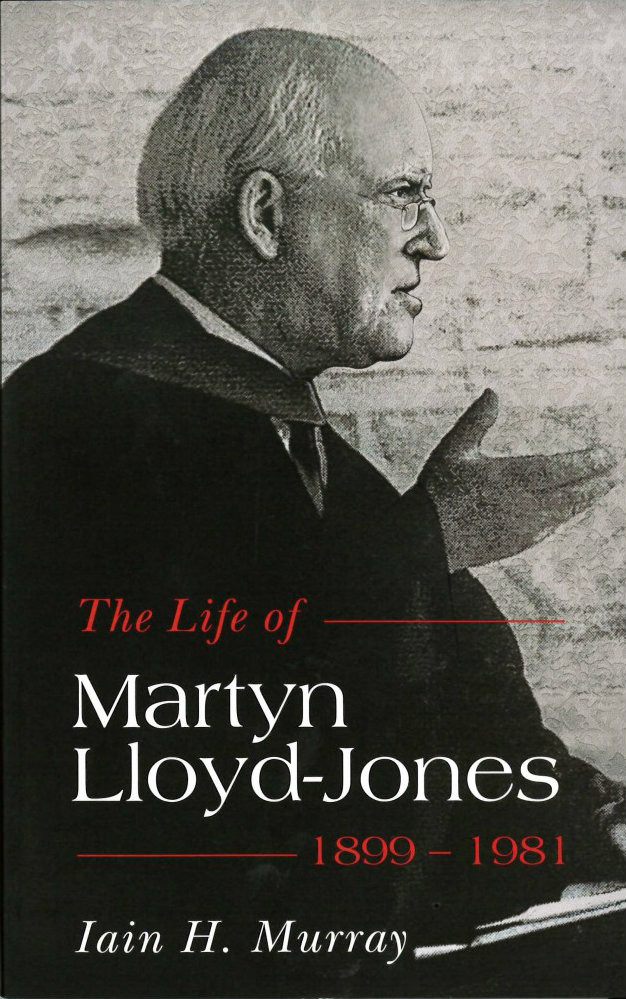
Which books to take, then? In a previous post I mentioned Tom Holland's Millennium. In addition, Evangelical Times kindly sent me a review copy of The Life of Martyn Lloyd-Jones 1899-1981, by Iain H. Murray. Now, being a proper Lloyd-Jones aficionado I've read Murray's two volume biog of the good Doctor. But let's face it, with Vol 1 a 394pp sizeable hardback and Vol 2 a hefty 831 pager, they are hardly EasyJet hand luggage fodder. Together they might even take up the whole of my bag weight allowance. I mean, I read Vol 2 during the summer of 1991 when it was first published and managed to break a deckchair. Seriously. Sitting by a swimming pool reading, The Fight of Faith, the stripy canvas split and I ended up in an undignified tangle on the floor. Not good. Murray's 476pp paperback abridgement seems just the thing, then. Apparently it's got some new material in it too, as well as leaving quite a bit of stuff out. 

Kindle-wise I'm hoping to make some more progress on The Idiot by Fyodor Dostoevsky

That's me done with blogging for a bit, then. See ya! 

Thursday, August 02, 2012

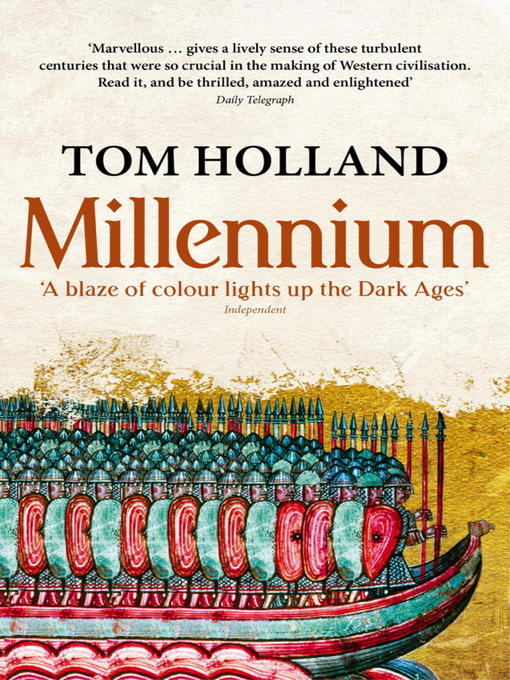
Hols & Aber 2012

Soon we'll be off on holiday for a couple of weeks. First we're heading to Carmarthen for a family break. Then it's the Aber Conference.  Reading-wise I'm hoping to finish Dickens' A Tale of Two Cities and make a start on Millennium by Tom Holland. Also, I recently received a review copy of Paul Brown's biography of Earnest Kevan (Banner of Truth). That spurred me on to read Kevan's The Grace of Law (Soli Deo Gloria), which has been gathering dust for far too long.