Pages

Showing posts with label Lloyd-Jones. Show all posts

Wednesday, August 20, 2025

Baptised with Heavenly Power, Philip H. Eveson

Baptised  with Heavenly Power:
The Holy Spirit in the Teaching and Experience
of D. Martyn Lloyd-Jones
by Philip H. Eveson
Mentor/Christian Focus, 2025, 421pp

Last November my wife and I visited Cardiff to watch the Wales v South Africa rugby match at the Principality Stadium. It was raining quite heavily that day, so we decided to do a bit of window shopping before the game. We wandered around various departments in the John Lewis store and then headed into St. David's centre, which was thronged with Christmas shoppers. Sarah spotted some familiar faces in the crowd. It was Philip and Jenny Eveson accompanied by one of their grandchildren. 

I first became acquainted with the author and his wife when I was a student what was then the London Theological Seminary (now simply London Seminary), from 1988-90. Mr Eveson was not only Resident Tutor at the seminary at the time, he was also pastor of Kensit Evangelical Church, of which I became a member. The seminary was founded by D.  Martyn Lloyd-Jones in 1977. His influence still loomed large when I studied there. 

We stopped to chat and Philip mentioned he had written a book that was being prepared for publication. This book. He was kind enough to have a review copy sent to me. The author was personally acquainted with Lloyd-Jones and had heard him preach on numerous occasions. I hadn't even heard of the famous preacher until after I was converted (circa 1984), and by then he had died (1981). However, I came across some his books as a young believer and read them avidly. As I recall the first Lloyd-Jones title I read was Prove All Things, followed by Joy Unspeakable. As I was beginning to feel the first stirrings of a call to pastoral ministry a lay-pastor friend lent me a copy of Preaching and Preachers. 

By the time I arrived at seminary I had read most of Lloyd-Jones's multi-volume expositions of Romans and Ephesians. Although it wasn't until later that the final volumes in the Romans series were published. What impressed me about Lloyd-Jones's writings was his strong emphasis on biblical doctrine, wedded to a deeply experiential thrust. He defined preaching as 'theology on fire', which sounded good to me. It wasn't until I arrived at the seminary that I discovered that Lloyd-Jones's teaching on the work of the Holy Spirit was the cause of some controversy. Influential leaders such as John Stott, Donald Macleod and Peter Masters were quite critical of some of Lloyd-Jones's writings. Some detractors even accused him of being a 'crypto-Pentecostal', or 'Reformed-Charismatic'. 

It seems that there are still some misgivings about aspects of Lloyd-Jones's teaching on the work of the Holy Spirit. Eveson writes in part to correct these misapprehensions, but he goes beyond answering critics to offer a constructive account of what Lloyd-Jones had to say on key elements of the Spirit's work. He does this in the opening chapters by locating the preacher in the context of the Reformed tradition, especially that of the Welsh Calvinistic Methodists of the Evangelical Revival. As the label suggests leaders such as Daniel Rowland and William Williams were solidly Reformed in their doctrine, but they had also experienced an outpouring of the Spirit that enabled them to preach with great power. They urged their converts to seek full assurance of salvation through the witness of the Spirit. 

It wasn't unusual for an older generation of Reformed writers to understand New Testament terms such as 'baptism with the Holy Spirit' or 'sealing of the Spirit' to denote a special empowering of the Spirit to give boldness in preaching and assurance of salvation. Lloyd-Jones drew upon this aspect of the tradition in articulating his views. In fact, his exposition of the sealing of the Spirit in Ephesians 1:13 and the witness of the Spirit in Romans 8:15-16 draws heavily on the work of the Puritan Thomas Goodwin. 

Eveson gives close attention to Lloyd-Jones's handling of the biblical materials on the person and work of the Holy Spirit. Chapters are devoted to the baptism, sealing and filling of the Holy Spirit. The writer interacts with critics of Lloyd-Jones's views. He is honest enough to point out that the preacher didn't always express himself consistently. In some sermons Pentecost is seen as the 'birthday of the church' that constituted her the one body of Christ, in others he distances himself from that position. Whatever may be thought of some of the details of Lloyd-Jones's expositions, it seems evident that the New Testament holds out the promise that since Pentecost a greater fullness of the Spirit may be sought and experienced by believers. Preachers are in need of the Spirit's empowering presence in their ministries. Believers may be filled with the Spirit, granting them assurance of salvation and inexpressible joy in the Lord.  

There has been a widespread recovery of expository preaching in Evangelical Churches in the United Kingdom. That is welcome, of course, but in practice what passes for 'expository preaching' can on occasion be reduced to an explanation of the meaning of a Bible passage, with a few words of application thrown in. A sermon may even be nicely structured and well-illustrated, but the element of 'theology on fire' may be conspicuous by its absence. Eveson provides a helpful corrective to this tendency in a number of chapters devoted to Lloyd-Jones's teaching on the relationship between word and Spirit in preaching. 

Preachers must proclaim the truth of Scripture faithfully and accurately, but they also need to  experience something of the wonder of that truth in their own hearts and lives. Eveson draws upon Lloyd-Jones's testimony to his own spiritual trials and experiences of God to help explain what made his preaching ministry so compelling. While it is true that the Spirit is always at work whenever the word of God is proclaimed, the Spirit's power may be more or less evident, both upon the preacher and also in the lives of those who hear the truth. Having only just been filled with the Sprit at Pentecost, the early church prayed that the Lord would 'grant your servants to continue to speak your word with all boldness' (Acts 4:29). The Lord answered their prayers by filling the people afresh with the Holy Spirit (Acts 4:31). The contemporary church urgently needs a fresh outpouring of the Spirit in all his fulness and Christ-exalting power. That is what will make the 'Quiet Revival' we are hearing so much about a 'Great Awakening'. 

Well, it was good to renew fellowship with the Evesons that rainy afternoon in Cardiff. I'm grateful for the review copy of Baptised with Heavenly Power. It's a powerful reminder of some vital truths. For my summer project at the seminary I wrote a essay on 'The Sealing of the Spirit'. I drew upon the writings of D. Martyn-Lloyd Jones, Thomas Goodwin and others in seeking to understand the meaning of Paul's words in Ephesians 1:13. Graham Harrison, lecturer in Christian Doctrine at the seminary oversaw my project. In his remarks on the essay, Harrison commented, 'Remember, there is always more with God'. That, in essence, is the burden of this book.

Monday, March 01, 2021

D. Martyn Lloyd-Jones (1899-1981) - A Personal Appreciation

40 years ago today, on March 1st 1981 D. Martyn Lloyd-Jones passed into eternity. It is somehow fitting that the great Welsh preached entered into glory on "St David's Day", the National Day of Wales. I never knew "the Doctor". Not once did I hear him preach. He died some years before I was converted. But Lloyd-Jones, through his books and example has had a formative influence on my life.

The Church in which I was converted during the mid 1980's had a growing Pentecostal and Charismatic element. Our young people were encouraged to meet with a neighbouring Pentecostal Young People's Fellowship. I was in my late teens at the time and had a growing interest in the work of the Holy Spirit and spiritual gifts. My home Church hosted a book evening. I spotted a book by D. Martyn Lloyd-Jones on the baptism and gifts of the Spirit entitled Prove All Things. I had not heard of the author, but the subject matter grabbed me. Before I became a Christian, I was not at all interested in books, leaving school at 16 with few qualifications. But as a new believer I found I had an insatiable desire to know more about the Christian faith. 

Little did I know that this book was to transform my outlook. Most of the Christian literature I had read up to that point was testimony type books, light on doctrine but full of wonderful experiences. But in Prove All Things, I encountered another world. Here was a man who took the text of Scripture seriously and thought deeply about the things of God. The writer was steeped in the works of the great Reformers and Puritans. Lloyd-Jones urged his readers to test all spiritual experiences by the Scriptures. I became disenchanted with the Charismatic Movement and longed for something with more Biblical depth. The writings of "the Doctor" were able to point me in the right direction.

In my early 20's I began to read through Lloyd-Jones' magnificent sermons on the Epistle to the Romans. This was the beginning of my theological education. "The Doctor's" preaching was intellectually demanding, doctrinally profound, thoroughly practical and wonderfully experimental.

When I felt called to the Ministry of the Word, my lay-pastor lent me his copy of Lloyd-Jones' Preaching and Preachers. This book has shaped my view of the pastoral ministry and preaching more than any other. I do not even try to emulate "the Doctor's" preaching style. But I practice the systematic exposition of whole books of the Bible and long that my preaching may be Holy Spirit anointed "logic on fire". When it came to choosing a theological seminary to prepare for the Ministry, I applied to the London Seminary . The seminary was founded by Lloyd-Jones in 1977 and seeks to train men for the Ministry with a strong emphasis on the preaching of the Word of God.

.Let me try to sum up some of the ways that "the Doctor" has influenced my Christian life and ministry:

Reformed Doctrine Lloyd-Jones preached the sovereignty of God in the salvation of sinners through Jesus Christ and by the power of the Holy Spirit. He proclaimed this deeply Biblical theology of grace that was rediscovered at the Reformation and exemplified by the Puritans and Calvinistic Methodists.

Revival "the Doctor" had a great burden for an outpouring of the Spirit upon the Church. He agreed with Jonathan Edwards, that the Church has grown and developed throughout history as a result of mighty God-given revivals. The need of the hour is not to find "new ways of doing church", important as that may be, but a heaven-sent, Christ glorifying revival.

Unity and Separation I believe that Lloyd-Jones was spot-on in 1966 when he called upon Evangelicals to withdraw from their ecumenically compromised denominations and come together as Bible-believing Christians.

Preaching Mrs Lloyd-Jones said that her husband was "first of all a man of prayer and then an evangelist". Lloyd-Jones is well known for his lengthy sermon series on Romans and Ephesians. What is less well known is that he preached evangelistically every Sunday evening at Westminster Chapel. I believe that sinners and saints alike need to hear the "old old story of Jesus and his love" in all its magnificent depth and richness.

The Value of History "the Doctor" loved Church history. That is one of the things that struck me when I read Prove All Things. The study of Church History and Christian biography is inspirational. We are reminded of what the Lord did in the past with ordinary men and women. Our understanding of the Bible is enriched in communion with the Theological reflection of the past. Familiarity with historical Theology also helps to keep the Church from doctrinal eccentricities and oddities.

The Life of the Mind Lloyd-Jones emphasised the importance of reading, study and scholarship. He helped deliver British Evangelicalism from the shallows of anti-intellectualism. "The Doctor" read widely and deeply. He was abreast of the latest trends in secular and Theological thinking. He was profoundly shaped by the Reformers, Puritans and Jonathan Edwards, but Lloyd-Jones was not their prisoner. He knew that no generation of Christians ever has a monopoly on the Truth. Everything must be tested by Scripture. The life and ministry of this great preacher gave UK Evangelicalism a new Theological depth. How can preaching be "theology on fire", if preachers fail to engage in theological reflection and study?

I commend to you the life and ministry of Martyn-Lloyd Jones. Read Iain Murray's Two Volume Biography, The First Forty Years & The Fight of Faith (Banner of Truth Trust). The second volume will give you a bibliography of Lloyd-Jones' publications. Murray has also published a single volume Life of D. M. Lloyd-Jones

* An earlier version of this article was posted on the blog in 2006. 

Friday, April 21, 2017

1966 and all that: an evangelical journey by Basil Howlett

EP Books, 2016, 128pp 

I was a student at the London Theological Seminary (now London Seminary) from 1988-90. During the summer of 1989 I did a summer pastorate alongside Basil Howlett when he was pastor of Copse Road Evangelical Church, Clevedon. I was only there for a month or so, but during that time I learned some valuable lessons from him concerning the work of the ministry. 

The seminary was founded in 1977 by Dr. D. Martyn Lloyd-Jones who was concerned that evangelicals were having to train for pastoral work in colleges dominated by theological liberalism. Rather than being fired up to preach the word, they were struggling to maintain their faith in Christ and love for him in the face of sustained attack from teachers who had little time for the biblical gospel. 

In October 1966 at the Second National Assembly of the Evangelical Alliance, Lloyd-Jones had issued a call for evangelicals in the mixed denominations to come together and form a loose alliance of gospel churches. Why should they remain any longer in denominations where the gospel was being denied?

Some have tried to suggest that the preacher's call was something of a damp squib. But in fact it was a turning point for evangelical witness in the United Kingdom. Basil Howlett for one was becoming increasingly unhappy with his situation as a Baptist Union pastor. His training for the ministry was undertaken by men who denied and indeed derided essential gospel truths. A number of Basil's fellow BU ministers were evangelicals, but others were out and out liberals. Church members were not as clear as they should have been on basic Christian beliefs and principles of godly living. Partly as a result of Lloyd-Jones' call, Howlett and the church he served took the costly step of leaving the BU. Many other evangelical ministers and churches in Baptist Union, Congregational, Presbyterian and Anglican denominations did the same, 

Evangelicals today have become used to belonging to church groupings like the Fellowship of Independent Evangelical Churches, In these groupings we stand unitedly for the gospel and there is no argument over essential truths. Time is not wasted on trying to advance the interests of a evangelical 'wing' of a denomination. Men can train for pastoral ministry in evangelical seminaries and colleges. These gains are at least in part a consequence of  '1966 and all that'.   

Basil's story is a reminder of the price that was paid by his generation of preachers as they endeavoured to ensure that churches were gospel-centered, and that the church groupings to which they belonged were united in biblical faith, not just denominational allegiance. It was prophesied that those, who, like Basil left their denominations were heading for the wilderness. But as his account shows, the Lord blessed their faithful stand and much fruitfulness followed. 

The basic principles for which Lloyd-Jones argued back in 1966 still hold good today. We need to be clear on the gospel, what it means to be a Christian and what is a church. The gospel must be allowed to define the limit and extent of fellowship between churches. Where false teaching is rife in a denomination, separation is called for. Secession should not involve sectarian isolation, however, for the gospel of grace unites us together in faith, love and mission. "Come out of it! But also come together" urged Lloyd-Jones. 

I for one found this a very moving and challenging read. Evangelicals in the 'mixed denominations' today would do well to review the lessons set out here. Is "in it to win it" a realistic, let alone biblically faithful strategy? Those of us who have "come out of it" need to devote ourselves afresh to the pursuit of deeper evangelical unity that respects differences on secondary matters, even as we "strive together for the faith of the gospel". (Philippians 1:27). The need of our nation is greater than ever for a bold and united witness to the message of salvation in Jesus Christ. To that end, let us be prepared to stand alone together. 

Tuesday, October 18, 2016

John Owen and D. Martyn Lloyd-Jones on Unity

2016 marks the 400th anniversary of the birth of John Owen in 1616 and the 50th anniversary of D. Martyn Lloyd-Jones' address on Evangelical Unity on 18th October 1966. Both men gave attention to the matter unity between Christians. Lloyd-Jones was a student of Owen and drew upon his work on Christian unity. However, I argue that Lloyd-Jones' strategy for achieving  greater unity among gospel churches was flawed in that was tied to Evangelicals coming together under one organisational umbrella group. In a previous post I looked at 'John Owen and D. Martyn Lloyd-Jones on Schism'.

The Puritan ecclesiastical experiment of the Commonwealth era had failed to unite all reform-minded believers under a single form of church government. Some favoured a drive to further reform the Church of England, others preferred Presbyterianism or others still, Independency. With the monarchy restored in 1660 the Church of England with its Episcopalian system became the State Church once more. The 1662 Book of Common Prayer was imposed on all Church of England congregations, leading to over 2,000 Puritan pastors being deprived of their livings. Anglicanism was the only officially recognised religion in England. 

It was payback time for the regicidal Puritans. Non-Anglicans faced sometimes viscous bouts of persecution. The well-known trials and tribulations of John Bunyan are a case in point. An attempt was made to impose Protestant unity upon all Christians in the land by means of the power of the State. But as Owen pointed out, rather than fostering true spiritual unity, the State-sponsored imposition of Anglicanism, Bishops, liturgy and all, only exacerbated divisions still further. Owen argued that God alone is Lord of men’s consciences. The Head of the Church had not left himself without witness when it came to the government, life and worship of the church. What he has commanded, man has no right to supplement, much less ignore.

Owen pleaded for toleration on the part of Nonconformists, arguing that doing so would not undermine the unity and peace of the nation. People should have the right to “do church” in the light of their understanding of Scripture and for the benefit of their souls, rather than be forced to conform to a Church that would not reform. Anglicanism was in danger of being as imperious and intolerant as Rome in insisting that unity could only be found under her banner and looking to the State to persecute Dissenters.

In 1672, Owen published A Discourse Concerning Evangelical Love, Peace and Unity. Our divine understood that inter-church unity could not be created institutionally, by forcing all Protestants to join the Established Church. True spiritual unity said Owen exists at three levels:

First in the Catholic Church on earth, which “is comprised that real living and spiritual body of his, which is firstly, peculiarly, and properly called the Catholic Church militant in this world. These are his elect, redeemed, justified, and sanctified ones, who are savingly united to their head by the same quickening and sanctifying Spirit” (15:78). All true believers belong to and are one with the Catholic Church on earth. They may disagree over many things and differ on points of church government, and yet “they esteem the things wherein they agree incomparably above wherein they differ.” (15:80). Those differences are to be handled not by one group of Christians riding roughshod over another because they have the power of the State on their side, but as befits their unity in the gospel. “It is love, meekness, forbearance, bowels of compassion, with those other graces of the Spirit wherein our conformity to Christ doth consist, with a true understanding and due valuation of the ‘unity of faith…’” that alone will enable believers to avoid the evils associated with entrenched differences between churches. To what extent do we give expression to our unity with the Catholic Church on earth that perchance exists outside of our hermetically sealed Reformed bubble?

Second there is the visible Catholic Church “comprehensive of all who throughout the world outwardly own the gospel, there is an acknowledgement of “one Lord, one faith, one baptism:” which are a sufficient ground of that love, union and communion among them” (15:82). It is in this manifestation of the Catholic Church “that salvation is to be obtained and out of which there is none.” (15:84).

Convinced Independent though he was Owen certainly did not want to limit the visible Catholic Church so defined to his own Independent church grouping. He regarded it as an “absurd, foolish and uncharitable error, which would confine the Catholic Church of Christ unto a particular church of one single denomination”. (15:84). Striking a consolatory note, notwithstanding his differences with the Church of England, Owen said he regarded her “to be as sound and healthful a part of the Catholic Church as any in the world.” (15:85). So far from being a narrow minded sectarian was Owen that he insisted, “Unto this Catholic Church we owe all Christians love, and we are obliged to exercise all the effects of it, both towards the whole and every particular member, as we have advantage and occasion.” (15:86). Owen was no sectarian Donatist, then. To what extent does our love for fellow Christians overflow our church groupings, to embrace believers in the mixed denominations, Charismatics, and others?

Thirdly Owen discusses the church of Christ in terms of those who profess the gospel and gathered into particular churches. All believers are obliged to belong to a local church. But in line with his principles, Owen did not recommend an “any church will do” approach. Should a local church degenerate from the biblical pattern and seek to impose unscriptural practices upon believers, the godly may separate from such a congregation and in doing so should not be regarded as schismatic. Owen stresses that in such situations reform-minded believers should not show themselves difficult rabble rousers. They are to attempt “peaceable endeavours to reduce [the church] to the order of the gospel” (15:97). All the time showing “charity, love and forbearance towards the persons of those whose miscarriages at present he cannot remedy.” (15:97). But if sincere Christians found themselves having corrupt practices and erroneous teaching forced on them, Owen counselled that they should peaceably withdraw and seek fellowship in a more biblically sound church. At a local level unity should not be sought at the expense of biblical purity.

What, then, according to Owen are the defining characteristics of gospel church unity that we are bound to seek?

1.      It is spiritual “the unity of the Spirit”, the product of being ‘spiritually and savingly united to Christ” (15:108), not the product of imposed uniformity.
2.      It is “unity of faith”, based upon “A precise and express profession of the fundamental articles of the Christian religion”. (15:108). Owen is not interested in lowest common denominator ecumenism, or sectarian exclusivism. Unity in the essential truths of the gospel is what matters. 
3.      It is a unity of Love. Love knits together all members of the body of Christ as the “bond of perfection”. This gospel love is not pernickety and excluding, but “acts itself by forbearance and condescension towards the infirmities, mistakes and faults of others”. (15:110). Is that always the case with us? Are we sometimes too quick to write others off?
4.      It is a unity in the orders of rule and ordinances of worship instituted by the kingly authority of Jesus. Where churches receive grace and gifts from the Lord Jesus to this end and seek to act in line with the Word, says Owen, “no such variety or difference will ensue as shall impeach that unity which is the duty of them all to attend unto.” (15:110). He is not demanding absolute uniformity of view and practice, but unity in diversity among churches that gladly submit to the rule of King Jesus laid down in his Word.

During the Restoration period Owen and his fellow Nonconformists faced a very different situation to ours today. Dissenters are no longer subject to persecution because we do not belong to the Church of England Established by Law. Much of Owen’s work on the doctrine of the church was an extended plea for the right of Nonconformists to exist persecution-free. That is no longer the need of the hour, thank God. But we are gospel-bound to pursue church-level Evangelical unity and Owen helps us to understand what that means. Evangelical unity flows from the gospel we believe and is shaped by the gospel of love. It is not about bringing all church groupings under one umbrella structure, or seeking to obliterate denominational distinctives. As with the poor, differences over church government, baptism and worship styles will be ever with us. But both within and among Gospel Churches we must do all we can to give expression to our unity in the gospel. How that works itself out in practice will differ in our various situations. Sometimes more fellowship will be possible with other neighbouring churches, sometimes less, but we need to find ways of expressing our unity in faith and love. Isolationism isn’t an option for true Independents. 

Sure, Affinity, the Fellowship of Independent Evangelical Churches, Grace Baptist Associations, Evangelical Presbyterian and Evangelical Anglican groupings, Gospel Partnerships and so on have a role in fostering unity between our churches. But is none large and comprehensive enough to serve as a pan-Evangelical Big Tent, where the “fundamental articles of the Christian faith” are confessed, but conscientious differences respected. Lloyd-Jones’ vision for Evangelical unity was strategically flawed in that he sought to replace the institutional unity of the World Council of Churches and British Council of Churches with that of another organisation, the British Evangelical Council. While we may agree that Evangelicals should separate from church groupings where there is no realistic prospect of reform, the answer is not as Lloyd-Jones put it in his 1967 address Martin Luther and his Message for Today: “Come out of it! But come together also…into an association such as this British Evangelical Council… Come out! Come in!” (Unity in Truth, D. M. Lloyd-Jones, Evangelical Press, 1991, p. 43). 

Dr. Owen grasped what Dr. Lloyd-Jones apparently did not at this point, that Evangelicals were already “in”, in the sense that together they belonged to the gospel-proclaiming Catholic Church in its local manifestations. Joining the BEC would not necessarily have broken down barriers between Evangelical Churches. What was needed there was a greater catholicity of spirit, more love for one another across denominational divides, a deeper determination to submit to the Lordship of Christ, come what may. Come out! Yes. But come out because you are in and that unity needs to be seen in action as gospel churches partner together to reach the nation for Christ. Lloyd-Jones would have been better advised to have stressed the basic principles, as did Owen, and not to have tied his vision to a single organisation.

Inter-church unity is organic, not organisational. As John Owen says in The True Nature on the Communion of Churches,

Take in the whole, and the union of churches consists in their relation unto God as their Father, and unto Christ as their only immediate head of influence and rule, with a participation in the same faith and doctrine of truth, the same kind of holiness, the same duties of divine worship, especially the same mysteries of baptism and the Lord’s Supper, the observance of all the rules of Christ in all church-order with mutual love, effectual unto all the ends of their being and constitution, or the edification of the Catholic Church. (16:190).  

Though there may be differences among gospel churches, our essential union is an expression of the oneness for with the Lord Christ prayed in John 17:20-23, that his disciples may be “perfect in one”. Giving that oneness visible expression is vital to the mission of the church, John 17:21.

There has been a welcome revival of interest in Puritanism among Evangelical Christians in the last few decades. That interest has largely focused on the rich treasury of Puritan devotional writings. But we must never forget that Puritanism was a movement dedicated to the reformation and revitalisation of the church. Reading the Works of John Owen Volumes 13-16 it is evident that he was a pastor-theologian; a theologian of the church and for the church. His ecclesiological writings are a standing reminder that, Ephesians 5:25-26.

* From my Evangelical Library conference paper: Reading John Owen: Volumes 13-16 

Monday, October 17, 2016

John Owen and D. Martyn Lloyd-Jones on Schism

2016 marks the 400th anniversary of the birth of John Owen in 1616 and the 50th anniversary of D. Martyn Lloyd-Jones' address on Evangelical Unity in 1966. Both men gave attention to the matter of schism or divisions between Christians. Lloyd-Jones was a student of Owen and drew upon his work on schism. However, his charge in 1966 that Evangelicals in the mixed denominations were guilty of schism was decidedly un-Owenic.  


John Owen was a leading voice of the Independent Churches. In the 17th Century the Independents were dogged by the charge of schism. They were Protestants who had separated from Rome. Schism number 1. They were Puritans and then Nonconformists who had separated from the Church of England. Schism number 2. They were Independents who allegedly had separated from the Presbyterian churches. Schism number 3. Understandably Owen didn’t find being labelled a 3-fold schismatic much to his liking. ‘schism scwism” might be our response, ‘so what?” For one, causing needless divisions among the people of God is a serious matter. John 17 for instance. For two, didn’t Evangelical Churches (whatever their ecclesiastical polity) face a similar charge when we refuse to get involved in Churches Together and the like? We’re splitters and no-one like a splitter.

Owen’s response to the charge of schism that was leveled against the Independents was a novel one. In Of Schism, Vol 13, published in 1657, he didn’t start with things as they were in his day with the Popery/Protestant divide and the splintering of Protestantism. Neither did he simply rehearse the denunciation of schism on the part of the Church Fathers. Augustine and the Donatists and all that. He took a rather novel approach. “Right” he said, “what does the Bible have to say about this?” Crazy, eh? Going back to the Bible’s he discovered that in the Good Book the word schism is only used of divisions within local churches. Never is it used of people who leave one local church and join another, or set up another, for whatever reason. Some in the church at Corinth were guilty of schism because they lined up behind their favourite preachers, or allowed social distinctions to rend the body of Christ at the Lord’s Supper. There’s schism for you.

But what of Christian unity on a bigger scale? Well, there’s the Universal Church. At that level, union consists of all who are chosen in Christ and saving united to him for salvation by the Spirit. That unity cannot be shattered because it is spiritual and organic, not organisational. No schism there, then. Then there’s the unity of the Visible Catholic Church. That is the church worldwide that professes the gospel. To split off from the Catholic Church so defined is not schism, argues Owen, but heresy and apostasy, 1 John 2:19.

Hang on a minute, Dr. Owen. What about the Roman Catholic charge against Protestants? As we have seen, for Owen, the Roman Catholic Church was no true Church, having apostatised from the Visible Catholic Church by defecting from the gospel. What about the Puritans and Non-conformists who left the Church of England? Owen argued that believers are not in any way obliged to align themselves with a territorial Protestant State Church. There is no biblical justification for such an institution. Owen confessed himself a member of the Church of England in the sense that he was united with the Visible Catholic Church in England composed believers in the nation who professed the gospel. But that did not mean he was guilty of schism for not being a member of the Church of England Established by Law by Henry VIII and his heirs and successors.

Believers are duty bound to gather themselves together in churches where the gospel is preached and godly discipline applied. When a local church of whatever denominational stamp refuses to reform itself according to the Word of God, it is the duty of believers to separate from it. Doing so was not to be regarded as schism. Neither was the fact that Independents differed from Presbyterians on certain points of church government and wished to put their beliefs into practice in their local churches.  

One Daniel Cawdrey, a Presbyterian minister at Great Billing, Northamptonshire took it upon himself to offer a response to Owen’s Of Schism in a pamphlet with the less than reconciliatory title, Independency a Great Schism. Suffice to say, the carping Cawdrey was no match for Owen in terms of theological acumen. Not to mention generosity of spirit.  Owen penned a Vindication. Reading it you sense his hurt at having his views and person traduced so roundly, even to the point of occasional tetchiness. Who can blame him? Owen felt himself reviled from one end of Cawrey’s work to the other. He was vilified as, ‘Satan, atheist, sceptic, Donatist, heretic, schismatic, secretary, Pharisee, etc”. (13:214). But the controversy also brought out the best in Owen in terms of his generous catholicity of spirit. He was certainly no sectarian Donatist and made it clear that he did not believe as Cawdrey had alleged that Independents were the only true churches.

Owen responded to a further critical rejoinder from Cawdrey. It is obvious that he found the controversy rather a chore. But he felt obliged to respond at length and with his customary thoroughness. This is Owen at his most cumbersome, taking pages and pages to say what could have been said much more succinctly. Eventually he called an end to what he called “this tedious debate” (13:269). For which his poor readers ought to count themselves grateful.

The main point as far as Owen was concerned, is that schism is a local church issue, not inter-church issue. But even if it was permissible for the term ‘schism” to be used of divisions between local churches, it wasn’t the Independents that were at fault. It wasn’t them that insisted that all local churches should belong to the Established Church of England. It wasn’t them that refused to reform the government of the church after a more biblical pattern. It wasn’t them that failed to exercise church discipline to weed out the notoriously ungodly from the flock. It wasn’t the Independents who imposed ceremonies, a fixed liturgy and canon law upon churches, all contrary to the mind of Christ. And then persecuted those who would not conform. That was the Church of England.

Owen did not write off the Church of England altogether, however. Writing, now in response to Dr. Stillingfleet on The Unreasonableness of Separation (1681), he said, “We do allow those parochial assemblies which have a settled, unblameable ministry among them to be true churches, for far as they can pretend so to be”. Then comes a lengthy, paragraph-long string of qualifiers. Parochial assemblies may be regarded as true churches although they had no power to choose or ordain their own ministers, or reform themselves according to the word of God, and that they neglected evangelical discipline and the like. Owen waspishly concludes, “Whatever can be ascribed to such churches we willingly allow to them.” (15:376-377). Where reforming such “parochial assemblies” proved impossible, peaceable withdrawal was not schism. Even then, Owen was not proposing total separation, just that Independents could not conscientiously engage in full communion with an unreformed Church of England. That was not what Scripture described as schism because it did not invoke stirring up divisions within a local church.

What, then do we make of Dr. Lloyd-Jones” charge in 1966 that Evangelicals in the mixed denominations were guilty of schism because they failed to separate from their error-tolerating denominations and come together as churches? He argued “that for us to be divided - we who are agreed about everything that really matters…is nothing but to be guilty of the sin of schism.” (Knowing the Times, D. M. Lloyd-Jones, Banner of Truth Trust, 1989, p. 254). Strong words. But if Owen is right, the charge of schism is a category mistake. Schism is local church issue, not an inter-church issue. Lloyd-Jones was aware of Owen’s work in this area. He devoted his 1963 Westminster Conference address to John Owen on Schism, in which Lloyd-Jones very much commended Owen’s attitude and approach. (The Puritans: Their Origins and Successors, D. M. Lloyd-Jones, Banner of Truth Trust, 1987, p. 73-100).

According to New Testament as demonstrated by Owen, schism is the sin of causing needless divisions within a gospel church. Divisions between gospel churches are another matter entirely. If a gospel church is in fellowship with a church grouping in which the the gospel is denied, and the situation cannot be remedied, that is a grievous disorder. We should separate from error. But Lloyd-Jones was wrong to say that Evangelicals were guilty of schism simply because their churches belonged to a 'mixed' denomination.

When it comes to the contemporary church scene we are often the ones accused of schism. Ours may be the only church in town not in Churches Together. But Churches Together has no biblical mandate. We are not obliged to be in it. It is no schism to be out of it. Especially as the grouping obscures clarity of gospel witness and is in danger of violating the unity of the Catholic Church by having Roman Catholics and unreconstructed Liberals involved.

We are schismatics, however, if we are the cause needless divisions within our local churches. We are failing in our duty of Christian love if we shun fellowship with other Evangelical churches because of differences over secondary matters.  

* From my Evangelical Library conference paper: Reading John Owen: Volumes 13-16 

Monday, December 01, 2014

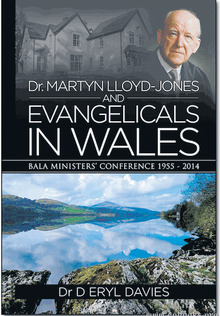
Dr. Martyn Lloyd-Jones and Evangelicals in Wales by Dr. D Eryl Davies


Dr. Martyn Lloyd-Jones and Evangelicals in Wales
Bala Ministers’ Conference 1955-2014,
by Dr. D Eryl Davies, Bryntirion Press, 2014, 442pp

Dr. Martyn Lloyd-Jones' influence on Evangelicalism in Wales did not wane when he moved from the Land of His Fathers to become Minister of Westminster Chapel in London in the 1930’s. In some ways his impact on Evangelicalism in Wales grew during the years of his London-based ministry. A new generation of young men converted in the 1940’s and called to pastor churches in the theologically mixed denominations looked to him for spiritual inspiration, theological guidance, personal advice and leadership.

Some of those men organised an annual Ministers’ Conference in the mid 1950’s that nowadays meets each June in the beautiful setting of Bala, north Wales. From its beginnings until he last attended the conference in 1978 Lloyd-Jones had a huge impact on the gathering. He chaired the discussion sessions and often gave the closing conference address. The ethos of Bala Ministers’ Conference was very much shaped by Lloyd-Jones, with its strong emphasis on prayer, preaching and revival.

The period in which Lloyd-Jones attended conference was one of great change for Evangelicalism in Wales. Many ministers faced the issue of secession from the mixed denominations. The challenges thrown up by the ecumenical movement forced them to go back to first principles and ask, ‘What is a Christian?’ and ‘What is the Church?’ The burgeoning Charismatic scene prompted reflection on what is and what is not a genuine work of the Spirit.   

Attending the conference as a younger Minister in the early 1990’s it seemed to me that the answer to almost every problem raised for discussion was, ‘we need a revival’. Discussions were often brought to a juddering halt when an old timer quoted something that ‘the Doctor’ had said some years earlier as if he was an infallible oracle. However, as Davies points out Lloyd-Jones would have deplored such a tendency and always encouraged men to think for themselves. While he believed in revival, he was also very much an evangelist and spoke of the need to be active in the Lord’s service in season and out of season.

The conference today seeks to maintain its focus on preaching the word in the power of the Spirit, while endeavouring to equip men to minister effectively and fruitfully in the contemporary setting. If it wasn't for my dislike of the dormitory sleeping arrangements, or, more accurately, the not sleeping because of other Ministers' snoring arrangements, I'd probably attend more frequently myself. 

Eryl Davies tells the story Lloyd-Jones and the Bala Ministers’ Conference with gripping simplicity. The bite-sized chapters make for easy reading and a fast-paced narrative. The author is not unaware of criticisms of the man and the conference and seeks to respond to them honestly and graciously. The final two chapters attempt to sketch out a theology of Word and Spirit in preaching. A number of appendices include notes on Lloyd-Jones’ addresses at Bala. His stirring emphasis on our need to see the living God at work among his people deserves to be heard afresh today. 

* Reviewed for Evangelical Times

Tuesday, December 10, 2013

Monday, September 23, 2013

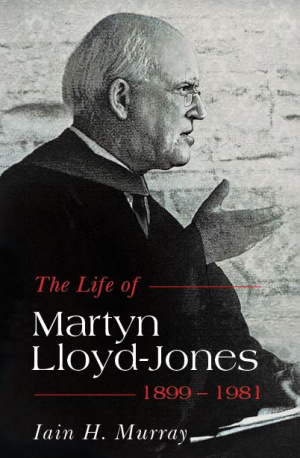
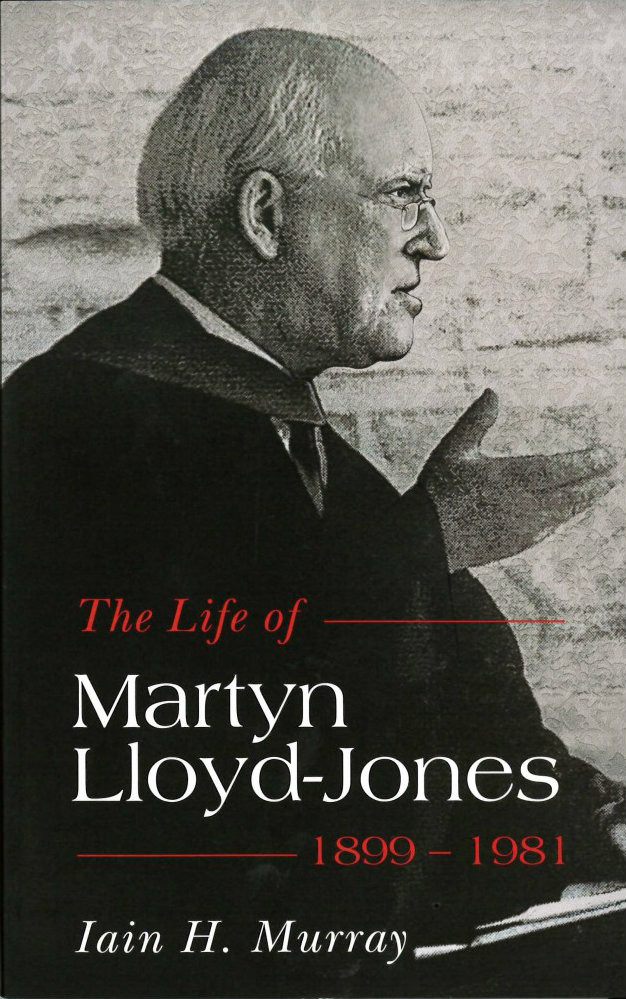
The Life of Martyn Lloyd-Jones 1899-1981 by Iain H. Murray

The Life of Martyn Lloyd-Jones 1899-1981
The Life of Martyn Lloyd-Jones 1899-1981Iain H. Murray,
 The Banner of Truth Trust, 2013, 476pp

Although I never heard Martyn Lloyd-Jones preach, his ministry had a huge effect on my early Christian life as I hungrily devoured his sermons on Romans and Ephesians and other published addresses besides. Wanting to know more about the man behind the messages I read and very much enjoyed Iain Murray’s two volume biography of the preacher, also published by the Banner of Truth. This edition of Murray’s life of Lloyd-Jones is a condensed and updated version of the larger works, which between them add up to over 1200 pages.

Lloyd-Jones’ story makes for a gripping read. He turned his back on an eminent medical career in order to become a preacher in Mission Hall in depression era Port Talbot. The Lord blessed his work there and many were converted under his earnest and passionate evangelical preaching. He was then called to Westminster Chapel in London, where he served for thirty years. There he regularly preached to thousands who were captivated by his powerful expository ministry.

Lloyd-Jones helped to spearhead the recovery of Reformed teaching in the United Kingdom, both through his preaching and by his involvement in organisations and initiatives such as IVF (now UCCF), the Evangelical Library and the Westminster Conference. He helped to found the London Theological Seminary.

His ministry was not without controversy. In 1966 he urged evangelicals to come together rather than be subsumed in the Ecumenical Movement. While many heeded his call and left the mixed denominations, other evangelicals such as John Stott and J. I. Packer followed a policy of integration rather than separation. Ironically the preacher’s call for Evangelical Unity left evangelicals badly divided and much ink has been spilt in trying to determine exactly what ‘the Doctor’ hoped to achieve. Murray interacts with some of Lloyd-Jones’ critics in an attempt to set the record straight.

This is not a critical biography that aims at presenting a coolly detached view of is subject. Lloyd-Jones and Murray were great friends and it shows. The author’s evident sympathy for the physician-cum-minister shines through on every page and enables him to present a convincing psychological and spiritual portrait of ‘the Doctor’. Murray’s treatment of Lloyd-Jones’ boyhood years and the account he gives of his death in the final chapter are especially moving.

Mrs Lloyd-Jones said that her husband was ‘first of all a man of prayer and then an evangelist’. In our era of media courting celebrity pastors, it is refreshing to read of an evangelical leader who refused to stand for a press photographer. He preached not himself, but Christ Jesus the Lord and did so in demonstration of the Spirit and power. Through his books and recordings of his preaching being dead, Lloyd-Jones still speaks to today, urging us to hold fast to the gospel that he lived to proclaim and died believing. This condensed biography serves as a welcome reminder of the man and his message. 

* Reviewed for Evangelical Times

Wednesday, July 31, 2013

My summer hols reading list


We're off to the Algarve tomorrow. Like the PM we're flying by EasyJet, but probably unlike him it's hand luggage only for us. Surprising how much you can fit into a small wheelie suitcase. But not that much. However, one must make room for essentials such as smellies, clothes and of course, books. Yep, I've got an Android Tablet with a Kindle app, but, sadly it isn't solar powered and the battery only lasts for around 2-3 hours before needing a recharge. Not much use for a four hour flight, or a day spent lazily reading on the beach. Nothing for it other than to take a couple of those papery, printy things called books. A bit primitive, I suppose, but there we are. The Tablet's coming too, mind you. Good for evening reading at the apartment, within reach of an electric socket.

Which books to take, then? In a previous post I mentioned Tom Holland's Millennium. In addition, Evangelical Times kindly sent me a review copy of The Life of Martyn Lloyd-Jones 1899-1981, by Iain H. Murray. Now, being a proper Lloyd-Jones aficionado I've read Murray's two volume biog of the good Doctor. But let's face it, with Vol 1 a 394pp sizeable hardback and Vol 2 a hefty 831 pager, they are hardly EasyJet hand luggage fodder. Together they might even take up the whole of my bag weight allowance. I mean, I read Vol 2 during the summer of 1991 when it was first published and managed to break a deckchair. Seriously. Sitting by a swimming pool reading, The Fight of Faith, the stripy canvas split and I ended up in an undignified tangle on the floor. Not good. Murray's 476pp paperback abridgement seems just the thing, then. Apparently it's got some new material in it too, as well as leaving quite a bit of stuff out. 

Kindle-wise I'm hoping to make some more progress on The Idiot by Fyodor Dostoevsky

That's me done with blogging for a bit, then. See ya! 

Monday, May 13, 2013

More on Lloyd-Jones and 'Secondary Separation'

Further to my earlier post on this subject, here, Peter Masters weighs in to the debate, here, pinching one of my quotes by the looks. But for a more considered view, see Stephen Clark's piece, Serving God in his Church in our Generation. As his masterly analysis shows, 'The Doctor's' position on separation was more nuanced and sophisticated than both some of his supporters and detractors have claimed. I don't much like just posting a bunch of links rather than writing something myself, as it's a bit lazy and not 'proper blogging'. But I've not got much more to say on the matter other than to commend Stephen Clark's excellent piece of work. So, a brace of links it is. 

Monday, July 16, 2012

Graham Harrison on Engaging with Lloyd-Jones: Round Two


Here Harrison gets to grips with "1966 And All That". A taster:
[Jim] Packer was to complain that Lloyd-Jones’ 1966 call was a ‘campaign of words without plans.’ (p.272). This position was elaborated years later by Carl Trueman who complained that Lloyd-Jones’ vague alternative to Anglicanism was ‘a non-ecclesiastical, non-confessional disaster.’ (p.272). Presumably he means that the Doctor had not produced a Presbyterian blueprint on which the forthcoming seceders could structure their theology. This is interesting as it betrays either an ignorance or, more likely, a rejection of Lloyd-Jones’ often argued distinction between the primaries and secondaries in the pecking order of evangelical doctrinal priorities. It is well known that into the latter category he was willing to place matters of church government, Independency, Presbyterianism and even Episcopacy. Important as they were they simply did not compare with the fundamental issues that were and still are at stake in a situation which calls into question the very nature of the gospel.
I think Harrison hits the nail on the head. Simply because Lloyd-Jones did not propose the post-succession restructuring of Evangelicalism along Episcopal or Presbyterian lines does not mean that he he had no concern for ecclesiology. On the contrary, what he wanted was a union of Evangelical churches, although those churches might have had differing patterns of church government. 

Monday, July 09, 2012

Graham Harrison on Engaging with Lloyd-Jones: Round One


I was never a member of Emmanuel Evangelical Church, Newport where Graham Harrison was the Minister for so many years. But I often sat under his preaching when living in Bassaleg, near Newport, and when visiting family back in South Wales. In addition, Graham Harrison was our systematic theology lecturer when I studied at the London Theological Seminary from 1988-1990. In one way and another he has had a formative impact on my life and ministry. I did a summer pastorate at Emmanuel some years ago, standing in for Graham when he was on sabbatical. We stayed at the Harrison's home for a month. Our son was a baby and Sarah was carrying our daughter, so it must have been a while back. What impressed me most about my time there was not so much Mr. Harrison's well-stocked library, but the realisation that the theologian and preacher was also a pastor. Talking to members of the congregation, it was evident that Graham cared for his people, visited the elderly saints regularly and comforted those who had lost loved ones.

But  Mr. Harrison could also be a bruiser, taking no prisoners in the cut and thrust of theological debate and discussion. If you were going to disagree with him you had better be able to put up a fight. Back in 2006 I had Graham come and speak on 'Martyn Lloyd-Jones 1966 & Today'. You can see a report here. While not agreeing with everything Lloyd-Jones said and did, Harrison is convinced that 'the Doctor' was right on the big issues, such as evangelical unity and the need for revival. It was with interest, then that  I read  the first part of his review of Engaging with Lloyd-JonesHarrison the Heavyweight is to the fore.

Seconds out for Round One of this rumble in the theological jungle

Here's an excerpt to get you going,
One other thing is lacking overtly from the book. It is the dimension of the effect he provoked on the part of those to whom his presence and the powerful expression of his views constituted something of an alien intrusion. That he was not English was a fact that soon became apparent. Nor did he come from Scotland which in a peculiar way (despite Gordon Brown) is still somewhat fashionable in London! He could not abide snobbery in any shape or form – whether or not it was expressed religiously, politically or merely socially. Many will have said - although Lloyd-Jones would no doubt have disagreed most strongly with them - that he was a self-made man who came from a remarkable family. Undoubtedly he possessed a boldness in advocating his opinions and something of a temperamental inability to be intimidated by persons or views contrary to his own. There can be little doubt that he was viewed as something of an irritant to the settled equanimity of the circles into which his gifts thrust him. It could not be gainsaid that he was intellectually brilliant, well able to hold his own in any company; he was a Christian of Calvinistic convictions and a preacher of remarkable power. But he was Welsh and unafraid to say so; he was not an Anglican but a dissenter and a nonconformist; furthermore, swimming against the tide was something that rarely seemed to bother him – particularly as usually and eventually he seemed to do it so well. Some find this hard to take – and, dare we say it, still do! Signs are not wanting in this volume that this attitude is still there, lurking, as it were, under the surface. Perhaps an open, full-blooded expression of such criticism would have been useful, if only to clear the air!

Friday, January 13, 2012

Engaging with Martyn Lloyd-Jones Edited by Andrew Atherstone & David Ceri Jones. Review Part 4


Engaging with Martyn Lloyd-Jones: The life and legacy of 'the Doctor',
Edited by Andrew Atherstone and David Ceri Jones, IVP/Apollos, 2011, 370pp

And so it's time to wrap up this series of posts on Engaging with Lloyd-Jones. The book is a timely reminder that the 'Doctor' was one of the key figures in 20th century Evangelicalism. In fact it is difficult to understand the recent history of Evangelicalism in the UK and beyond without factoring in the life and ministry of the Geneva gown-clad preacher.

This symposium reflects the fact Lloyd-Jones' life and teaching is racked by apparent contradictions. He helped to spearhead the recovery of Reformed doctrine and gave encouragement to the burgeoning Charismatic movement. He despised anti-intellectualism and emphasised the importance of theological study. But he was suspicious of the scholarly guilds and disliked scholasticism. He was a passionate advocate of Evangelical unity. Yet his 1966 address split UK Evangelicalism in two, with intergrationists the one side and separatists on the other.

It would be easy to focus attention on only one aspect of Lloyd-Jones' seemingly dialectical thought and paint him as a wilfully divisive crypto-Pentecostal with narrow minded fundamentalist leanings (see Robert Pope on Lloyd-Jones and fundamentalism). But that is to forget that Lloyd-Jones was a preacher-leader. Like any good preacher, he tailored his message to his audience. When preaching to Evangelicals who tended to have little time for biblical doctrine, he emphasised the value of theology and the need to think deeply about the things of God. When speaking to scholars he warned of the temptation of compromising the gospel for the sake of academic respectability. When ministering to Christians who were obsessed by spiritual experiences, he reminded them of the importance of the objective truths of Scripture and the need for discernment. When speaking to believers who were concerned about doctrinal correctness, but had little desire for experiential communion with God, he told them that true faith is more than mere intellectual assent. The truth must know and felt.

Remembering that Lloyd-Jones had an abiding concern to apply the Word as he judged most appropriate to his audience will help guard against a one sided reading of his teaching. He was not an academic theologian who's task in life was to produce a perfectly balanced and symmetrical system of doctrine. He was a preacher who shaped his messages to minister to the needs of the hour. As Calvin said, 'For it would be  a cold way of teaching, if the teachers do not carefully consider the needs of the times and what is appropriate for the people, for in this matter nothing is more unbalanced than absolute balance.' (Cited in Engaging with Calvin, Edited by Mark D. Thompson,  IVPA/Apollos, 2009, p, 17).

Lloyd-Jones was a different kind of Evangelical leader. His legacy is not a movement that bears his name and follows his dictates or a 'Lloyd-Jones Study Bible'. He has been criticised for not micro-managing the reorganisation of Evangelical churches which had separated from the mixed denominations in the wake of his 1966 call for Evangelicals to come together. But by temperament he was not an organiser and had little time for administration. He had no wish to be leader of a new movement that was overly dependent upon him as a person. His was a vision church-based Evangelical unity, rather than one where Evangelicals were encouraged to unite around personalities. This is perhaps one of the dangers of the "new Calvinism" associated with Together for the Gospel and The Gospel Coalition in the States.

Nevertheless, it is true to say that some of Lloyd-Jones' followers became too reliant on the great man in a way that was unhealthy. Donald Macleod's concern over this factor is mentioned in the book, p. 23-25.  The citing of Lloyd-Jones' words as an end of all discussion at Ministers' fraternals and conferences is an indication of the tendency to treat him as the next best thing to an infallible oracle. A conference I attended in Wales some years ago even featured an address on, What Lloyd-Jones would have thought of Evangelicalism today! We must learn what we can from the 'Doctor', but we have been called to serve the Lord in the 21st century where we face fresh challenges that cannot be met by trying to second guess what he might have thought about things.

Engaging with Lloyd-Jones will help us with the task of  critically assessing the preacher's lasting legacy. The trouble with big figures like the 'Doctor' is that he seems like a man whose life and ministry is quite remote from the situations in which we find ourselves today. Not many of us preach to thousands Sunday by Sunday in an influential London Church. Few pastors could keep a congregation gripped and enthralled by a decade spanning series of sermons on Romans. It wouldn't do to try and ape the great man, but we do still have a lot to learn from him. One point is that Lloyd-Jones was a pastor-theologian. He regarded reading simply for the sake of sermon prep as sheer professionalism. He studied the great works of theology (Calvin, Owen, Edwards etc). He endeavoured to get to grips with the latest theological trends (see Robert Strivens on Lloyd-Jones and Karl Barth). How many of us are aspiring to become pastor-theologians whose faith and ministry is enriched by wide and deep theological reading?

However, for Lloyd-Jones preaching was not a theological lecture or even a Bible study but a God-encountering, life-changing event. He sought to preach the Word in the transforming power of the Holy Spirit. Many think of the 'Doctor' as the great expositor, famed for his commitment to systematically preaching through books of the Bible. He certainly did that. But it is important to remember that his published expositions of Romans and Ephesians do not represent the whole of his sermon output. His wife once commented that Lloyd-Jones was "first of all a man of prayer, and then an evangelist". Every Sunday evening at Westminster Chapel, the 'Doctor' would herald the gospel with a view to seeing sinners saved. How many Reformed pastors today preach evangelistically as a regular part of their ministry?

Perhaps the 'Doctor's' greatest legacy is that his teaching and ministry bear witness to the fact that true preaching is nothing less than "theology on fire". Can we be content with anything less? 

Tuesday, January 10, 2012

Engaging with Martyn Lloyd-Jones Edited by Andrew Atherstone & David Ceri Jones. Review Part 3


Engaging with Martyn Lloyd-Jones: The life and legacy of 'the Doctor',
Edited by Andrew Atherstone and David Ceri Jones, IVP/Apollos, 2011, 370pp

A second controversial feature of the Lloyd-Jones legacy is his call for Evangelical unity in 1966. Andrew Atherstone gives a fair account of the event and its aftermath in his chapter, Lloyd-Jones and the Anglican succession crisis. The 'Doctor' argued that Evangelicals should come together in a loose church-based affiliation rather than  remain in the theologically mixed denominations. Some understood Lloyd-Jones to be calling for Evangelicals to succeed from their denominations without delay and unite to form a new purely Evangelical super-denomination. John Stott was so alarmed at the prospect of Evangelical Anglicans leaving the Church of England en masse that he used/abused his role as chairman to declare that Scripture and church history were against Lloyd-Jones. For him Evangelicals were called to be a faithful remnant within the professing church, rather than separate themselves from the denominations.

At the heart of Lloyd-Jones' case was the argument that Evangelicals should put fellowship with Evangelicals first rather than allow themselves to be kept apart due to their various denominational attachments. He reasoned that placing involvement in the mixed denominations before church-based fellowship with Evangelicals was tantamount to schism. His address was given added urgency by his understanding that the Ecumenical Movement aimed at uniting the historic denominations under the banner of Rome. In that situation Evangelicals would find themselves as one wing of territorial church that was in submission to the pope. Far better, he urged that Evangelicals should stand together outside of the Ecumenical Movement, giving a united witness to the gospel.

A number of Evangelical Anglicans and Nonconformists did leave their demoninations in response to Lloyd-Jones' call, but many did not. John Stott, Jim Packer and others wanted to see Evangelicals further integrated in the Church of England rather than septate from her. The drift of the Keele Conference in 1967 and Packer's involvement in writing  Growing into Union with Anglo Catholics only served to confirm this. Ironically, Lloyd-Jones call for Evangelical unity only helped to cement divisions between separatist Evangelicals and those who remained in the mixed denominations.

The reason why Lloyd-Jones spoke as he did in 1966 has been variously explained. Gaius Davies interprets his call for Evangelical unity in psychological terms. He charges Lloyd-Jones with control freakery.  He had a desire always to be right that verged on an infallibility complex. Davies explains that this psychological malady was the product of traumatic experiences in Lloyd-Jones' youth. If I were to don the mantle of amateur psychologist, I might wonder whether Gauis Davies' hatchet job might be the result of him being far too in thrall to the 'Doctor' in his earlier years. Now, somewhat like a difficult teenager, he feels compelled to give his spiritual father figure a hard time in an attempt to establish  his own identity. But far be it from me to suggest such a thing. Others posit that as a Welshman Lloyd-Jones had an inbuilt antipathy towards Anglicanism, making his call the product of nationalistic prejudices. Now, it's true that no one is free from psychological 'issues', not even the great 'Doctor'. National identity no doubt colours our thinking in a whole range of often imperceptible ways. But to try and explain away the burden of Lloyd-Jones' 1966 message in such terms is reductionistic in the extreme.

Carl Trueman, whose criticism of Lloyd-Jones is cited in the book (p. 19-20) charges the 'Doctor' with presenting a "completely incoherent vision" of the doctrine of the church in his 1966 address, "for one cannot call a group to an ecclesiastical action (separation) which leads to a non-ecclesiastical result (some broad, parachurch alliance)" - here. But this is not quite right. For many years Evangelicals in the UK were largely content to remain in the mixed denominations. They co-operated with fellow Evangelicals in parachurch organisations such as missionary societies and the Evangelical Alliance, but were united on a church level with Liberals, Anglo-Catholics, and other dodgy characters,  Lloyd-Jones challenged the status quo by arguing that mere parachurch fellowship between Evangelicals was not enough. Those who were united in the gospel should come together as churchesThat is why John Coffee is incorrect draw a parallel between the 'Doctor's' prescription for Evangelical unity and movements in the USA like Together for the Gospel or the Gospel Coalition (p. 323). Those groups are based on an alliance of Evangelical leaders (or even personalities) rather than churches. The British Evangelical Council (forerunner of Affinity) was founded to facilitate fellowship between individual local churches and church groupings, not merely to enable Evangelicals to engage in fellowship and mission on a personal level. Separation from the denominations is indeed an ecclesiastical act, but in Lloyd-Jones' vision, separation had an ecclesiastical goal,  "stand together as churches, constantly together, working together, doing everything together, bearing our witness together." (Knowing the Times, D. M. Lloyd-Jones, 1989, Banner of Truth Trust p. 256). This was also emphasised in his 1967 address, Martin Luther and his message for today
Come out of it! [Denominations signed up to the ecumenical movement and heading for Rome] But come together also, come into fellowship with all like-minded Christian people. Come into an association such as this British Evangelical Council, that stands for truth and against compromise, hesitation, neutrality and everything that but ministers to the success of the plans of Rome and the ecumenical movement. Come out; come in! (Unity in Truth, D. Martyn Lloyd-Jones, 1991, Evangelical Press, p. 43). 
The problem is that Evangelicals are not agreed on the issues of church government and paedo/credo baptism. That is why the formation of a new Evangelical super-denomination would have been impossible. Given the reality of the situation, a loose alliance of Evangelical churches and church groupings was the best that could have been hoped for. However, one difficulty with Lloyd-Jones' proposals is that he envisaged a pan-Evangelical grouping of churches that included both Calvinistic and Arminian fellowships. He was by his own admission and 18th century man. The trouble is that if the Evangelical Revival of the 18th century becomes the starting point for defining authentic Evangelical identity, then Wesley's Arminianism must be added to the mix alongside Whitefield's Calvinism. While Lloyd-Jones deprecated Wesley's Arminianism and was Calvinistic in his own convictions, he argued that the issues of Arminianism and Calvinism should not divide fellow Evangelicals. When played out at the level of a church-based alliance, his vision involved a  measure of doctrinal indefferentism on issues that are not indifferent to the clear presentation of the gospel. It would have been far better had Lloyd-Jones proposed an association of distinctly Reformed independent local churches and church groupings that was based on the historic Reformed confessions of faith, or their contemporary equivalent. That way differences over church government and baptism could have been accommodated, while enabling Evangelical and Reformed churches to retain a united witness to the truth in all its glory.

But where does Lloyd-Jones' address leave us today? There is currently a substantial sector of Evangelical and Reformed churches in the UK that do not belong to the mixed denominations. Many, but by no means all of these churches belong to Affinity. How should separated churches relate to Evangelicals who remain in the Church of England, Church of Scotland, Baptist Union, Presbyterian Church of Wales, etc? I sense that a new generation of Evangelical leaders in the Church of England, especially those associated with the Proclamation Trust do not ascribe to the intergrationist policy of Stott and Packer. They have little time for ecclesiastical politics and simply want to get on with the work of preaching the gospel at the level of the local parish church. Links are bring fostered with such Anglican Evangelicals and their Free Church colleagues through regional Gospel Partnerships. But Gospel Partnerships are alliances of Evangelical leaders, rather than church-based groupings. The Gospel Partnerships may do some good and separated Evangelicals should encourage and support friends who stand for the gospel in the mixed denominations. But the issue of separation is being fudged and Lloyd-Jones' strategic vision of Evangelical church-based unity has yet to be realised.