Pages

Showing posts with label Preaching. Show all posts

Wednesday, August 20, 2025

Baptised with Heavenly Power, Philip H. Eveson

Baptised  with Heavenly Power:
The Holy Spirit in the Teaching and Experience
of D. Martyn Lloyd-Jones
by Philip H. Eveson
Mentor/Christian Focus, 2025, 421pp

Last November my wife and I visited Cardiff to watch the Wales v South Africa rugby match at the Principality Stadium. It was raining quite heavily that day, so we decided to do a bit of window shopping before the game. We wandered around various departments in the John Lewis store and then headed into St. David's centre, which was thronged with Christmas shoppers. Sarah spotted some familiar faces in the crowd. It was Philip and Jenny Eveson accompanied by one of their grandchildren. 

I first became acquainted with the author and his wife when I was a student what was then the London Theological Seminary (now simply London Seminary), from 1988-90. Mr Eveson was not only Resident Tutor at the seminary at the time, he was also pastor of Kensit Evangelical Church, of which I became a member. The seminary was founded by D.  Martyn Lloyd-Jones in 1977. His influence still loomed large when I studied there. 

We stopped to chat and Philip mentioned he had written a book that was being prepared for publication. This book. He was kind enough to have a review copy sent to me. The author was personally acquainted with Lloyd-Jones and had heard him preach on numerous occasions. I hadn't even heard of the famous preacher until after I was converted (circa 1984), and by then he had died (1981). However, I came across some his books as a young believer and read them avidly. As I recall the first Lloyd-Jones title I read was Prove All Things, followed by Joy Unspeakable. As I was beginning to feel the first stirrings of a call to pastoral ministry a lay-pastor friend lent me a copy of Preaching and Preachers. 

By the time I arrived at seminary I had read most of Lloyd-Jones's multi-volume expositions of Romans and Ephesians. Although it wasn't until later that the final volumes in the Romans series were published. What impressed me about Lloyd-Jones's writings was his strong emphasis on biblical doctrine, wedded to a deeply experiential thrust. He defined preaching as 'theology on fire', which sounded good to me. It wasn't until I arrived at the seminary that I discovered that Lloyd-Jones's teaching on the work of the Holy Spirit was the cause of some controversy. Influential leaders such as John Stott, Donald Macleod and Peter Masters were quite critical of some of Lloyd-Jones's writings. Some detractors even accused him of being a 'crypto-Pentecostal', or 'Reformed-Charismatic'. 

It seems that there are still some misgivings about aspects of Lloyd-Jones's teaching on the work of the Holy Spirit. Eveson writes in part to correct these misapprehensions, but he goes beyond answering critics to offer a constructive account of what Lloyd-Jones had to say on key elements of the Spirit's work. He does this in the opening chapters by locating the preacher in the context of the Reformed tradition, especially that of the Welsh Calvinistic Methodists of the Evangelical Revival. As the label suggests leaders such as Daniel Rowland and William Williams were solidly Reformed in their doctrine, but they had also experienced an outpouring of the Spirit that enabled them to preach with great power. They urged their converts to seek full assurance of salvation through the witness of the Spirit. 

It wasn't unusual for an older generation of Reformed writers to understand New Testament terms such as 'baptism with the Holy Spirit' or 'sealing of the Spirit' to denote a special empowering of the Spirit to give boldness in preaching and assurance of salvation. Lloyd-Jones drew upon this aspect of the tradition in articulating his views. In fact, his exposition of the sealing of the Spirit in Ephesians 1:13 and the witness of the Spirit in Romans 8:15-16 draws heavily on the work of the Puritan Thomas Goodwin. 

Eveson gives close attention to Lloyd-Jones's handling of the biblical materials on the person and work of the Holy Spirit. Chapters are devoted to the baptism, sealing and filling of the Holy Spirit. The writer interacts with critics of Lloyd-Jones's views. He is honest enough to point out that the preacher didn't always express himself consistently. In some sermons Pentecost is seen as the 'birthday of the church' that constituted her the one body of Christ, in others he distances himself from that position. Whatever may be thought of some of the details of Lloyd-Jones's expositions, it seems evident that the New Testament holds out the promise that since Pentecost a greater fullness of the Spirit may be sought and experienced by believers. Preachers are in need of the Spirit's empowering presence in their ministries. Believers may be filled with the Spirit, granting them assurance of salvation and inexpressible joy in the Lord.  

There has been a widespread recovery of expository preaching in Evangelical Churches in the United Kingdom. That is welcome, of course, but in practice what passes for 'expository preaching' can on occasion be reduced to an explanation of the meaning of a Bible passage, with a few words of application thrown in. A sermon may even be nicely structured and well-illustrated, but the element of 'theology on fire' may be conspicuous by its absence. Eveson provides a helpful corrective to this tendency in a number of chapters devoted to Lloyd-Jones's teaching on the relationship between word and Spirit in preaching. 

Preachers must proclaim the truth of Scripture faithfully and accurately, but they also need to  experience something of the wonder of that truth in their own hearts and lives. Eveson draws upon Lloyd-Jones's testimony to his own spiritual trials and experiences of God to help explain what made his preaching ministry so compelling. While it is true that the Spirit is always at work whenever the word of God is proclaimed, the Spirit's power may be more or less evident, both upon the preacher and also in the lives of those who hear the truth. Having only just been filled with the Sprit at Pentecost, the early church prayed that the Lord would 'grant your servants to continue to speak your word with all boldness' (Acts 4:29). The Lord answered their prayers by filling the people afresh with the Holy Spirit (Acts 4:31). The contemporary church urgently needs a fresh outpouring of the Spirit in all his fulness and Christ-exalting power. That is what will make the 'Quiet Revival' we are hearing so much about a 'Great Awakening'. 

Well, it was good to renew fellowship with the Evesons that rainy afternoon in Cardiff. I'm grateful for the review copy of Baptised with Heavenly Power. It's a powerful reminder of some vital truths. For my summer project at the seminary I wrote a essay on 'The Sealing of the Spirit'. I drew upon the writings of D. Martyn-Lloyd Jones, Thomas Goodwin and others in seeking to understand the meaning of Paul's words in Ephesians 1:13. Graham Harrison, lecturer in Christian Doctrine at the seminary oversaw my project. In his remarks on the essay, Harrison commented, 'Remember, there is always more with God'. That, in essence, is the burden of this book.

Thursday, November 19, 2020

Where Has All The Gospel Preaching Gone? by Roger Carswell

This little booklet came as a freebie with a book I ordered from 10ofthose.com. It was very kind of the publishers to send me a gratis copy. Although it was a bit like receiving the gift of a book on losing weight, or how to smarten up your appearance. What is the giver trying to say? 

Roger Carswell is a gifted evangelist whose soul winning ministry has been wonderfully used of the Lord in the UK and beyond. He thinks he's spotted a gap, or maybe even a gaping hole in much of contemporary Evangelical preaching. There isn't much of the evangel in it. Expository preaching may expound a Bible passage and apply it to the congregation, but the gospel of salvation isn't necessarily proclaimed and a response called for.

Does Carswell have a point? Yes. Whatever text they are handling, preachers should always set the little story of a particular Bible chapter or verse in the context of the big story of God's redeeming grace. And Jesus is at the heart of that big story of creation, ruin, redemption and renewal. 

But it isn't simply a matter of bringing the gospel into a sermon. The gospel, or al least some aspect of the gospel should flow from the text, into the sermon and be applied to the congregation. That doesn't mean John 3:16 always gets tagged onto the end of every message. The gospel is as broad as it is deep in its declaration of the plight of man and the power of God. 

Regular hearers of our preaching should be left in no doubt that they are sinners who need to repent and believe in the Saviour who died for our sins and rose from the dead that we might be put right with God and have the hope of eternal life. 

It may be easier to do that when preaching from some Bible books/passages than others, but it can and should be done at all times. In the evenings I'm currently preaching through Peter's sermon on the Day of Pentecost in Acts 2. You can't avoid proclaiming Jesus' saving crucifixion, resurrection, exaltation and new life in the Spirit. Peter even tells us how to apply the message, Acts 2:37-41. 

In the mornings I'm preaching through Jeremiah and the other week I gave a sermon on Jeremiah 10:1-16, 'The stupidity of idolatry and the supremacy of God'. 'Not very gospely', you might say. But my headings give the drift of the message: I. In our folly we put idols in God's place, II. Let us put God in his rightful place, III. In his grace God put Jesus in our place. The great exchange of the gospel undoes the grim exchange of sin. 

I think one thing pastors need to work on in giving their preaching an evangelistic edge is the introduction to their messages. This should flag up a link between the passage in hand and people's need to hear the good news of Jesus. The pandemic has highlighted the plight of man in sin, for which the gospel alone has the answer. Let's make that clear, rather than simply jump into the text with some remarks about the background of a passage, or whatever. 

Carswell argues his case for bold evangelistic preaching biblically and with the support of some of the great evangelistic preachers of the past such as C. H. Surgeon and Octavius Winslow. He could also have enlisted the help of D. Martyn Lloyd-Jones. While he is best known these days for his great expository series on Romans and Ephesians, on Sunday evenings at Westminster Chapel, he would herald the gospel that sinners might be saved. 

Maybe one of the reasons behind the decline of evangelistic preaching is that we tend to think of outreach primarily in terms of personal witness and small group study. The preaching of the Word to the gathered church is not necessarily seen as an evangelistic event. Perhaps it is assumed that every member of the congregation is already converted, but that is a dangerous assumption to make. 

Besides, non-Christians should be made welcome in our services. They need to hear the gospel if they are to be reconciled to God. Such was the case in the church gatherings of the New Testament, 1 Corinthians 14:24-25. The fact that our services are now broadcast online for all to hear should make us all the more determined to proclaim the gospel that people might turn to Christ for salvation. 

A timely call for pastors to, 'preach the word... do the work of an evangelist', 2 Timothy 4:2, 5. 

Wednesday, May 16, 2018

Preaching as the Word of God by Sam Chan

Preaching as the Word of God:
Answering an Old Question with Speech-Act Theory,
Sam Chan, Pickwick Publications, 2016, 279pp

The Second Helvetic Confession expresses the high view of preaching that obtained among the Reformed churches when it says, 'The preaching of the Word of God is the Word of God'. (Chapter 1). That is some claim to make. Can it be truly said that a mere human preacher can give voice to the very Word of God? The Reformers not only answered that question in the affirmative, they made the faithful preaching of the Word of God one of the identifying marks of a true church. 

Sam Chan sets out to examine whether the claims of the Reformers can be biblically justified. He brings the insights of speech-act theory to bear on the question in hand. First of all Chan investigates what Martin Luther and John Calvin had to say on preaching as the Word of God, and the preaching of the Word of God as a mark of the church. Copious reference is made to the writings of the two leading Reformers. They were in essential agreement on both points, while nuanced differences are teased out. Chan's discussion of the Reformers' views is illuminating. However, Luther and Calvin were lucid enough communicators for the writer to have foregone his summaries of what they had said after almost every quote. 

Attention is then given to the biblical materials. In the Old Testament God spoke to his people through prophets like Moses (Deuteronomy 18:15-22). The Old Testament also looked forward to the coming of One who would proclaim the Word of the Lord in the power of the Spirit (Isaiah 61:1-4). Jesus is revealed as the fulfillment of Deuteronomy 18 and Isaiah 61. He was anointed by the Spirit to proclaim the good news of the kingdom of God (Luke 4:16-19). Jesus then commissioned the Twelve apostles to bear witness to his works and words (Acts 1:8).  The church founded upon the apostolic testimony to Jesus was to preach the Word for the salvation of the lost and the building up of God's people (Acts 8:4, 2 Timothy 4:1-5). Chan's scriptural survey gives credence to the Reformer's claim that God indeed speaks through human beings. The preaching of the Word of God can therefore rightly be regarded as the Word of God through men and to men. 

But what exactly is meant by 'the Word of God', and how can we be sure that God is truly speaking through a preacher? The whole Bible may be regarded as the written and authoritative Word of God. But in a more limited sense, to preach the Word is to proclaim the gospel of salvation. That is certainly what we find in Acts and also in the teaching of the Reformers. To preach the Word is to announce the good news of Jesus as disclosed in the pages of Scripture. A message that fails at that point cannot be regarded as the Word of God. 

Chan draws upon speech-act theory as a tool that helps the church to discern the voice of God in the words of a preacher. Speech-act theorists divide language up into three key elements. Locutions, words or sentences. Illocutions, what a speaker is doing with his or her words. Perlocutions, the effect that words have on hearers. The main thing is that words are never 'just words'. To speak is to act. Applied to the Bible and preaching, in Scripture we have God's written words. But God is doing things with these words, such as making promises, laying down commands, or issuing warnings. The illocutionary intentions of God's words have their appropriate perlocutionary effects as promises are believed, commands obeyed and warnings heeded. Speech-act theory helps safeguard both the propositional and personal aspects of biblical revelation. We have the propositional locutions such as 'Jesus is Lord', and also the personal address, 'believe that Jesus is Lord and follow him'. 

Preaching is an act of divine self-communication through a human agent. For preaching to be counted as the Word of God the preacher's locutions must match those of the gospel given in Scripture. Like the Bereans of Acts 17 the church must "examine the Scriptures, to see if these things were so." (Acts 17:11). More than that, those who proclaim the Word of God must also press the practical illocutionary demands of the gospel; repentance, faith and obedience. The preacher, however, cannot secure the perlocutionary effects of gospel proclamation. Only the Holy Spirit can do that. 

While Chan's main focus is on the gospel as the Word of God, the same essential principle applies whatever portion of Scripture is being expounded and applied. That said, no biblical text is explained faithfully unless it it set in the context of the drama of redemption that unfolds in the canon of Scripture as a whole. The preacher, for example, may be expositing the food laws in Leviticus 11, but he will not have preached the food laws unless he relates that chapter to Jesus' teaching in Mark 7:18-19 and Peter's experience as recounted in Acts 10 & 11. Then the preacher must press home the key idea of sinners being made clean and included among the people of God by the gospel. 

Chan's  conception of the gospel seems to be rather narrow in scope. I am not sure it is right to say that Paul's teaching on Christ's coming and the resurrection of the dead in 1 Thessalonians 4:15 are 'not directly related to the gospel'. That is exactly the good news he proclaimed, 1 Thessalonians 1:9-10. 

None the less, I fully agree with the author's basic thesis. The Reformers were right. Scripture itself teaches that the preaching of the Word of God is the Word of God, and is to be received as such by the faithful. Speech-act theory helps clarify how that is the case.  God as a divine speech-agent communicates his saving word through commissioned human beings to human beings. 

But no book on preaching, not even one on the theology of preaching can be regarded as up to the mark if it does not fire us up to preach the Word. In his own terms, Chan may have faithfully re-locuted what Scripture says about preaching as the Word of God, but the illocutionary force of the Bible's command to 'preach the Word' with urgency and boldness is somewhat lacking. The work can be dryly technical. Take Chan's conclusion, for example,
to preach the gospel as the word of God is to re-locute and re-illocute the divine speech act, the gospel, which itself was once locuted and illocuted by the prophets, Jesus and the apostles, and which now continues to be locuted and illocuted in the canonical Scriptures. (p. 212). 
I know what the author means, but that is not a definition of preaching that will inspire busy pastors to preach their hearts out next Lord's Day. If that was not Chan's intention in writing on preaching, perhaps it should have been. Since preaching is 'theology on fire', we also need a theology that will put fire into our preaching.The practical implications of the view Chan is advocating ought to have been spelled out more fully. The need for the empowering presence of the Spirit upon preacher and hearers alike is mentioned, but not given sufficient weight. Lack of space means writers cannot say everything that they would like, but there is a considerable amount of repetition in chapters 9-10. Choices have to be made on what to leave out and what to include. Less focus on linguistic technicalities and additional practical application would have made this a more useful book for preachers. A theology of preaching should generate heat as well as light. 

By all means read Chan. His treatment will help crystallise your thinking on what it means to preach the Word. His discussion of the Reformers' position and handling of the biblical materials are most helpful. Speech act theory reminds us that the preacher is swept up in the communicative action of the triune God. But you will need to supplement this somewhat theoretical work on preaching with something more soul stirring, like Preaching and Preachers by D. M. Lloyd-Jones, or practical, such as Preaching Pure and Simple by Stuart Olyott.

* I am grateful to the author for being kind enough to send me a free review copy. 

Friday, January 05, 2018

Blogging in the Name of the Lord: Stephen Kneale

GD: Hello Stephen Kneale, and welcome to Exiled Preacher. Please tell us a little about yourself.

SK: Hello! My friends call me Steve (some very close friends and family run with Stevie) I prefer being called Steve but hate it in conjunction with my surname, hence Stephen Kneale. Err... anyway that’s my name (hope you’ve made room for this). I was born in Oxford, began my schooling in Birkenhead, finished my secondary education in W. Berks, did my undergrad degree in History & Politics 10 years ago at Liverpool, where I also met my wife Rachel. From there, I took a Religious Studies & Philosophy PGCE  and had a very brief career as a secondary school teacher in Newbury. After a hefty bout of depression, I left teaching and completed an MA in Theology (I had intended to do it with the Artist formerly known as WEST, but their distance programme wasn’t suitable for me at the time). At this point, we were in Shrewsbury due to my wife’s work. From there, we followed my wife’s work again to Manchester where I became a self-employed researcher serving the recruitment sector and serving with a church in Moss Side. From there, I was called to be the pastor at Oldham Bethel Church around 3 ½ years ago. Since then, you asked me to do this a few hours ago, marking the zenith of both my theological development and overall growth as a person.

GD: It doesn't get munch better than this. You blog at https://stephenkneale.com/. What made you start blogging?

SK: My blog began as a primarily political blog with a bit of theological comment thrown in. It has morphed somewhat since then, moving from Blogger to Wordpress and undergoing a couple of rebrands before landing on the form it takes today.

I began for a variety of reasons. I spent the early part of my university years shouting at people for not being political enough and, in a brief flirtation, knocking around with the SWP. Blogging seemed like a more efficient way to shout at a wider range of people. It became apparent that some of the radical SWP views didn’t quite square with the radical Socialism with a Christian bent I tended toward. As I began writing, much of the material was drawn from whatever I was studying or reading infused with a theological twist and a soupcon of my own thoughts. It soon became less a tool to shout my rightness at people and more a means of formulating my own views on a given subject and starting a discussion.

As it morphed into more theological and social comment, I found it helpful in forming my own views or pushing against things that struck me as sub-optimal in the Christian world, as I perceived them. It has also proved to be a making our little corner of the UK, and our unique challenges, a little wider known.

GD: Which blogs do you enjoy reading and why?

SK: You can hardly be reformed and not read Tim Challies blog. Funnily enough, I have valued his a la carte feature as much as anything as it has led me to several blogs I would never have read otherwise.

David Robertson at The Wee Flea is always good value. He is so insightful and absolutely excellent on the pressing social issues of the day.

Then I have valued several smaller blogs of folk working in similar areas to us. Duncan Forbes at Council EstateChristianity has much to say as does Dave Williams at Faithroots.net. Mez McConnell is normally churning out something interesting at the 20Schemes blog too.

GD: What are the strengths and weaknesses of blogging as a medium for reflection on theological and ministry matters?

SK: At its best, blogging can bring real clarity to an issue. More usually, it is helpful in starting a discussion and process of thinking. Occasionally, it descends into arguments because one cannot say in everything 1000 words (particular if someone has a particular something in mind that you chose not to say!)

I have found blogging valuable in offering a quick response, or a basic outline of thoughts, addressing issues that arise in the both the local and wider church. It has also been a useful exercise in offering a position to the church that we would work toward. Due to a combination of character traits (some good; some less good) I appear to have a particular penchant for puncturing what I perceive to be blind spots that are passed around, especially as they relate to how things are on the ground in our particular context.

I have found blogging exceptionally helpful in raising the profile of our work in Oldham. It has also given me room to make clear to those who might support our work to “prove” I am kosher and share their core convictions, rather than relying on some unspoken shibboleth or a secret Reformed handshake (no one has shown it to me yet!)

GD: Do you use other forms of social media, and why/what for?

SK: Being the appropriate age, I joined Facebook when it first hit universities and never really came off it. I joined Twitter much later with almost minimal use and am on Linkedin but rarely visit.

Since becoming a pastor and determining to blog much more frequently, I primarily use all of these as a means of publicising my blog. However, I have since come to value Twitter the most. I have built up a small, but supportive, group of people who are either in similar situations to us, theological training or are inclined to support work such as ours. More than a few excellent steps forward for our church can be traced back to Twitter in some respect.

GD: Who has had the greatest influence on your theological development?

SK: Without doubt, my Dad. I was brought up in a sound Evangelical family. My Dad’s family were traditionally raised in the Brethren and, whilst my Dad was at Bible College in Birkenhead, we attended a Brethren Assembly on a ‘problem estate’. Whatever else one may say about the Brethren, I have no doubt that my Dad’s evangelistic zeal stemmed from here and passed down to myself (now a pastor) and my brother (now a missionary). When we moved down South, we ended up in Grace Baptists circles – partly due to a lack of Brethren Assemblies and my Dad’s theological shift – and it was here that I essentially became the convinced Reformed Baptist that I remain to this day. But that is all background really. My Dad’s consistent love for the Lord, clear devotion to the word and obvious zeal in evangelism – leading him into a full-time role as Executive Officer with United Beach Mission for a decade – has without doubt had the biggest impact on me, hands down.

GD: Which character from post-New Testament church history would you most like to meet and what would you say to him/her?

SK: What a great question (almost impossible to answer)! I am struggling, I’ve already come back to this twice. It would perhaps be fascinating to go back and ask John Stott for his views on 1966 in the wake of current goings on in the Anglican communion, but that is nothing more than dissenting rubber-necking really isn’t it?

GD: Tell us how you felt called to pastoral ministry:

SK: I’m going to point you to a blog post I wrote a while ago re calling (here). It is a little relevant to the answer. I essentially did my MA for two reasons: (1) a vague sense of wanting to ‘do something’ in ministry at some point in future; (2) as a means of recovering from depression, being well enough to need something to focus my mind but without being able to go back into work. It fit the bill perfectly and the setup of my distance-learning course meant I could fit all this around how I was feeling. I mention this because at that point I wasn’t specifically looking.

I was quite happy serving in our church in Manchester and working in recruitment when I was called. I very definitely was not looking at the time. The outgoing minister was retiring and my pastor at the time had made contact through the NW Partnership and offered to cover their preaching for a time. I was duly dispatched to help, not knowing the church were on the lookout for someone to come in. At some point, my training and background must have been discussed (alongside potential future plans) but I honestly don’t remember much about it. Having made myself available to help fill their pulpit with some frequency, as far as I was concerned I received a call out of the blue asking if i would consider becoming their pastor.

My wife and I prayed about it and, frankly, weren’t sure but couldn’t find any reason to object. I took it to our elders, fully expecting them to laugh at the idea. I intended to speak to all of them together but ended up talking to two independently first (one being the pastor). Both of them was individually very encouraging and said it was a confirmation of their own thinking at the time – the other two elders agreed when we got to meet with all of them. I spoke to my parents, who similarly told me I should go for it. In the face of one church asking, another church telling me it was a good idea and my Dad also affirming the idea, it seemed hard to say no really. So, as per my linked post, I felt called when I actually was called, to be honest.

GD: Where did you train for the ministry and what did you find especially helpful about your training?

SK: All of my undergrad and postgrad work has been useful. But, my direct theological training came in the form of an MA at Kings Evangelical Divinity School.

The course was great for handling the Bible and considering (from an academic stand point) cultural issues pertinent to ministry. But my degree was a purely academic one.

GD: What would be your three top tips for budding preachers?

SK: I’m not sure I’m qualified to comment! Everything I have learnt from preaching has come from Stuart Olyott’s writing and watching others.
I’d probably go for: (1) Stick closely to the text; (2) illustrations are useful but overrated i.e. preach as though what you’re saying is inherently interesting; (3) be yourself in words and dress so that the guy apart from the sermon sounds/looks like the one delivering it.

GD: Describe the situation where you are now ministering. What are some of the key challenges you face?

SK: Oldham is the most deprived town in England. The borough is 230,000 people and is in the top 10 of all the polls you’d rather you weren’t. The town is very segregated with S. Asian Muslims areas almost entirely separated from working class white estates. Joblessness, poverty, homelessness, racial tension and asylum seekers are all rife. We are the only FIEC church in the borough and one of only two gospel partnership churches.

Our main challenges are severaly fold: (1) the church has been through something of a journey over the years. Whilst the eldership is overtly and decidedly Reformed, the congregation is not. We are working with many from Pentecostal backgrounds and trying to lead them to Biblical truth; (2) trying to break into the local Pakistani and Bangladeshi communities (we are making some inroad but it is a drop in the bucket); (3) We function bilingually due to the large number of Iranian and Afghan asylum seekers coming into the church and converting (we are now 50% Farsi-speaking). This has difficult challenges in discipling and teaching new believers when hardly anything exists in Farsi and what does is typically rubbish that leads to the similarly bad delivery of English stuff by English guys like us and the hope it is being adequately translated on the hoof. (4) Reaching asylum seekers and the jobless means we are not solvent as a church (we have a regular £1500 deficit), are unlikely to ever be and thus rely on outside supporters. We have a few but not nearly enough to cover the gap in finances caused by a combination of people unable to give substantially, my salary and deep practical needs among the membership. [Info on how to Give in support of the work].

GD: How can Reformed Evangelicalism reconnect with disadvantaged communities?

SK: By teaching the truth of the gospel. The false promises of the Prosperity Gospel take hold easily but always fail to deliver. Methodism has had a stranglehold in Oldham for decades, but a social gospel is great for those using its services but quickly falters for those doing the serving (and does little for the souls of those coming). The borough is littered with failing Methodist churches that have dwindled down to a handful because, essentially, people got sick of serving just because it’s a nice thing to do.

It is only the gospel that will reconnect with the poor. That is what Jesus called good news – not the feeding of the 5000, but the gospel itself. If we want the promises we offer people to last, we need to offer them the unfailing promises of Christ in the gospel. If we want people to stick in the church, we need to give them something more than ‘serving is nice’. We need to serve them and give them the reason for the hope that is in us.

GD: Is the church you serve part of a wider group? If so, what are the benefits of belonging to the FIEC/NWP

SK: We are a part of both the Fellowship of Independent Evangelical Churches and North West Partnership. Both these groups have given us churches we can pass new converts who have had to move onto. They have also given us a ready made network of churches with whom we can work in the gospel both locally and more nationally. They have also provided something of a platform for us to share our work with those who would otherwise never have heard of it. These links will come into their own, particularly as we look to plant into unchurched areas of the borough.

GD: What is the most helpful theological book that you have read in the last twelve months? It is a must read because?

SK: There are several that are good contenders. We were doing a lot of work on polity and membership this last year. Whilst Dever’s 9 Marks of a Healthy Church was extraordinarily helpful, I think Thom Rainer’s I am a member was probably the simplest and easiest that laid out in the clearest possible work what membership should be from a members point of view. I suspect it would be the book to have the biggest impact on our members if we all read it together as a church.

GD: In a recent blog post you argued that it isn’t necessary to wear a suit and tie in the pulpit. Since when was scruffiness next to godliness?

SK: When in Rome... (and, of course, according to the Bible!) According to my Facebook comments, the turning point seems to be somewhere around 55.

GD: What do you do to relax?

SK: My wife would say, ‘not much’. I genuinely like blogging and find it quite cathartic. But, if that sounds too close to work, I tend to veg out of TV of some sort. Streaming boxsets are very helpful.

GD: Care to share your top three songs or pieces of music?

SK: Just 3? I’m not sure they’re top 3 but they are 3 I have really been enjoying lately:
  1. Start a War – The National
  2. Hail to the Lord’s Anointed – The Welcome Wagon
  3. Tom on the Boulevard – The Innocence Mission
GD: What is the biggest problem facing evangelicalism today and how should we respond?


SK: Presuming we are saying in the UK, it is hands down the overwhelming white educated middle class and Southern nature of British Evangelicalism that is seeing swathes of the poor and needy heading for Hell because we are unwilling to go to them because we are, frankly, comfortable where we are in our middle class enclaves. Evangelicalism will always remain minority unless we revive the missionary spirit and make a concerted effort to reach those in deprived communities, not just those people like us with whom we are comfortable, where the schools and cafes are to our liking.

GD: Agreed. Thanks for dropping by for this conversation, Steve. 


Tuesday, September 05, 2017

Seven Leaders: Preachers and Pastors by Iain H. Murray

Banner of Truth Trust, 2017, 279pp 

The author wrote this book out of the conviction that lessons of abiding importance may be learned from godly and able preachers and pastors across the ages. It will be of interest to men aspiring to pastoral ministry, or who are just setting out in that work. Here they will find role models to follow whose example will both challenge and encourage them. More seasoned pastors will also find help here. If we are not careful it is easy to drift into going through the motions of ministry, rather than our work being the overflow of deep communion with God. These pages will provide a necessary corrective. Those not called to preach or pastor will none the less find their souls stirred by Murray’s accounts of seven exceptional Ministers of the Gospel.

Attention is given to seven men: John Elias, Andrew A. Bonar, Archie Brown, Kenneth A MacRae, Martyn Lloyd-Jones, W. J. Grier and John MacArthur. Murray does not so much give us potted biographies of these varied characters, as attempt to show what made them tick. These are very different men, called to serve the Lord at different times and in different situations. Some had more academic training than others. All were wonderfully used by the Lord to accomplish great things for him.

While certainly not like peas in a pod, these ‘Magnificent Seven’ Ministers had a number of things in common that helps account for their usefulness. They were all strongly Calvinistic in their doctrinal emphasis, some at times when the Reformed faith seemed to be going out of fashion. They maintained their stand for the sovereign grace of God because they were convinced that the great truths commonly labelled ‘Calvinism’ were in fact nothing less than biblical Christianity.

The importance of prayer and communion with God in ministry is highlighted in the chapter on Andrew A. Bonar. The thoughtful reader will be humbled, challenged and made to yearn for a deeper walk with God through Bonar’s example. A missing note in some Evangelical circles today is the need for the empowering presence of the Spirit in preaching. The preachers described here were men of the Word, yet they also longed and prayed for the Spirit’s work upon their preaching and in the lives of their hearers. He alone is able to give the Word preached its life-transforming effectiveness.  

All were evangelistic preachers, in that they intentionally addressed their messages to the unconverted, aiming at their salvation. In addition, Murray shows that these gifted preachers worked hard to make their content-rich sermons as clear, logical and easy to follow as possible. Helpful instances are given as to how they did just that, especially in the chapters on Lloyd-Jones and MacRae. 

Martin Luther once wrote, “It is not by reading, writing, or speculation that one becomes a theologian. Nay, rather, it is living, dying, and being damned that makes one a theologian.” The same may be said of pastors and Murray describes how the Lord made these men tender hearted shepherds of the flock by bringing suffering and trials into their lives, This is especially brought out in the chapter on C. H. Spurgeon’s friend and contemporary, Archie Brown. 

Some chapters are stronger than others. Elias, Bonar, Brown and Lloyd-Jones are highlights. I'd barely heard of MacRae, but enjoyed Murray's pen portrait of the Isle of Lewis pastor. I found the one on W.J Grier a little hard going. The MacArthur chapter was good on preaching and Scripture. 

The book as a whole is a standing reminder of one vital fact, “what a preacher is as a Christian is of greater consequence than his natural gifts. In the words of M’Cheyne: ‘It is not great talents that God blesses so much as great likeness to Jesus. A holy minister is an awful weapon in the hand of God.’” The great burden of this work is a call to return to the apostolic pattern of gospel ministry, 'we will give ourselves to prayer and to the ministry of the word' (Acts 6:4). In that order. 

* Reviewed for Evangelical Times

Monday, February 01, 2016

Preaching with Spiritual Power by Ralph Cunnington

Preaching with Spiritual Power: 
Calvin's Understanding of Word and Spirit in Preaching,
Ralph Cunnington, Mentor, 2015, 126pp

In the last decade or so something of a controversy has been rumbling on in the Evangelical and Reformed world on the relationship between Word and Spirit in preaching. On the one side some are so concerned to guard against Charismatic excesses that they almost go so far as to identify Word and Spirit. At least functionally, if not ontologically. When the Word is preached it is held that the Spirit is active in a virtually unvarying manner. We could call it (slightly unfairly) the 'Moore College view'. On the other side some are so concerned to safeguard the sovereignty of the Spirit that they hold that the Word may be preached as a 'bare Word', apart from the Spirit's activity. We could call it (with some justification) the 'London Theological Seminary view'. 

In pitting Moore against LTS I am oversimplifying rather. I should also point out that Cunnington's book isn't framed at an attempt to adjudicate a battle of the bible colleges. But it was former LTS Principal Philip Eveson's critique of 'Moore Theology' in Foundations (2006) that helped to bring the controversy to public attention. Current LTS Principal Robert Strivens added his two penn'orth in his 2008 Westminster Conference paper on 'Preaching - 'Ex Opere Operato?'' Strivens attempted to align the 'Moore view' with Martin Luther's alleged changed stance on the relationship between Word and Spirit as he reacted against the views of certain radical reformers. They tended to exalt the Spirit to the denigration of the Word. Stuart Olyott also weighed in against the Reformer in his Banner of Truth Magazine article on 'Why Luther Got It Wrong - And Why We Need to Know About It', (December 2009). Over and against Luther and his explanation of the Reformation in terms of 'the Word of God did it', Olyott  was at pains to argue that the Spirit brings sinners to new life apart from even the instrumentality of the Word. (It was a poorly argued piece, see here). In addition, Cunnington takes into account the views of ex-LTS man Hywel Jones in his 2011 Foundations article on 'Preaching the Word in the Power of the Holy Spirit'.

You might be forgiven for wondering why this controversy, carried out in the pages of magazines and theological journals, should be of interest to anyone beyond the the honourable guild of ministerial theology geeks? But it is important, because the view we take on the relationship between Word and Spirit in preaching will have a significant impact on how we view the preaching of the Word, both in terms of its manner and intended impact. Those who tend towards binding the Spirit to the Word  may veer towards seeing preaching as little more than a well-delivered exposition of Scripture. We can trust that the Spirit will without variation be present and active whenever the Word is proclaimed. Others who emphasise the Spirit's sovereignty in relation to the Word may be more inclined to see preaching as an event where the Spirit's activity may be more intense and evident on some occasions than others. That may stimulate a longing to pray for 'more'. 

Cunnington's contribution brings a detailed study of historical theology to bear upon the debate in hand. He questions the contention of Robert Striven that Luther shifted his position on the relationship between Word and Spirit in reaction to the extreme views of certain radical reformers. In fact, Luther had a nuanced view of the Spirit's work in relation to the Word, and the same basic stance is is evident throughout his ministry. The Spirit's work may be viewed as distinct from the Word and therefore subject to variation in its effects, but Word and Spirit are never separated. However, as Charles Hodge pointed out in his Systematic Theology (Volume III p. 482) and as Cunnington acknowledges, in later Lutheran theology there was a tendency to blur the distinction between Word and Spirit. In Reformed thought however,  it was held that the Spirit works not only in and by, but also with the Word. Thus making due allowance for sovereign variation in the Spirit's work. As Herman Bavinck comments,
[The Holy Spirit] always works through the word but not always in the same way…Hence the subjective activity of the Spirit has to be added to the objective word. In the nature of the case it cannot be enclosed in the word; it is another activity, an additional activity, a subjective activity, not through but along with the word. (Reformed Dogmatics,Volume Four: Holy Spirit, Church, And New Creation. (Grand Rapids, Baker, 2008), 459-460). 
The idea of Word and Spirit as 'distinct yet inseparable', borrowed from the filed of Chalcedonian Christology, is key to understanding Cunnington's thought. It preserves him from a tendency to functionally merge Word and Spirit and also from saying that the Word may sometimes come to us totally bereft of  the Spirit's presence and action. He draws upon Calvin's theology of the Lord's Supper to show that according to the Reformer the Spirit is distinct from the symbols of bread and wine in the Supper, but never separate from them. Whenever the sacraments are received by faith the Spirit is at work enabling believers to feed upon Christ. But even if they are not received by faith, the Spirit is nevertheless present with the bread and wine, although in that case only the sign is received, not the grace signified by it. 

Calvin deploys a similar approach to the issue of the relationship between Word and Spirit in preaching. The Spirit is distinct from the Word as a sovereign divine person, yet the Word cannot be separated from the Spirit. It is his Word and the Spirit is invariably present and active together with the Word he has given. But that does not mean the Spirit is unvaryingly present and active whenever the Word is proclaimed. Where the Word is not received in faith, he may be present and active in judgement. Where the Word is received in faith it is because the Spirit is present and active in saving power. 

Cunnington makes fleeting reference to the findings of speech-act theory to elucidate his point. This theory of how words work is a fruitful resource for formulating the relationship between Word and Spirit. Words at their most elemental are basic units of speech, or locutions. But words are uttered with a view to their illocutionary intent; they are meant to do something, like issue a command or make a promise. When a command is obeyed or a promise believed, words have had a perlocutionary effect upon those who heard them. The Spirit is the author of the biblical locutions and illocutions and is ever present, 'speaking in the Scripture' whenever the Word of God is communicated, but it takes a distinct action of the Spirit to ensure that the Word has the intended perlocutionary effect. That helps to account for texts such as 1 Corinthians 2:1-5 and 1 Thessalonians 1:5. The gospel did not come in 'word only', but the Holy Spirit was present in saving power. 

The main insight that Cunniungton draws from Calvin's teaching, that Word and Spirit are distinct and yet inseparable helps bridge the divide between the 'Moore College view' and the 'LTS view'. It has the advantage of reassuring the preacher that the Spirit will always accompany his Word and accomplish what he desires through it. And yet, I wonder whether Cunnington has gone far enough in recognising what Bavinck called 'the subjective activity [of the Spirit], not through but along with the word'. The 'distinct and yet inseparable' formula, while valid, should not be taken to mean that the Spirit is without variation present and active with the Word. The Spirit is sovereign in his use of the Word as an instrument of his perlocutionay actions, whether they be saving, sanctifying, or hardening. 

Also, the Spirit is sovereign when it comes to the extent to which he makes the preacher aware of his empowering presence when in the act of preaching. Paul makes reference to this element in both 1 Corinthians 2:1-4 and 1 Thessalonians 1:5. The Spirit works in the preacher's subjective experience, granting a sense of his being clothed with authority, and granted liberty and boldness in preaching. The congregation may also be given an awareness that the Spirit is present and acting along with the Word in an evidently striking manner. This is hinted at in Acts 4:31. Paul requested prayer for this, Ephesians 6:18-20. 

I believe this this is the dimension that the 'LTS men' were keen to safeguard over and against the view Philip Eveson identified with the Moore College tendency. They may have been ill-advised to suggest that the Word ever comes to us as 'bare Word', totally bereft of the presence and power of the Spirit. That is to deny the 'distinct yet inseparable' principle. But we should not lose sight of the biblically sanctioned subjective element of the Spirit's work in preaching. Neither should preachers and congregations be discouraged from seeking an intensification of the Spirit's work when the Word is proclaimed. As Calvin wrote, preaching is 'dead and powerless, if the Lord does not make it efficacious by his Spirit'. Preaching is meant to be more than an well-delivered exposition and application of the Word. The Spirit's empowering presence enables preachers to proclaim the Lord Jesus with boldness, liberty and life-transforming effectiveness. His communicative action makes preaching an event where the God of the gospel is encountered in all the fullness of his grace and power.

Ralph Cunnington's work has made an important contribution to the development of a constructive theology of Word and Spirit in preaching. He has provided a helpful corrective to a tendency to overstate the extent to which the Spirit is either tied to the Word or acts separately from it. But more attention needs to be given to the subjective dimension of the Spirit's work in the preaching of the Word in so far as that affects both the act of preaching and the way in which the preached Word is received by those who hear it. The Spirit works in, by, with and upon the preaching of the Word. That is what makes preaching 'theology on fire'.

In the interests of full disclosure it it should be said that I trained for the Ministry at the London Theological Seminary (1988-90). Not that this makes me biased, of course.

Oh, and this blog gets a footnote on p. 26, n 69. Can't be bad, eh?

Wednesday, August 12, 2015

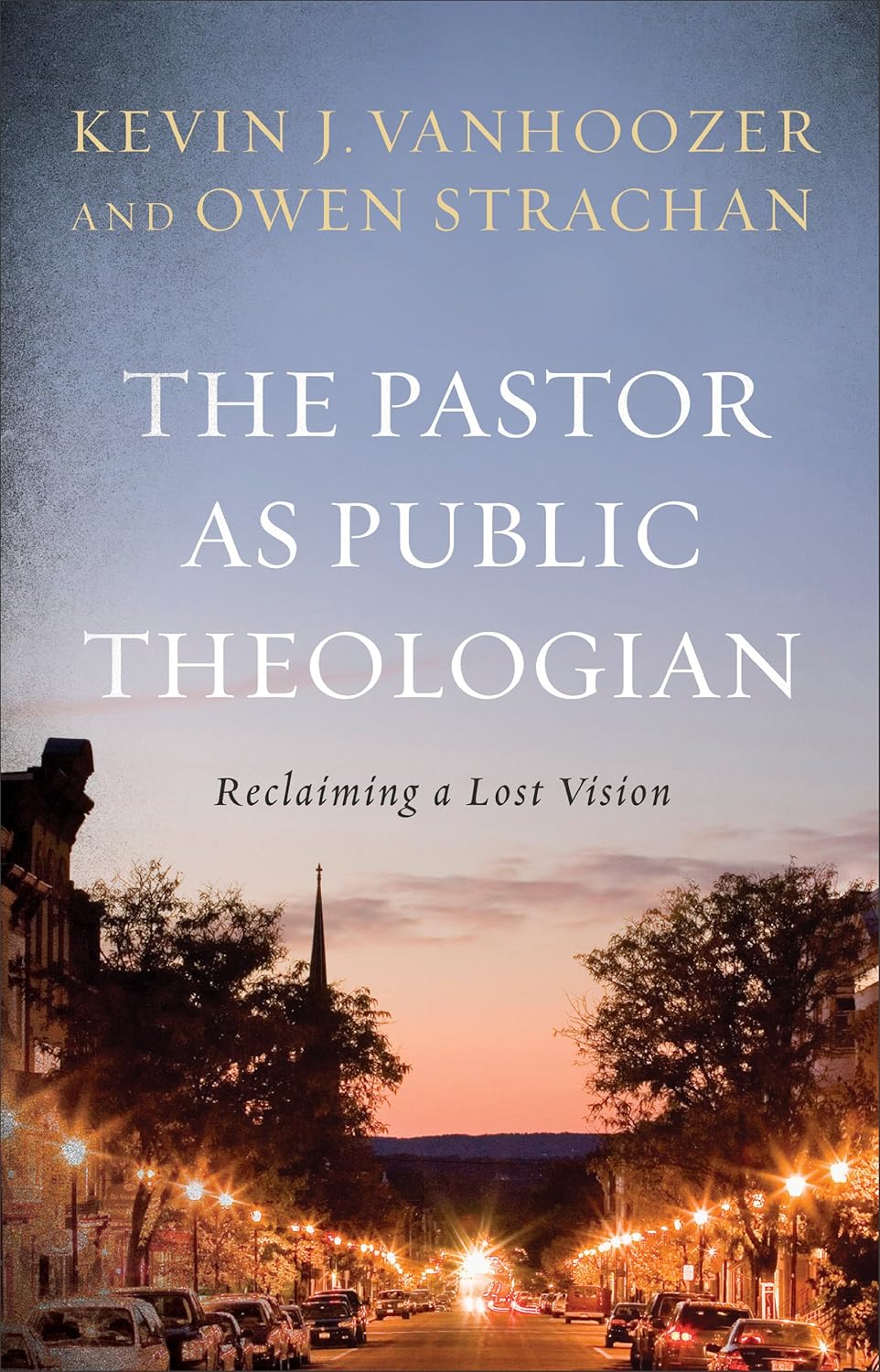
Out now: The Pastor As Public Theologian: Reclaiming a Lost Vision


This book to which I made a modest contribution, with a piece on The Drama of Preaching is out now. Download a Kindle sample to see what it's all about, here

Monday, March 23, 2015

Coming soon: The Pastor as Public Theologian by Kevin J. Vanhoozer & Owen Strachan (and me)


I've long been an admirer of Kevin Vanhoozer's work and look forward to the publication of this title in August. Includes a contribution by yours truly on The Drama of Preaching, see here

Sunday, January 12, 2014

On Christian Doctrine by Augustine of Hippo


On Christian Doctrine by Augustine of Hippo, 
Kindle edition, print length 202 pages, £0.77

One of the wonderful things about the advent of e-books is that it allows cheapskates like me to get hold of some of the classic works of Christian theology at bargain basement prices. The same title would have cost me £15.67 for a hardback edition or £8.05 for the paperback. Besides taking up more space on my already packed to capacity bookshelves. I first became aware of this title at last year's Banner Ministers' Conference, where Mike Reeves mentioned that in this work Augustine devotes a chapter to 'The Trinity the True Object of Enjoyment.' That sounded good to me and I swiftly downloaded a copy. I may have baulked at price of a hard copy , but at 0.77p, what's to lose? Not that investing in Augustine is ever a risky venture.

Augustine divides his treatment of Christian Doctrine into four 'Books'. Book I offers a general summary of Christian teaching. Book II is devoted to hermeneutics. Book III considers how the Bible teacher may attempt to resolve interpretive difficulties. Book IV reflects on how biblical truth thus discovered might best be taught to others. The main thrust of the work is hermeneutical. As Augustine writes in the Preface, 
There are certain rules for the interpretation of Scripture which I think might with great advantage be taught to earnest students of the word, that they may profit not only from reading the works of others who have laid open the secrets of the sacred writings, but also from themselves opening such secrets to others.   These rules I propose to teach to those who are able and willing to learn, if God our Lord do not withhold from me, while I write, the thoughts He is wont to vouchsafe to me in my meditations on this subject. (St Augustine of Hippo (2012-07-08). On Christian Doctrine (Kindle Locations 281-288). Veritatis Splendor Publications. Kindle Edition.) 
In Books II & III Augustine gives careful attention to 'rules for the interpretation of Scripture'. He deals with matters such as the importance of knowledge of the original biblical languages, understanding figurative speech, the usefulness of 'profane leaning' to the Bible expositor and the resolution of knotty exegetical problems. But his hermenutical reflections are not confined to literary matters. The doctrinal summary of Book I is Augustine's way of ensuring that the interpretive task is placed within a clear theological framework. While diversity of opinion on the meaning of some Scripture passages is to be expected, the exegete is not entitled to discern a meaning in the text of Scripture that would contradict the basic elements of Christian truth as clearly disclosed in the Bible and confessed by the Church. This approach is in line with what the Reformers would later describe as the 'analogy of faith'. 

Augustine would have students of the word give themselves to the theological interpretation of Scripture so that their teaching will build up the people of God. While the Church Father does not avoid dealing with technicalities, his great desire is that a proper understanding the Bible and the powerful proclamation of its message should lead to the enjoyment of the God,
The only object which ought to be enjoyed is the triune God, who is our highest good and our true happiness. We are prevented by our sins from enjoying God; and that our sins might be taken away, "the word was made flesh," our Lord suffered, and died, and rose again, and ascended into heaven, taking to himself as his bride the church, in which we receive remission of our sins. And if our sins are remitted and our souls renewed by grace, we may await with hope the resurrection of the body to eternal glory; if not, we shall be raised to everlasting punishment. (St Augustine of Hippo (2012-07-08). On Christian Doctrine (Kindle Locations 448-456). Veritatis Splendor Publications. Kindle Edition.)
This thought is further developed in the chapter that first drew my attention to this work, Book I: Chapter 5 - The Trinity the True Object of Enjoyment.
The true objects of enjoyment, then, are the Father and the Son and the Holy Spirit, who are at the same time the Trinity, one Being, supreme above all, and common to all who enjoy Him, if He is an object, and not rather the cause of all objects, or indeed even if He is the cause of all.   For it is not easy to find a name that will suitably express so great excellence, unless it is better to speak in this way: The Trinity, one God, of whom are all things, through whom are all things, in whom are all things. (St Augustine of Hippo (2012-07-08). On Christian Doctrine (Kindle Locations 552-559). Veritatis Splendor Publications. Kindle Edition.) 
Some of Augustine's exegesis is a little fanciful when compared the sober canons of interpretation laid down by the Reformers. Here and there his applications might give rise to a wry smile. He commends Ambrose inveighing against women using make-up as an example of the 'majestic style' of speech,  
If thou art comely why dost thou hide thy comeliness? If thou art plain, why dost thou lyingly pretend to be beautiful...? (Augustine of Hippo (2012-07-08). On Christian Doctrine (Kindle Locations 5437-5439). Veritatis Splendor Publications. Kindle Edition.)
He justifies preachers using other people's sermons on the grounds that all truth is God's truth anyway and 'even those who could not compose what they say make it their own by composing their lives in harmony with it.' (St Augustine of Hippo (2012-07-08). On Christian Doctrine (Kindle Locations 5767-5769). Veritatis Splendor Publications. Kindle Edition.) Well, that's alight, then. 

More seriously, Augustine insists that Christian teachers must practice what they preach, 'But whatever may be the majesty of the style, the life of the speaker will count for more in securing the hearer's compliance.' (St Augustine of Hippo (2012-07-08). On Christian Doctrine (Kindle Locations 5649-5650). Veritatis Splendor Publications. Kindle Edition.) And that before speaking the preacher must first lift up his soul to God in prayer, 
And when the hour is come that he must speak, he ought, before he opens his mouth, to lift up his thirsty soul to God, to drink in what he is about to pour forth, and to be himself filled with what he is about to distribute. (St Augustine of Hippo (2012-07-08). On Christian Doctrine (Kindle Locations 4870-4873). Veritatis Splendor Publications. Kindle Edition) 
Augustine hardly needs any commendation from me, but may I suggest in the words that marked the turning point in the great man's life, that you toll lege, or whatever the Latin is for 'download and read' his On Christian Doctrine. All this for only 0.77p. Go on. You know it makes sense. 

Monday, November 11, 2013

Augustine on prayer before preaching


In his book, On Christian Doctrine, Augustine sets out some of the essential doctrines of the Christian faith and gives guidelines for interpreting Holy Scripture. In the final section of the work he devotes attention to the matter of how Christian doctrine ought to be communicated. Clearly after having painstakingly discussed theological and  hermeneutical matters, he does not believe that a man should simply turn up in church and say the first thing that comes into his head. Preparation for preaching involves sound exegesis, deep theological reflection and careful consideration of the applicatory force of biblical truth, 
The eloquent divine, then, when he is urging a practical truth, must not only teach so as to give instruction, and please so as to keep up the attention, but he must also sway the mind so as to subdue the will.   For if a man be not moved by the force of truth, though it is demonstrated to his own confession, and clothed in beauty of style, nothing remains but to subdue him by the power of eloquence. (St Augustine of Hippo (2012-07-08). On Christian Doctrine (Kindle Locations 4808-4813). Veritatis Splendor Publications. Kindle Edition.)  
As he says, 'Accordingly, he who is anxious both to know and to teach should learn all that is to be taught, and acquire such a faculty of speech as is suitable for a divine.'  But, Augustine does not yet consider the preacher's preparatory work to be done. He urges that the 'Christian orator' give himself to prayer for the empowering presence of the Spirit in preaching. Through his Spirit God enables the preacher to speak the Word in a way that is most appropriate for the congregation, 
And so our Christian orator, while he says what is just, and holy, and good (and he ought never to say anything else), does all he can to be heard with intelligence, with pleasure, and with obedience; and he need not doubt that if he succeed in this object, and so far as he succeeds, he will succeed more by piety in prayer than by gifts of oratory; and so he ought to pray for himself, and for those he is about to address, before he attempts to speak.   And when the hour is come that he must speak, he ought, before he opens his mouth, to lift up his thirsty soul to God, to drink in what he is about to pour forth, and to be himself filled with what he is about to distribute.   For, as in regard to every matter of faith and love there are many things that may be said, and many ways of saying them, who knows what it is expedient at a given moment for us to say, or to be heard saying, except God who knows the hearts of all?   And who can make us say what we ought, and in the way we ought, except Him in whose hand both we and our speeches are?   Accordingly, he who is anxious both to know and to teach should learn all that is to be taught, and acquire such a faculty of speech as is suitable for a divine.   But when the hour for speech arrives, let him reflect upon that saying of our Lord's as better suited to the wants of a pious mind:   "Take no thought how or what ye shall speak; for it shall be given you in that same hour what ye shall speak.   For it is not ye that speak, but the Spirit of your Father which speaketh in you." The Holy Spirit, then, speaks thus in those who for Christ's sake are delivered to the persecutors; why not also in those who deliver Christ's message to those who are willing to learn? St Augustine of Hippo (2012-07-08). On Christian Doctrine (Kindle Locations 4864-4888). Veritatis Splendor Publications. Kindle Edition. 
As envisaged by Augustine, preaching involves both diligent preparation and a readiness to improvise when in the act of declaring the Word under the guidance of the Holy Spirit. That is a fine line to tread. If a speaker is too tied to his sermon notes, his  message will take the form of a lecture. His delivery will lack the spontaneity that comes from the interplay of preacher and congregation that is of the essence of preaching. On the other hand, if the preacher presumes to speak without due preparation, trusting in the impulse of the moment under the guise of relying on the Spirit, he is a lazy slacker who has neglected his calling to 'labour in the word and teaching' (1 Timothy 5:17). The preacher must give himself to 'prayer and the ministry of the word' (Acts 6:4). As Augustine put it most eloquently,  'And when the hour is come that he must speak, he ought, before he opens his mouth, to lift up his thirsty soul to God, to drink in what he is about to pour forth, and to be himself filled with what he is about to distribute.'   

Friday, August 16, 2013

Forthcoming title: The Pastor as Public Theologian: Reclaiming a Lost Vision by Kevin J. Vanhoozer and Owen Strachan


The book challenges popular paradigms for thinking about the nature and function of church pastors. It sets forth a positive alternative picture, partly through reclaiming pictures from the past, and claims that pastors (in particular, senior, teaching or preaching pastors) should be Evangelicalism’s most prominent public theologians – the “prime ministers” of the word of God. Academics, including biblical scholars and theologians, have too often become specialists, making it harder for anyone to speak with authority about the big general questions (i.e., what is the meaning of life?). The pastor’s work is necessarily integrative inasmuch as it involves the theological interpretation of Scripture, namely, the application of God’s word to all areas of life and thought. The present situation calls for a paradigm revolution in the very idea of what a pastor is and does – liberation from the picture that currently holds pastors hostage and prevents them from fully exercising their vocation.

I've been asked to contribute a short chapter on The Drama of Preaching. Release date, June 2014. 

Tuesday, November 20, 2012

Serving Today with Grace Baptist Mission


Had an enjoyable day at GBM HQ in Abindgon, recording a series of talks on Jesus "I am" sayings in The Gospel According to John. I've done a bit of radio work before, mainly 'morning thought' type things for BBC Radio Wiltshire and occasionally offering my opinion on topical news items. But the idea with GBM's 'Serving Today' programme is to help African pastors develop their expository preaching skills. The talks took the form of a dialogue between presenter, Andrew Cook and myself on how to preach on the different "I am" sayings. We recorded eight conversations in all, four before and four after lunch. 

The talks were mostly reworked sermons from a series I did on John a while back. The trouble was that when I agreed to do the talks for GBM, I  had forgotten I had handwritten the earlier sermons in the series. It wasn't until John 12 that I switched from handwriting my notes to using Microsoft Word. The effort of trying to decipher my messy handwriting to write up the scripts was a good reminder of why I laid aside my trusty fountain pen in favour of a keyboard.