Pages

Showing posts with label Bible. Show all posts

Monday, January 28, 2008

Ten things on Christian spirituality

1. The essence of Christian spirituality is communion with the Triune God. It springs from the communicative love of the Father, who has elected us for fellowship with himself through the sacrificial death of the Son and the sanctifying presence of the Spirit.

2. Christian spirituality is in fact Spirituality with a capital "S". The Holy Spirit is the agent of true Spirituality. He brings those who were dead in sin and cut off from the life of God to new birth by his sovereign and gracious power. The believer has been made holy to God by the definitive action of of Spirit. This leads to a Spirit-empowered life of holiness, characterised by the mortification of sin and the vivification of righteousness, in obedience to God's commands. Christian spirituality is holy Spirituality.
3. Christian spirituality is rooted in the believer's union with Christ. We participate in the fruits of his atoning death and mighty resurrection. In Christ, we are forgiven and put right with God. The believer has been crucified with Christ to the old life of sin and raised with him to the new life of holiness. The risen Christ dwells in the hearts of his people by the power of the Holy Spirit. The Spirit's task is not to draw attention to himself, but to glorify Christ and communicate his life-transforming presence. The goal of Christian spirituality is that the believer should be conformed to the image of God's own Son.
4. Christian spirituality is sustained by constant prayer. Through the blood of Christ, we are given access to the Father by the Spirit. Prayer involves worship, praise and communion with God as well as petition and supplication. The Father is pleased to answer the prayers of his people in Jesus' name, in accordance with his abundant mercy and sovereign will. The believer should make time each day for sustained prayer and meditation.
5. As God's authorised self-revelation, the Scriptures play an essential role in Christian spirituality. The Spirit who gave the written Word bears witness to the truth and authenticity of Scripture in the mind, heart and life of the believer. The Scriptures disclose the Triune God of the Gospel and reveal the basis for Christian spirituality in his saving acts. The Word of God read and preached is a means of grace that promotes the development of spiritual growth and maturity - Psalm 1. There can be no true spirituality apart from Scripture.
6. Christian spirituality develops in the context of the communion of the saints. It is not a privatised quest for self-fulfilment, but is expressed in love for the people of God. The Church exists to foster a spiritual life of compassion, service, witness and worship. She does this by exercising the ministry of the Word and prayer, and administering baptism and the Lord's Supper. Any spirituality that sidelines involvement in church life is a travesty of the Gospel.
7. Many versions of spirituality are focused on self-realisation and self-discovery. Not so Christian spirituality, which is primarily concerned with self-denial and the realisation of God's glory. An encounter with the Holy One will bring us to see the wickedness of our selfish pride that refuses to let God be God. Authentic self-awareness will bring us to cry out, "Lord, have mercy upon me, a sinner." Only those with a humble and contrite spirit will really be able to appreciate God's amazing grace. Such will give him all the glory for saving us from sin. Soli Deo gloria.
8. The spiritual life is shaped by biblical doctrine and theological reflection. But true Christian spirituality is also deeply experiential. As the old hymn put it, "True religion is more than a notion/ something must be known and felt." The Spirit of truth makes us existentially aware of our sin and need of Christ. God's love is shed abroad in the hearts of believers by the Holy Spirit whom he has given us. By the Spirit, we cry "Abba, Father", as we sense God's fatherly love embracing us. We have assurance of our adoption as the Spirit bears witness with our spirits that we are the children of God. We know Jesus Christ as a living reality. He is Christ in us, the hope of glory. Though we have not seen Jesus, we love him and believing, we rejoice with glorious and inexpressible joy. Communion with the Triune God means having distinct, experiential fellowship with each person of the Trinity. Now, our union with God in Christ is constant and fixed, while our communion with him is subject to change and fluctuation. But experiential Christian spirituality will be content with nothing less than being strengthened by the Spirit, that we may know the love of Christ that passes knowledge, that we may be filled with all the fullness of God.
9. Christian spirituality leads to practical action. The most "spiritual" Christians, like William Wilberforce, have also been those who have done the most good for their fellow human beings. Christians have been saved to serve by doing good works for the glory of God. Our faith works by love. Yes, that primarily means love for the saints, but we are to show love and practical concern for all men, even our enemies.
10. Christian spirituality is eschatological. Our communion with God in this present world is an anticipation of our fellowship with him in glory. Even now we have been raised with Christ to newness of life. The Spirit is the "earnest" or down-payment of our inheritance. We hope for the coming of the Lord, the resurrection of our bodies and the renewal of the universe. We look forward to being rid of all vestiges of the sin that mars our communion with God. Then we shall be made like our Lord Jesus and he will be glorified in us. The distinction between heaven as God's dwelling place, and the earth as our home will be rendered void as God comes down to dwell among his redeemed people. He will wipe all tears from our eyes. We will rejoice in the Spirit and see the Lamb in all his glory, world without end.

Tuesday, January 23, 2007

Revelation and the Gospel

If we follow the path provided by the gospel, we see that knowing God, his person and his plans comes from faith in the word of God. The gospel is a word that centres on Jesus Christ and proclaims that he is Lord. The word of the gospel itself reveals that God has always sought to rule his people by the word of his covenant. The Christian revelation also reasserts his rule over a wayward and rebellious people. It is not a religious experience, although to receive the gospel by faith is to experience entering a new relationship. The revelation is verbal; it announces the word of God, centred on Jesus Christ but multifaceted in its expression. It is coterminous with Scripture, and it functions to re-establish God's rule by creating and nourishing faith. God's central revelation of himself therefore, is evangelical at heart, covenantal by nature and scriptural in form.
From The Revelation of God by Peter Jensen, IVP, 2002, p. 93-94.

Saturday, March 25, 2006

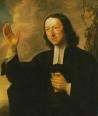
John Wesley on the Bible, "O give me that book!"

John Wesley Posted by Picasa

To candid, reasonable men, I am not afraid to lay open what have been the inmost thoughts of my heart. I have thought, I am a creature of a day, passing through life as an arrow through the air. I am a spirit come from God, and returning to God: just hovering over the great gulf; till, a few moments hence, I am no more seen; I drop into an unchangeable eternity! I want to know one thing the way to heaven; how to land safe on that happy shore. God Himself has condescended to teach the way; for this very end He came from heaven. He hath written it down in a book. O give me that book! At any price, give me the book of God! I have it: here is knowledge enough for me. Let me be "homo unius libri."

Here then I am, far from the busy ways of men. I sit down alone: only God is here. In His presence I open, I read His book; for this end, to find the way to heaven. Is there a doubt concerning the meaning of what I read? Does anything appear dark or intricate? I lift up my heart to the Father of Lights: "Lord, is it not Thy word, 'If any man lack wisdom, let him ask of God'? Thou 'givest liberally, and upbraidest not.' Thou hast said, 'If any be willing to do Thy will, he shall know.' I am willing to do, let me know, Thy will. ' I then search after and consider parallel passages of Scripture, "comparing spiritual things with spiritual." I meditate thereon with all the attention and earnestness of which my mind is capable. If any doubt still remains, I consult those who are experienced in the things of God; and then the writings whereby, being dead, they yet speak. And what I thus learn, that I teach.

Concerning the Scriptures in general, it may be observed, the word of the living God, which directed the first patriarchs also, was, in the time of Moses, committed to writing. To this were added, in several succeeding generations, the inspired writings of the other prophets. Afterward, what the Son of God preached, and the Holy Ghost spake by the apostles, the apostles and evangelists wrote. This is what we now style the "Holy Scripture:" this is that "word of God which remaineth for ever:" of which, though "heaven and earth pass away, one jot or tittle shall not pass away." The Scripture therefore of the "Old and New Testament," is a most solid and precious system of divine truth. Every part thereof is worthy of God; and all together are one entire body, wherein is no defect, no excess. It is the fountain of heavenly wisdom, which they who are able to taste, prefer to all writings of men, however wise, or learned, or holy.

From his Preface to Standard Sermons

Friday, March 24, 2006

John Owen on the Richness of Scripture

John Owen Posted by Picasa

O heavenly, O blessed depositum of divine grace and goodness!...Hence, although every humble soul may learn and receive from it what is absolutely sufficient for itself on all occasions, with respect to its own duty and eternal welfare, yet the whole church of God, neither jointly nor severally, from the beginning to the end of the world, have been, are, or shall be, able to examine these stores to the bottom, and find out perfectly all the truths, in all their dimensions, concerns, extent, that are contained therein.

Cited in Sinclair B. Ferguson's excellent John Owen on the Christian Life, Banner of Truth Trust, 1987, (p. 189-190).

Thursday, March 23, 2006

Back to the (no) Future with Liberal Evangelicals

In his book, Evangelicalism in Britain 1935-1995, (IVP 1997), Oliver Barclay makes a distinction between "classical" or "conservative" evangelicals (CE's) and "liberal evangelicals" (LE's). He is writing of the state of evangelicalism in the 1930's at this point,

CE meaning those who maintain a doctrine of the reliability, sufficiency and final authority of the Bible, and as a result maintain also the substitutionary character of the atonement and seek to bring people to an experience of new birth... LE's, while they maintain typical evangelical emphases, do not maintain, and often repudiate, the total reliability of the Bible and usually do not preach substitutionary atonement, even if they stress the cross in a doctrinally undefined way. (p. 12)
.
Barclay charts the decline of the LE movement, as LE's became less and less evangelical and more and more liberal in their teaching. His description of the liberal evangelical movement of the 1930's certainly rings some bells today. Some of today's evangelicals dismiss Biblical inerrancy, substitutionary atonement and the eternal punishment of the wicked. They seem more like the liberal evangelicals of the 1930's than classic evangelicals. Barclay concludes his book with a sober assessment of the future of evangelicalism if we follow the liberal evangelical model of doctrinal compromise and accommodation to the spirit of the age,
.
What, then, of the present and the future? The portion of history I have sketched suggests strongly that evangelicalism will not advance by cultural and intellectual compromise, as advocated by the LE tradition...The danger is that, as many evangelicals did then, we should either compromise the truth or dilute it to a point where there is little biblical substance left. (p. 137)
.
But, suggests Barclay, there is an alternative, better future for the evangelical movement:
>
All down the centuries God has blessed the recovery of biblical truth, and we cannot expect to find greater blessing in anything else. There must me a commitment to biblical Christianity in dependence on the Holy Spirit to enable us to understand the Bible, and to apply its teaching to ourselves and to the hearts of believers and unbelievers alike. Given that foundation, it should be possible to recapture for a more nearly biblical position much more of the life and thought of the churches, and from there, of the life and thought of the community. It will not be easy, but we cannot aim for less. We must pray for that, and work in genuine dependence upon God who alone is able to bring it about. (p. 142)

Friday, March 17, 2006

The Bible as Propositional Truth

Over at Chrisendom there is a discussion of the Bible as propositional truth.

Peter Jensen deals with this subject very helpfully in his The Revelation of God (IVP, 2002). He writes,

We have seen the unwillingness of modern theology directly to identify words with revelation. Propositional revelation has been attacked and the revelation of persons favoured; communication with the self-giving God is preferred to information from propositions. But if the gospel occupies the place in the economy of salvation that its first proponents suggested, and if it accomplishes what they claimed for it, the distinction between personal and propositional knowledge cannot be sustained. Their view of revelation certainly permits words and language to be identified with revelation. The description of the gospel as the word of God demonstrates that. To have some other theory is to depart radically from the fount of the Christian tradition. (p 87-88)

Sunday, October 30, 2005

Word and Spirit in Reformed and Puritan Theology

The conflict between the Reformers and Roman Catholicism

The Roman Catholic Church taught that the laity should not be allowed to read the Bible. Only the Pope and the priests and officers of the Church could interpret the Word of God. The official Catholic interpretation of Scripture is called the Magesterium. The Catholic Church elevated its traditions to the level of Scripture. It held that there were seven sacraments, not two. It taught that the faithful should pray to Mary and the saints. It offered indulgences for sale for the forgiveness of sin.

The Protestant Reformers rejected all that. Luther saw that the basis for Christian truth is the Bible only. Tradition is valuable. The Reformers often quoted from Augustine and the other Church fathers. But the Bible alone is authoritative. When Luther was urged to retract his criticisms of the Catholic Church at the Diet of Worms, he said, “My conscience is bound by the Word of God. Here I stand, I can do no other, so help me God.”

The Genevan Reformation developed along the same lines:

First we affirm that we desire to follow Scripture alone as rule of faith and religion, without mixing with it any other thing which might be devised by the opinion of men apart from the Word of God, and without wishing to accept for our spiritual government any other doctrine than what is conveyed to us by the same Word without addition or diminution, according to the command of our Lord. (Genevan Confession)

The Bible, God’s infallible word, is sufficient for Christian teaching and living. It is the final the authority in all matters of controversy.

Evangelical Protestant Churches give central place to the Bible. Luther translated the Scriptures into German to give the Bible back to the people. Tyndale and other did this for the English-speaking world. Bishop William Morgan translated the Bible into Welsh in 1588. Evangelical Protestantism is a reading religion. The Reformation gave birth to a literary culture as people voraciously read the Bible and helpful spiritual books. Today’s emphasis on universal literacy is a fruit of the Reformation.

The Reformation calls us back to the Bible. We must test everything “by the word and the testimony” of Scripture. We must continue to be in conflict with Rome over the vital issue of the authority of the Bible.

The Reformers and the Radical Mystics

But it was not just against Rome that the Reformers had to contend for “sola scriptura”. Some elements within the so-called “Radical Reformation” began to prefer their inner “spiritual revelations” to the Word of God.

A radical like Sebastian Franck held that the Bible is a dead letter and full of contradictions. He pointed people to the life-giving inner Word. The “Spiritualist” Radicals exalted the Spirit over the Word and this led to an unbiblical mysticism.

The British 17th Century Quakers were heirs of the 16th Century European radicals. They held that, while the Bible is the word of God, it is the inner light of the Spirit that really matters.

George Fox, the founder of the Quaker movement once listened to a sermon on 2 Peter 1:19. The preacher taught is people that, ‘the Scriptures were the touchstone and judge by which they were to try all doctrines, religions and opinions’. Fox immediately expressed his disagreement with the preacher and cried out, ‘Oh no, it is not the Scriptures…but the Holy Spirit, by which the holy men of God gave forth the Scriptures, whereby opinions, religions and judgements were to be tried; for it led into all Truth, and so gave the knowledge of the Truth.’

You note the way in which Fox set the Spirit against the Word. This led to all kinds of bizarre behaviour. Quakers would “feel led of the Spirit” to go naked as a sign, much to the outrage of society. Richard Sale said of Fox, ‘Praises, praises, eternal praises to thee forevermore, who was and is and is to come, who is god over all, blessed forever.’ What unbiblical blasphemy!

The most shocking example of extreme Quaker conduct was when James Nayler rode into Bristol in 1656, consciously re-enacting Christ’s triumphal entry into Jerusalem. His followers hailed him as ‘Jesus’ and cried ‘Hosanna’ and ‘holy, holy, holy Lord God of Israel!’

When we set the Spirit against his inspired Word we leave ourselves open to such fanatical delusions. We are counselled to “test the Spirits whether they are of God” 1 John 4:1-2. The Holy Spirit will always glorify Jesus and point us to him as the Word made flesh for our salvation. Christ said of the Spirit, “He will glorify me, for he will take of what is mine and declare it to you.” John 16:15.

The Puritans battled against the traditionalism of Rome and Anglicanism on the one hand and against the mysticism of the Quakers on the other. They defined themselves as “sola Scriptura” over and against both of these positions:

The whole counsel of God concerning all things necessary for his own glory, man's salvation, faith and life, is either expressly set down or necessarily contained in the Holy Scripture: unto which nothing at any time is to be added, whether by new revelation of the Spirit, or traditions of men. [Emphasis added]. (Baptist 1689 Confession, Chapter 1:6.)

This teaching has obvious relevance for today’s scene. The extremes of behaviour associated with the recent “Toronto Blessing” movement are redolent of 17th Century Quakerism. We must not pit the Spirit against his Word. He speaks today though the Book he inspired. The Spirit will never contradict his Word and since the closure of the New Testament cannon, he will not add to it either. We need the Spirit to enlighten our minds to understand the Truth. But illumination is not the same as revelation.

We must be very careful and circumspect about claiming that “the Lord told me this or that”. While not denying that the Lord does sometimes speak to us and prompt us in unusual ways – it is in the Bible that we hear his voice speaking clearly to us each time we read it. We may not claim the “The Spirit told me to do so and so” if what we are being told to do is plain against the teaching of Scripture. We must look to the Book to guide us. We should not wait for mystical impressions to tell us what to do, but learn to think and act wisely and Biblically.

The Reformers and Puritans held Word and Spirit together in fine balance. We have a lot to learn from their deep theological wisdom today.