Pages

Wednesday, August 21, 2013

The Good God: Enjoying Father, Son and Spirit by Michael Reeves

Kindle e-book

I first came across Michael Reeves at the Banner Ministers' Conference earlier this year. His addresses on Mission and the Trinity and Augustine were among the highlights of the event. In fact, I was so impressed that I was moved to write up my conference reports as a kind of pastiche of Augustine's Confessions. That's my excuse, anyway. Since hearing him at Banner I had been eager to to read one of his titles. Friends recommended The Good God and so I downloaded a copy. Still seems strange to speak of 'downloading' a book, but I'm getting a dab hand at this Kindle lark and e-reading doesn't detract from my pleasure of getting stuck into a work, certainly not this one, which I enjoyed immensely. 

They say you shouldn't judge a book by its cover, but you should be able to judge a book by its title. Reeves' basic thesis is that God is good precisely because his is Father, Son and Holy Spirit. A monopersonal God could not by definition overflow with life and goodness. Before the creation of the universe, he would have no one to whom he could be good. However, the God who has revealed himself in Holy Scripture is not a divine loner. In the one God there are three persons, Father, Son and Holy Spirit. From eternity the Father has overflowed with life and goodness to the Son, and the Father and Son to the Holy Spirit. For the triune God, loving communicative action is not contingent upon his creating the world, it is at the very heart of what it means for him to be God. 

In fact, there is little reason to believe that a monopersonal God would have created the universe. Why would he, unless it was because he needed company, or simply because he wanted people to act as his minions. On the other hand, Reeves cites the Puritan theologian, Richard Sibbes to show that it makes perfect sense for a tripersonal God to communicate his goodness by creating the world,

If God had not a communicative, spreading goodness, he would never have created the world. The Father, Son, and Holy Ghost were happy in themselves, and enjoyed one another before the world was. Apart from the fact that God delights to communicate and spread his goodness, there had never been a creation or redemption. (Location 592). 

In salvation, the triune God not only forgives his rebellious human creatures, he brings them into fellowship with himself that they might share in the love that the Father has for his Son by the presence of his Spirit in their hearts. Our calling is not to hunker down and grimly serve our divine Master, but to enjoy and delight in the triune God of the Gospel. We become what we worship. Those who worship Father, Son and Holy Spirit will overflow with life and goodness towards his people in fellowship and towards the world in mission. 

Some works on the Trinity are dryly technical and do little to stir the soul to worship and adore the God of whom they speak. As his subtitle indicates, Reeves wants his readers to enjoy Father, Son and Holy Spirit. The tone of the work is suffused with wonder and praise. The author's style is vibrant and fast paced, with a touch of gentle humour here and there, but his lightness of touch  is placed at the service of real theological depth. Reeves' work is steeped in Scripture, while mindful of the rich theological heritage of the church. He draws on a range of theologians from across the gamut of church history to give added colour to his exploration of the good God who is Father, Son and Holy Spirit. 

This is not a book simply for Ministers and theological students. The Good God is a fine example of theology for everybody. And that means you too, dear reader. If you've got one of those newfangled e-readers, why not download a copy now?

Mike Reeves has recently joined the faculty as 'Theologian-at-Large' at WEST

Monday, August 19, 2013

Go WEST?


For a little while I've been eyeing the Mth Theology in Scriptural Context offered by Wales Evangelical School of Theology, AKA WEST. It's not something I could contemplate doing in the short to medium term and it would have to be as a part time student, but there's no harm in having dreams, is there? I like the look of some the modules and an idea for the dissertation is slowly forming in my mind. Have any readers done the course and if so, any thoughts? Should I go WEST?

Friday, August 16, 2013

Forthcoming title: The Pastor as Public Theologian: Reclaiming a Lost Vision by Kevin J. Vanhoozer and Owen Strachan


The book challenges popular paradigms for thinking about the nature and function of church pastors. It sets forth a positive alternative picture, partly through reclaiming pictures from the past, and claims that pastors (in particular, senior, teaching or preaching pastors) should be Evangelicalism’s most prominent public theologians – the “prime ministers” of the word of God. Academics, including biblical scholars and theologians, have too often become specialists, making it harder for anyone to speak with authority about the big general questions (i.e., what is the meaning of life?). The pastor’s work is necessarily integrative inasmuch as it involves the theological interpretation of Scripture, namely, the application of God’s word to all areas of life and thought. The present situation calls for a paradigm revolution in the very idea of what a pastor is and does – liberation from the picture that currently holds pastors hostage and prevents them from fully exercising their vocation.

I've been asked to contribute a short chapter on The Drama of Preaching. Release date, June 2014. 

Thursday, August 15, 2013

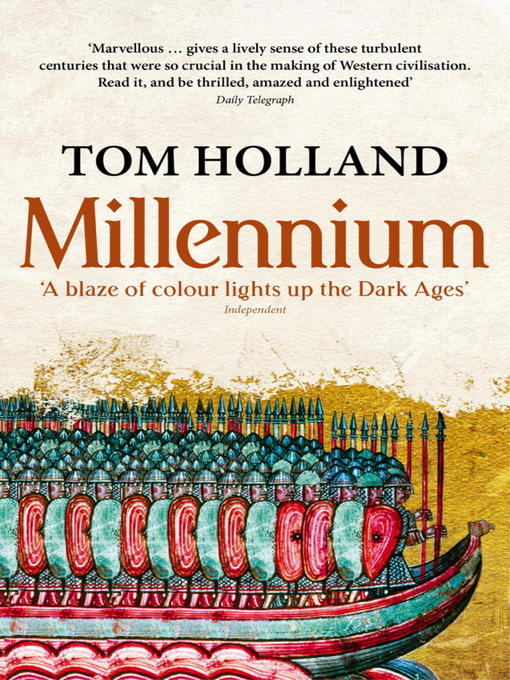
Millennium by Tom Holland

Millennium: The End of the World and the Forging of Christendom,
 by Tom Holland, 2008, Abacus, 476pp

Tom Holland's Millennium was my 'big read' for the summer hols. I managed to stow the weighty tome in my EasyJet hand baggage without exceeding the airline's limits. Most of the book was read airport departure lounges or on one or another of the Algarve's wonderful beaches between dips in the sea to cool off after baking in the heat. 

Holland is an acknowledged master of narrative history and his skills were well deployed in telling the story of what happened in the period that spans a hundred years either side of 1000 A.D. He traces the development of Christendom from the conversion of Constantine in 312 to the capture of Jerusalem in the First Crusade in 1099.  Along the way he describes the repeated attempts on the part of rulers from East and West to recreate the glories of the old Roman Empire, and the rise of the papacy as the dominant force in Christendom. Holland introduces his readers to some of the big players of the time including Charlemagne, Rollo the bloodthirsty Viking 'convert' to Christianity, Fulk Nerra, the Godfatherish Count of Anjou, an assortment of Ottos and Henrys. Then there's 1066 and all that. All the familiar elements of Medieval history are here. Want to know how knights first won their spurs? Why power hungry potentates started building castles? Maybe it's blood-spattered battle accounts that you're after? Look no further. 

Now, in the period leading up to the end of the first Millennium, folks in Christendom weren't looking forward to big parties and fireworks displays, all set to a Robbie Williams soundtrack to mark the advent of the year 1000. Rather, it was feared that the dawning of the 1000th anniversary of Christ's birth might mark the end of the world, or at the very least, the coming of the Antichrist. When neither happened, attention was fixed instead on 1033 A.D., the 1000th anniversary of Christ's death and resurrection. Augustine of Hippo (not to mention the Bible) warned believers of the folly of predicting when the End will come, but people will never learn. That apocalyptic visions had such a hold on the Medieval imagination is only one of the ways that makes the so-called Dark Ages seem so different from our own. However, as Holland points out in his preface, we who live at the beginning of the third Millennium are not without our secularised doom laden scenarios, such as the threatened devastation of human life by global warming. 

There is much that could be said in response to reading Holland's work, but what especially struck me was just how spectacularly wrong-headed the was the whole notion of 'Christendom'. It began with the conversion of Constantine, with the Roman Emperor attempting to Christianise his realm. In its origins Christendom was Erastian. Yeah, yeah, that's an anachronism. Thomas Erastus was a sixteenth century man. But it's the Swiss theologian's name that's associated with the view that the church should be a servant of the state. After Constantine successive 'Holy Roman Emperors' meddled in church affairs, appointing bishops, removing popes and so on. Figures such as Charlemagne, the Ottos and the Henrys believed that they had been specially  anointed as priestly-kings to defend Christendom and rightly order the church in their domains. But over time the papacy developed big ideas of its own. Gregory VII claimed that the Bishop of Rome had absolute power not only over the church, but also the right to remove emperors'should the need arise. And when it did, Henry IV had little option but to grovel before him a Canossa.

In the preface, Holland argues that Canossa was a watershed moment in history, when church and state first began to divide into distinct realms in the West. The thought is not developed later in the book and I'm not sure that it can be justified by the evidence. If anything Canossa represented at attempt by the church control the world of politics. But having the pope lord it over the emperor was as bad as the church being treated as the plaything of earthly potentates. Church and state are two distinct institutions, ordained by God for two very different ends. The two should not be confused or conglomerated. The power of the state is political and may legitimately include the use of force to uphold the law and in defence of the realm. The power of the church is solely evangelical. State power must not be used to advance the mission of the church. Her weaponry is not carnal but spiritual, a lesson that the Medieval Church tended to forget. And so to the crusades, an account of the first of which brings this book to an end. 

Not even the Magisterial Reformers were clear on this point, hence their title, meaning that they were willing to utilise the power of the Magistrate to further and defend the cause of Reformation. English Separatists such as John Greenwood and Henry Barrowe had a better insight into the New Testament's teaching on the relationship between church and state. Rather than waiting for the Elizabethan state to reform the church Erastian-style, they argued for Reformation Without Tarrying for Anie and paid for their principles with their lives. The church may be called upon to die for it's beliefs, but she should never be prepared to kill for them, or ask others to do so on her behalf. Christendom with its 'Holy Roman Emperors' bearing their 'sacred lances' into battle and lordly popes preaching up the crusades tragically ignored the words of the Prince of Peace before Pontius Pilate, 'My kingdom is not of this world.' (John 18:36). I'm not saying that the Church of the Middle Ages was totally devoid of gospel light, but as Holland's narrative of the period demonstrates, there was far too much of 'this world' and far too little of Christ in Christendom.

To conclude, Millennium is an absorbing and instructive read. But the book also served another vital purpose when we were on holiday. I used it to squish the pesky mosquito that had been greedily gorging itself on my blood during the night, leaving me covered in nasty bites. Kind of a fitting use for a book oozing with the guts and gore of ancient battles.

Highly recommended. Mosquitoes beware.  

Wednesday, July 31, 2013

My summer hols reading list


We're off to the Algarve tomorrow. Like the PM we're flying by EasyJet, but probably unlike him it's hand luggage only for us. Surprising how much you can fit into a small wheelie suitcase. But not that much. However, one must make room for essentials such as smellies, clothes and of course, books. Yep, I've got an Android Tablet with a Kindle app, but, sadly it isn't solar powered and the battery only lasts for around 2-3 hours before needing a recharge. Not much use for a four hour flight, or a day spent lazily reading on the beach. Nothing for it other than to take a couple of those papery, printy things called books. A bit primitive, I suppose, but there we are. The Tablet's coming too, mind you. Good for evening reading at the apartment, within reach of an electric socket.

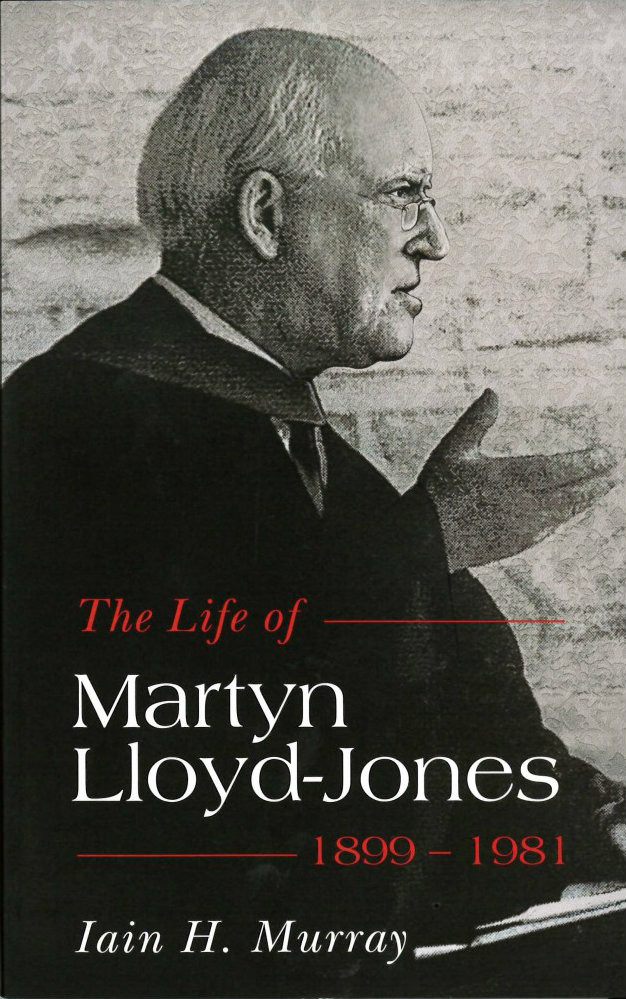
Which books to take, then? In a previous post I mentioned Tom Holland's Millennium. In addition, Evangelical Times kindly sent me a review copy of The Life of Martyn Lloyd-Jones 1899-1981, by Iain H. Murray. Now, being a proper Lloyd-Jones aficionado I've read Murray's two volume biog of the good Doctor. But let's face it, with Vol 1 a 394pp sizeable hardback and Vol 2 a hefty 831 pager, they are hardly EasyJet hand luggage fodder. Together they might even take up the whole of my bag weight allowance. I mean, I read Vol 2 during the summer of 1991 when it was first published and managed to break a deckchair. Seriously. Sitting by a swimming pool reading, The Fight of Faith, the stripy canvas split and I ended up in an undignified tangle on the floor. Not good. Murray's 476pp paperback abridgement seems just the thing, then. Apparently it's got some new material in it too, as well as leaving quite a bit of stuff out. 

Kindle-wise I'm hoping to make some more progress on The Idiot by Fyodor Dostoevsky

That's me done with blogging for a bit, then. See ya! 

Monday, July 29, 2013

A Tale of the Unexpected


The unexpected sometimes happens. Who would have thought that Andy Murray would finally win Wimbledon, the first British male to do so since Fred Perry, some seventy seven years ago? Who would have thought that sixteen years after the last victorious tour, the British and Irish Lions would triumph in Australia? Admittedly, with ten Welshmen in the starting line up, the series clinching 16-41 win wasn’t too hard to predict. But still, it goes to show that strange stuff happens. And what about Chris Frome winning the Tour de France in the wake of Bradley Wiggins' 2012 victory?

Perhaps the strangest thing of all is how a small band of followers of a travelling preacher from Nazareth came to have such a powerful impact on the world. It’s not as if they had a message that the masses were longing to hear. What they said concerning the death and resurrection of Jesus provoked widespread ridicule and hostility. Yet nothing could stop them proclaiming that Jesus was the world’s true Lord and King.
 
Jesus preached a message that was so out of the ordinary it left people reeling. He called not the righteous, but sinners to follow him. He pronounced blessing not on the high and mighty, but on the poor in spirit and promised that the meek will inherit the earth.

Yet perhaps the most surprising thing about Jesus is that what may seem like the moment of his utter defeat was in fact his greatest triumph. The would-be Messiah was crucified, dying the death of a common criminal. But this was no terrible accident. It was the victory of love. Jesus willingly died in our place so that those who believe in him may be forgiven and be put right with God. He was raised from the dead that we may have the hope of everlasting life.

That is the ultimate ‘tale of the unexpected’.  

* From my article in the White Horse News

Friday, July 26, 2013

Persian Fire by Tom Holland

Persian Fire: The First World Empire and the Battle for the West, 
by Tom Holland, Abacus, 2005, 418pp. 

And for my next trick I shall attempt to review a book that I finished reading in the summer of 2011. Why bother now? Well, since reading Tom Holland's Rubicon a few years ago it's been my habit to have one of his historical blockbusters on my summer hols reading list. I plan to take his Millennium with me when we head for the Portugal next week. Thinking about Millennium jolted my memory that I'd not posted a review of Persian Fire on the blog. A bit of an omission really, because I so enjoyed reading it.

I first became fascinated with the classical period in school, where I did a Classical Studies O Level. Mr. Hamlet's lessons were probably the only ones to which I especially looked forward. He was a brilliant teacher, bringing Homer's Iliad and Odyssey to life. Mr. Hamlet wielded his board ruler as if it were Achilles' spear. He could throw his board rubber with pinpoint accuracy at any pupil who failed to give him their full attention, leaving a wide chalky stripe on their blazer.  I was something of a schoolboy socialist and proudly sported a non-regulation CND badge on the lapel of my blazer. Mr. Hamlet was the only teacher who praised rather than scolded me for wearing it. 

Anyway, in Persian Fire Tom Holland, narrative historian par excellence gives an immersive account of the Persian invasion of Greece, led by the mighty Xerxes. With high frame rate clarity the author charts the build up of the invasion. He tells the story of the rise of successive middle eastern empires; Assyrian, Babylonian and Medio-Persian. We're introduced to a cast of ambitious, ruthless and bloodthirsty empire builders, including Cyrus, Darius, Nebuchadnezzar and, of course, Xerxes himself. 

Meanwhile, Holland takes us back to ancient Greece and the Millibandian sibling rivalry that existed between Sparta and Athens. The historian recounts renowned battles between Greek and Persian forces; the Athenian hoplites crushing their opponents at Marathon, the Spartan Immortals heroically holding the pass at Thermopylae, and the eventual defeat of the Persian invasion force at Eurymedon. All told with gripping, cinematic detail. 

All this is interesting enough in itself, but the period also forms the backdrop to Old Testament history. Holland occasionally gives a nod to the Scriptures, referencing Isaiah's prediction that Cyrus would give the Jews permission to return to Jerusalem and rebuild the Temple after the Babylonian captivity, Isaiah 45:1-3, cf. Ezra 1:1-4.  Daniel, who served in the court of Nebuchadnezzar spoke of the coming of a kingdom that would never be destroyed, Daniel 2:44. The once mighty empires of old now lie in ruins, yet the kingdom of God still endures. It's only weapon is not a hoplite's spear or a revolutionary's Kalashnikov, but the 'sword of the Spirit', which is the word of God. The truth spoken in love. David Bentley Hart has deonstrated how the 'Christian Revolution' transformed the moral and spiritual values of the ancient world in his Atheist Delusions: The Christian Revolution and Its Fashionable Enemies, which I read alongside Persian Fire. Reflecting on the latter title brings to mind the words of David Charles' (1762-1834) great hymn, translated from the Welsh by Edmund Tudor Owen,

Great providence of heaven--
What wonders shine
In its profound display
Of God's design:
It guards the dust of earth,
Commands the hosts above,
Fulfils the mighty plan
Of his great love

The kingdoms of this world
Lie in its hand;
See how they rise or fall
At its command
Through sorrow and distress,
Tempestuous storms that rage,
God's kingdom yet endures
From age to age

Thursday, July 25, 2013

Come and See

 
There have always been cynics who habitually try and see the worst in other people. They are quick to pour scorn on new ideas and fresh initiatives. ‘What’s the point?’ they say, ‘Nothing good will ever come of it.’ Jesus himself encountered his fair share of cynics. Some doubted his motives, others dismissed him as a mad man.
 
There was a character by the name of Nathanael. Philip, one of Jesus’ enthusiastic new followers told him that they had found the longed-for Messiah. It was Jesus from Nazareth. Jerusalem sophisticates like Nathanael despised lowly Nazareth. When he heard the claim that the Messiah was from that town, Nathanael responded, “What, can anything good come out of Nazareth?”
 
Spoken like a card carrying cynic. Philip’s response to this brush-off was classic. He simply said, “Come and see.” Nathanael came and saw Jesus and was never the same again. The old cynic was converted, saying of Jesus, “You are the Son of God! You are the King of Israel.”
 
Now, you may have dismissed talk of the Christian faith with a weary shrug of the shoulders. “Can anything good come of that?” Get along to gospel preaching church and see for yourself. You will meet people whose lives have been transformed by knowing Jesus as their Lord and Saviour.

Interested? Cynical? Why not come and see? 

* From my piece for the July/August edition of News & Views, West Lavington's Parish Magazine

Tuesday, July 23, 2013

Matravers School Governor Blog

I may have mentioned before that I'm a school governor. And what does every governing body need? A blog, obviously. 

Tuesday, July 09, 2013

So, what's a Baptist, then mister?

Had a lovely time this afternoon, speaking to a Primary School class on the differences between  Baptists and the Church of England. I started off by contrasting the leadership structure of the CofE with our own. Their 'Supreme Governor' is the Queen and they have Archbishops, Bishops, Priests and Deacons, etc., while we simply have elders, one of whom is the pastor, and deacons. I told them that the Prime Minister appoints the Archbishop of Canterbury and other senior clergy, while in Baptist churches, church members elect their own leaders. We discussed the difference between Christening and believer's baptism, why I don't wear clerical garb, the Baptist approach to the Lord's Supper, and how our church buildings reflect our differing emphases. 

Then came questions from the floor. The children asked: How old Jesus was when he was baptised? If Jesus was at God's right hand, who was at his left? How many people I had baptised? How old do you have to be before being baptised? How old was I when I was baptised? Had I been to any other Baptist Churches? What religion was Jesus? Do we eat food other than bread and wine at the Lord's Table? Those and many more questions kept me on my toes.

The class kindly gave me a round of applause at the end and I clapped them back for all their brilliant questions.