Pages

Showing posts with label Marilynne Robinson. Show all posts

Wednesday, August 30, 2017

The Value of a Soul

O teach me what it meaneth:
  That Cross uplifted high,
With One, the Man of Sorrows,
  Condemned to bleed and die.
O teach me what it cost Thee
  To make a sinner whole;
And teach me, Saviour, teach me
  The value of a soul

(Lucy Anne Bennett (1850-1927)

Upon that cross of Jesus
  Mine eye at times can see
The very dying form of One,
  Who suffered there for me;
And from my smitten heart, with tears,
  Two wonders I confess,
The wonders of His glorious love,
  And my own worthlessness.

(Elizabeth Cecilia Clephane  (1830-1869)
Two Victorian era hymnwriters. Two quite different valuations of the human soul. Lucy Anne Bennett wants Jesus to teach her the 'value of a soul'. While Elizabeth Cecilia Clephane confesses 'my own worthlessness'. Is that the 'value of a soul', worthless? Stephen Hawking has said as much. More or less, "The human race is just a chemical scum on a moderate-sized planet, orbiting around a very average star in the outer suburb of one among a hundred billion galaxies. We are so insignificant that I can't believe the whole universe exists for our benefit." But he's a self-confessed atheist for whom human beings are mere physical entities. Souls and their value don't come into it. We're "chemical scum". Period. 

But hang on a minute. While it is not the case that the whole universe exists for our benefit, the 'anthropic principle' is widely recognised. The universe is fine tuned for human life and is understandable, at least to some extent, to the human mind. That in itself tells us something about the unique status of mankind. Maybe we're not so scummy after all. 

The Christians faith has a high estimation of human beings. We are made in the image of God, who created us as 'living souls'. With that in mind Marilynne Robinson writes, "humankind is the true and appropriate object of [God's] love". She speaks of, "our ontological worthiness to be in a relationship with God" and says, "To properly value this pledge of fervent love, the Incarnation, we must try and see the world as deserving of it" (The Givenness of Thingsp. 155, 272 & 201). 

Jesus asked, "what will it profit a man if he gains the whole world and forfeits his soul? Or what shall a man give in exchange for his soul?" (Matthew 16:26). His words place a high value on human life. When placed in the balance, a single soul outweighs the whole world. To lose one's soul to gain the all the riches of the world is an eternally bad deal. We can go beyond that when we factor in the gospel. It is not the comparative value of the world that defines the worth of a soul, but that "the Son of God loved me and gave himself for me" (Galatians 2:20). 

In his classic work on the atonement, The Cross of Christ, John Stott devotes a chapter to Self -understanding and self-giving in the light of the Cross. In it the writer notes Dr. Hoekema's criticism of the words of Clephane's hymn cited at the top of this post,
No, no, Dr. Hoekema objects. We cannot sing that. 'And my own unworthiness' would express the truth, but not 'my own worthlessness. Is it 'worthless' be a child of God, a member of Christ and an heir of heaven? So then, a vital part of our self-affirmation, which in reality is an affirmation of the grace of God our Creator and Redeemer, is what we have become in Christ. 'The ultimate basis of our positive self-image must be God's acceptance of us in Christ'. (The Cross of Christ, John Stott, IVP, 1986 p. 283-284).
Stott's emphasis is subtly different to that of Robinson. While she speaks of the 'ontological worthiness' of human beings as objects of God's love, Stott highlights the grace of God. This is appropriate because sin has rendered human beings unworthy of God's love and deserving of his judgement. That certainly does not mean we are worthless. Pace Robinson, however, the measure of human worth is not to be sought in our ontology. It is disclosed at Calvary. Stott once more, "It is only when we look at the cross we see the true worth of human beings. As William Temple expressed it, 'My worth is what I am worth to God; and that us a marvellous great deal, for Christ died for me'" (op cit, p. 282). That is why the first two lines of Bennett's stanza answer so well to the last two, which isn't necessarily the case with the opening and closing lines of Clephane's verse.

Love in it's fullest and deepest expression is not based on the inherent worthiness of the loved one. It is a self-generated flow of love from the lover to his beloved. Shakespeare meditated on this in Sonnet 116,

Let me not to the marriage of true minds 
Admit impediments. Love is not love 
Which alters when it alteration finds, 
Or bends with the remover to remove. 
O no! it is an ever-fixed mark 
That looks on tempests and is never shaken; 
It is the star to every wand'ring bark, 
Whose worth's unknown, although his height be taken. 
Love's not Time's fool, though rosy lips and cheeks 
Within his bending sickle's compass come; 
Love alters not with his brief hours and weeks, 
But bears it out even to the edge of doom. 
If this be error and upon me prov'd, 
I never writ, nor no man ever lov'd.

God saw alteration in us when Adam fell and we in him became a sin-ruined race. Yet God's eternal love for his people did not alter. It looked on the tempest of our sinful rebellion and was never shaken. If Robinson is right and God loves human beings because they in some way deserve it, then the game's up because sin has rendered us undeserving and therefore unloveable. The ontology of the gospel is different. Thankfully, it is rooted in what God is - love, rather than what we have become - sinners. Don Carson reflects,
Doubtless the Father finds the Son lovable; doubtless in the realm of disciplining his covenant people, there is a sense in which his love is conditioned by our moral conformity. But at the end of the day, God loves, whomever the object, because God is love. There are thus two critical points. First, God exercises this love in conjunction with all his other perfections, but his love is no less love for all that. Second, his love emanates from his own character; it is not dependent on the loveliness of the loved, external to himself. (The Difficult Doctrine of the Love of God, Crossway, 2000, p. 63). 
The value of a soul is that God loves his people, sinful and unworthy though they are. They are worth something to him. Worth the death of his Son to redeem them. If "God is love", that is his love in action, 1 John 4:10. Our love for one another should be a reflection of God's love for us (1 John 4:11). Those who love the God who first loved us will love his people. We recognise the image of God in our neigbour whom we are called to love as we love ourselves. We must love our enemies as God loved his foes and sent his Son to die for them (Romans 5:8, 10). Carson once more,
John’s point in 1 John 4, “God is love,” is that those who really do know God come to love that way too. Doubtless we do not do it very well, but aren’t Christians supposed to love the unlovable—even our enemies? Because we have been transformed by the Gospel, our love is to be self-originating, not elicited by the loveliness of the loved. For that is the way it is with God. He loves because love is one of his perfections, in perfect harmony with all his other perfections. At our best, we know that that is the way God’s image-bearers should love too. (Op cit, p. 63-64)
The Cross teaches us the true value of a soul; worth the death of the infinite Son of God that we might not perish but have everlasting life. It should be said at this point that when construed biblically, talk of the 'value of a soul' should not be taken to mean that the spiritual side of human nature is of great worth, but the physical is a worthless cask. Christ assumed a human body and soul to redeem us as complete human beings. The Bible never describes the soul as distinct from the body as 'eternal' or 'immortal'. Eternal life is resurrection life, John 6:40. We shall be raised immortal, 1 Corinthians 15:53-54. The value of a soul denotes the worth of a human person to God, body and spirit. 

If we value souls we will treat them with dignity and respect, whoever they may be. Irrespective of race or class. We will endeavour to do people good, serving them in whatever ways we can. We will seek the peace of the community of souls in which we live, be responsible citizens of our nation, and contribute to the common good of the world. Above all, if we value souls, the love of Christ will constrain us to preach the gospel to people that they may be saved. And we will love saved souls, for "if we love one another, God abides in us, and his love has been perfected in us." (1 John 4:12).

And teach me, Saviour, teach me
  The value of a soul

Tuesday, August 22, 2017

The Givenness of Things by Marilynne Robinson

Virago, 2015, 322pp 

Another holiday read. 

Over the last few years I have made my way though Robinson's Gilead trilogy; Gilead, Home and Lila. I have been entranced by the fictional world she has created, full of finely drawn, characterful characters. The novels are slow burners rather than racy page turners. They offer a thoughtful and compassionate account of the human condition. We are broken and flawed, yet we may hope for mercy and redemption. Robinson's fictional output is an extended meditation on the meaning of grace. 

Imagine what it would be like to have Marilynne Robinson expand on some of the theological themes pondered in her novels. You, know where old pastor friends, John Ames and William Boughton discuss predestination, or try and make sense of suffering and evil in God's world. We need imagine no more. For here, without the intermediary of her fictional characters, Robinson attempts to do just that.

In a conversation with Barak Obama, a transcript of which appears at the end of the book, the author gives a matter of fact explanation for publishing these essays, "I give lectures at a fair rate, and when I have given enough of them to make a book, I make a book" (p. 289). Fair enough.

It's obvious from her novels that the writer is deeply familiar with the thought of John Calvin. Here she avers, "I am a Calvinist...I really am a Calvinist" (p. 116). She loves Calvin's humanistic appreciation of the dignity of human beings and his admiration for man's dazzling achievements, 'the manifold agility of the soul, which enables it to take a survey of heaven and earth; to join the past and present; to retain the memory of things heard long ago; to conceive whatever it chooses by the help of imagination; its ingenuity also in the invention of such admirable arts'" (p. 26). 

Robinson deprecates reductionist accounts of human consciousness on the part of some Neuroscientists, for whom the "self" is an illusion created by electrons in the brain. As she points out, however, "If Shakespeare had undergone and MRI there is no reason to believe there would be any more evidence of extraordinary brilliance in him than there would be evidence of a self or soul" (p. 11). The old humanists were on the right track, who "took the works of the human mind - literature, music, philosophy, art, and languages - as proof of what the mind is and might be" (p, 11).

This should not be taken to mean that Robinson is anti-science. Far from it. She returns again and again to the counter-intuitive world of quantum physics, where the normal rules that govern the physical universe seem to break down into randomness. Robinson sees this as in line with Jonathan Edwards's conception of, 'the arbitrary constitution of the Creator'. What she calls "the givenness of things" (p.84). Things are as they are because that is what they were given to be by God.  

Science is the product of the human impulse to understand our world. And understand it we can, at least to some degree, which is a remarkable thing in itself. "Einstein said the the most incomprehensible thing about the universe is that it is comprehensible" (p. 154). That the human mind can comprehend the universe is testimony to the fact that God has created it and made us in his image that we may see his wisdom displayed in his mighty works. 

One of the impressive things about these essays is their range. Robinson is a true polymath. Chapters are devoted to the Reformation, the theme of Grace in the plays of Shakespeare, the idea of Servanthood in Protestant thought. There are essays on Metaphysics and Theology. The chapter, Son of Adam, Son of Man, is a mini-biblical theology. While the essays are diverse they cohere around a key thought; the dignity and value of human life against the vast backdrop of universe. She is content to put human beings centre stage because they have the distinction of being made in the image of God. The sustained application of this theological principle is one of the things that makes these essays so illuminating. 

Avid Robinson readers will also appreciate the insight given into her creative writing processes, "I feel a novel begin to cohere in my mind before I know much more about it than it has the heft of a long narrative" (p. 218). It's fascinating to learn that John Ames just 'showed up' when Robinson was in a Massachusetts hotel room waiting to spend Christmas with her sons. As she took up a pen to to write on blank piece of paper, the first sentence was in the voice of the old pastor (p. 302).

There is a basic flaw, however, in Robinson's configuration of Christian theology. A surprising one for a self-confessed Calvinist. She certainly accepts that man is a fallen creature and takes sin seriously. But not, perhaps, seriously enough. For all Robinson's talk of grace, she writes of "our ontological worthiness to be in a relationship with God" (p. 272) and "To properly value this pledge of fervent love, the Incarnation, we must try and see the world as deserving of it" (p. 201).

Gilead, we have a problem. The words just quoted are dangerously close to advocating a kind of 'L'Oriel theology', 'Because you're worth it!' That is a misconception, for if grace is deserved, it is no longer grace. What makes God's love for the world depicted in John 3:16 so amazing is that the world in its sin lies under God's condemnation (John 3:18) and is subject to his wrath (John 3:36).  There is nothing in us to compel God's grace. Grace is his free, undeserved favour, or it is nothing at all.  

This failure to attach sufficient gravity to the plight of human beings in sin means that Robinson struggles to find a place in her system for the Cross. She is happy to see the death of Jesus as a pledge of God's love for the world, "a gesture of such unthinkable grandeur and generosity-over and above the generosity of Creation itself" (p. 197).  But she admits to having difficulty with the idea of Jesus' death as sacrifice (see p. 193-195). The author wonders where that conception would leave those who lived and died before the Cross.

A close reading of the New Testament shows that Christ's sin-atoning death had a retrospective as well as prospective aspect, see Romans 3:24-26 and Hebrews 9:15. Robinson's answer to the question, 'what of those who lived before the Cross?' is somewhat different. She sees Christ as an active presence in the world from the beginning through his identification with the poor, needy and oppressed (p. 200). 

In all, Robinson offers a pretty thin doctrine of the atonement. Certainly not one that is recognisably Calvinistic. Calvin's account is considerably thicker and more robustly biblical, "Christ, in his death, was offered to the Father as a propitiatory victim; that, expiation being made by his sacrifice, we might cease to tremble at the divine wrath." (Institutes of the Christian Religion, II:16:6). Robinson, I venture to say, wouldn't put it quite like that.

In Lila, the novelist has her eponymous lead character imagine, "In eternity people's lives could be altogether what they were and had been, not just the worst they ever did, or the best things either." That way Lila could dream of seeing her old departed friend and guardian Doll once more, despite the fact that Doll had little interest in the Christian faith. Even wicked old Mack would be there, "wondering what the catch was". (Lila, Virago, 2015, p. 259-260). The universalstic drift of of Lila's vision is obvious. It is a projection of Robison's belief that the piety of sincere pagans is acceptable to God (p. 207). All people will be restored in the end; our friends, our enemies, to a 'heaven of souls' (p. 239). Where that leaves Matthew 25:46 and other biblical texts, I'm not exactly sure. Again, the saving necessity of Christ's death and faith in the same are not given sufficient weight.

I am a great admirer of Robinson's fictional output. There is much to mull over in this beautifully written set of essays. But something is lacking here. Where is the balm in Gilead to heal the sin-sick soul? The full depths of God's love for human beings is revealed in that "while we are still sinners, Christ died for us" (Romans 5:8). We did not deserve to have Christ bear our sins. We do not deserve to have his righteousness reckoned to our account. "For by grace you have been saved through faith. And this is not your own doing; it is the gift of God" (Ephesians 2:8). Grace is the ultimate given thing. Rather, grace is God giving himself to us and for us in the person of his Son. The cry of the redeemed is not, "We are ontologically worthy to be in a relationship with God." No, to the Lamb in the midst of the throne they sing a new song,

“Worthy are you to take the scroll
    and to open its seals,
for you were slain, and by your blood you ransomed people for God
    from every tribe and language and people and nation,
and you have made them a kingdom and priests to our God,
    and they shall reign on the earth.”
(Revelation 5:9-10).

The redeemed people of God shall be with Christ, be made like Christ and will reign with Christ. Then we will see the the heights to which human beings can be raised by the grace of God. At last we will see what is man. 

Monday, August 21, 2017

"Fetch down some knowledge from the clouds": the pedagogy of Isaac Watts

Isaac Watts 1674-1748

Writing up a review of The Givenness of Things by Marilynne Robinson I was reminded of what she had to say on Isaac Watts's contribution to pedagogy. In her chapter on the Reformation, she reflects on the educational impulse of Protestantism, "The bookishness of the Reformation might be said to have generalized itself to become an expectation of legibility in the whole of Creation." This bookish attitude was not at all elitist.  William Tyndale famously wished that a ploughboy might be as adept at reading Scripture as a priest. Robinson explains, "This sense that revelation, scriptural and natural, was essentially available to everyone, pervades Reformation thought" (p. 23).

In line with this impulse Robinson points out that the Congregational Minister and hymnwriter Isaac Watts also authored a groundbreaking and influential work on pedagogy entitled, The Improvement of the Mind: A Supplement to the Art of Logic. Watts wanted education to be enjoyable as well as informative for children, drawing on their natural curiosity about the world. Robinson includes a quote from The Improvement of the Mind to illustrate his approach (p. 23-24), 
Fetch down some knowledge from the clouds, the stars, the sun, the moon, and the revolutions of all the planets. Dig and draw up some valuable meditations from the depths of the earth, and search them through the vast oceans of water. Extract some intellectual improvements from the minerals and metals, from the wonders of nature among the vegetables and herbs, trees and flowers. Learn some lessons from the birds, and the beasts, and the meanest insect. Read the wisdom of God, and his admirable contrivance in them all. Read his almighty power, his rich and various goodness, in all the works of his hands.
As a Dissenter Watts was not permitted to study at Oxford or Cambridge. University was only for the communicant members of the Church of England. Nonconformists devised an alternative system of education, the Dissenting Academies. They were set up to to train men for pastoral ministry and provide a the sons of Nonconformist families with a standard of higher education to rival anything Oxbridge had to offer. 

Young Isaac's earliest education was at the hands of his father, also named Isaac. At six years of age Watts was sent to a Free School at Winkle Street, Southampton. He then headed to London to study at the Nonconformist Academy at Stoke Newington Green. His biographer comments, "Watts was in an educational tradition that has enriched the life of this country. The Dissenting Academies played an important role in the development of modern education." (Isaac Watts Remembered by David Fountain, 1978, Gospel Standard Baptist Trust, p. 76).

Isaac Watts penned several works on pedagogy including a number of catechisms, a Discourse on the Education of Children, and The Improvement of the Mind Parts I & II. He championed learning in the medium of English alongside Latin, the traditional language of scholarship. The forward looking educationalist suggested the use of card games to teach grammar, astronomy and other subjects. But there were limits. The Congregationalist Minister was strongly opposed to students attending balls, gaming houses and the theatre. The ways of the world could be picked up more safely by reading the Spectator

In an age when strict, if not harsh, educational discipline was the norm (enough to make Michaela seem soft), Watts urged teachers to endeavour to win the hearts and minds of their pupils, 
He should have so much of a natural candour and sweetness mixed with all the improvements of learning, as might convey knowledge into the minds of his disciples with a sort of gentle insinuation and sovereign delight, and may tempt them into the highest improvements of their reason by a resistless and insensible force. 
Dr. Johnson was a great admirer of Watts's The Improvement of the Mind.
Few books have been perused by me with greater pleasure than his Improvement of the Mind, of which the radical principles may indeed be found in Locke's Conduct of the Understanding, but they are so expanded and ramified by Watts as to confer upon him the merit of a work in the highest degree useful and pleasing. Whoever has the care of instructing others, may be charged with deficiency in his duty if this work is not recommended. (Isaac Watts Remembered, p. 76). 
Marilynne Robinson worries that we are in danger of losing the educational impulse of Protestantism in Western society. She laments, "we are now living among...the ruins of the Reformation" (p. 26). As a result, "Now we are more inclined to speak of information than of learning, and to think of the means by which information is transmitted rather than of how learning might transform, and be transformed by, the atmospheres of a given mind" (p. 28). More a case of fetching information from the Cloud than scanning the clouds for glimpses of the glory of God. Robinson concludes, "The Reformation is another beautiful and worthy heritage, another stream of cultural and spiritual wealth, also deserving of advocates and interpreters" (p. 30). An apt sentiment for the year that marks the 500th anniversary of the start of the Protestant Reformation. 

Sunday, August 07, 2016

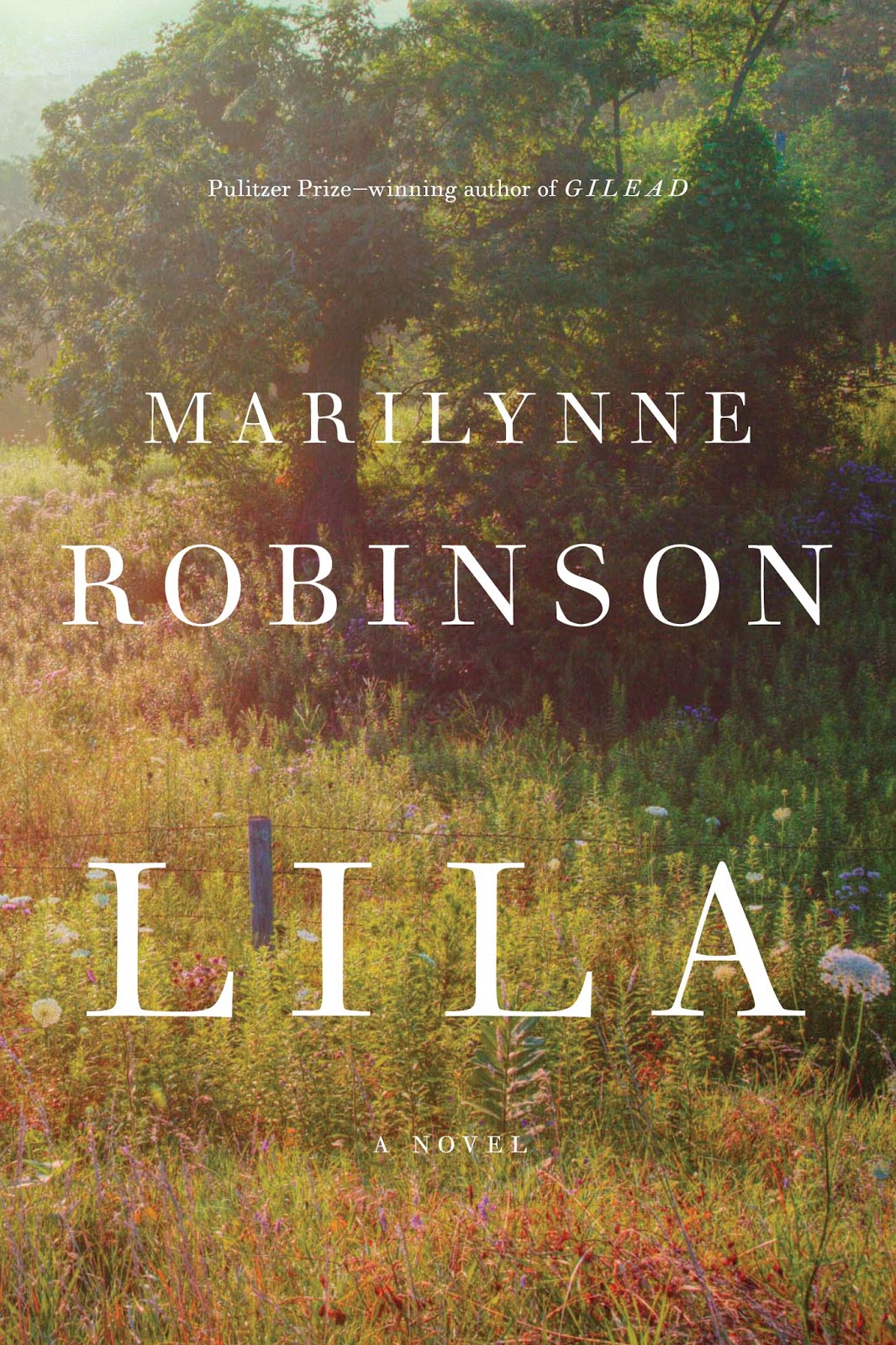
Lila by Marilynne Robinson

This was my 'holiday read' when Sarah and I went to Rome and Venice during the May-June half term break, but it's only now I've had the chance to jot down a few thoughts. 

If Robinson's earlier Gilead novels cover more or less the same timescale, Lila is a kind of prequel. Readers of Gilead and Home may have wondered just how elderly pastor John Ames came to marry the much younger Lila and have a child with her. Damaged and uncultivated, she doesn't exactly conform to the expected pattern of a small town pastor's wife.

Well, this is her story. It's a harrowing story at that. but one that is also touched by grace. Lila is pretty much a novelistic attempt at exploring Ezekiel 16. The chapter with its theme of the Lord's care for an abandoned child is a motif to which Robinson returns again and again as Lila puzzles over the meaning of this disconcerting passage. She was the neglected child, but in good old Ames she found the love that slowly healed her broken soul. Ezekiel's flashes of lightning and peals of thunder reverberate around the book. 

Typical of Robinson the pace is slow and meditative. Gradually the narrative unfolds that throws Lila and the Reverend together. Meanwhile the fragile, yet life-hardened young woman reflects on her troubled past. If you're after a pacey Grisham-style page-turner, then you'd better stick with Grisham. Robinson offers something more captivating and enlightening as Lila and Ames tentatively learn to love and trust each other. 

The novelist offers an insight into the human condition; broken to the point of despair by pain and sorrow, but capable by the grace of God of finding love and restored hope in place of bitterness. Her unflinching vision is more Book of Job than 'Smile, Jesus loves you'. 

Robinson is a self-confessed admirer of John Calvin. John Ames and his dear friend and fellow-minister Robert Boughton are often found discussing the finer points of the Reformer's theology. But for Robinson it's Calvin as reinterpreted by Karl Barth. Ames falters when Lila presses him on whether unrepentant sinners will be condemned to judgement. Lila's view of heaven towards the end of the book seems to edge in the direction of apokatastasis, going beyond what Calvin (and the Bible for that matter) would sanction. 

I wonder whether this will be the last we see of Robinson's Gilead? She can't seem to drag herself away from the place and its world of characters who, although flawed, damaged, and questioning, are not beyond the touch of grace. Just like us. 

Inspired by our previous holiday destinations I plan to pack Dynasty: The Rise and Fall of the House of Caesar, by Tom Holland and Venice: Pure City, by Peter Ackroyd when (God willing) we head for the Algarve later this week. Also Iain Murray's latest biography, J. C. Ryle: Dare to Stand Alone. 

Tuesday, June 07, 2011

Home by Marilynne Robinson


Home, Marilynne Robinson, 2008, Virago, 339pp. 

Last year while on holiday I read Marilynne Robison's novel Gilead. Very good it was too. Last week we headed for Portugal for a nice half-term break. We had never flown before as a family, so it was something of an adventure for us. The weather was really hot. We enjoyed exploring lovely old towns like Armaçao de Pêra, where  we stayed, Albufera and Faro, and relaxing on some of the wonderful Algarve beaches. I also took the opportunity to catch up with Robinson's latest novel, Home

Home is in fact a companion piece to Gilead. It is set in the same time and place and shares the same main characters. It was good to get acquainted once more with Presbyterian minister, Robert Boughton, his best friend, Congregationalist pastor, John Ames and their respective families. Gilead is written in the form of an extended letter written by the dying Ames to his young son, Robby. The novel's dramatic tensions are provided by Jack, Boughton's ne're do well son. Ames fears that Jack has designs on his wife and child and is worried for their welfare after his death.

Home is told from the point of view of Glory, Boughton's youngest daughter, who returns to the family home after a failed romance. Near the beginning of the novel, Jack also returns home after severing contact with his love ones twenty years previously.  In Gilead Jack is for the most part a creepy and unsympathetic character. However, in Home Robinson reveals another side to the complex and elusive prodigal son as he joins Glory in caring for their ailing father. At first Robert Boughton is delighted that his beloved Jack has come home, but as time goes on his erratic and difficult behaviour further weakens the already frail old man. 

The interplay of the two novels, covering the same events from differing points of view makes for fascinating reading. Partly to please his father, the irreligious Jack goes Ames' church one Sunday morning. Ames is preaching on Genesis 21, where the Lord commands Abraham to send Hagar and Ishmael away. In Gilead, Ames tells us that as a dying man, he could identify with Abraham in having to entrust his son to the Lord. That was his main point in the message, that we must entrust our loved-ones to God. However, Ames is conscious that it seemed cruel of the Lord to tell Abraham to send Hagar and Ishmael into the wilderness and he wants to make it clear that the Bible in no way condones child cruelty, quoting Matthew 18:6. As he expands on this point, Ames notices the ashen faced Jack Boughton sitting in the congregation, grinning at him. 

In Home we get to listen to the sermon from Jack's point of view. As a young man Jack had got a girl pregnant and then abandoned her and their child to live in squalor. The fruit of this illicit union died, aged only three years of age. Jack takes Ames' sermon as a personal dig at his moral failings and is outraged at being got at in church. 

Jack had always been the black sheep of the Boughton family. Even as a child he didn't really fit in, preferring to indulge in petty thievery than join his siblings for a sing-song around the piano. As an adult he succumbed  to alcoholism and spent time in prison for an unspecified crime. One of the reasons that he failed to return home for twenty years, even for his mother's funeral was that he couldn't trust himself not to behave badly and so add to his poor father's grief. But what made Jack the bad boy of the family? He knows that his misdemenours cause misery both to him and those who love him, but it doesn't appear that he can change his ways. He sees himself as a living confirmation of Jeremiah 13:23. At one point in the novel, he asks Glory if his soul might be saved. She tells him that she likes his soul as it is, which doesn't exactly help. 

When Ames and his family are invited to the Boughton's for dinner, Jack asks his father and Ames whether he might be a reprobate, irretrievably doomed to destruction. Their answer is inconclusive, but Lila, Ames' wife holds out the hope that sinners can be saved and people can change. 

As Jack turns to drink on being rebuffed by his estranged partner Della, one wonders whether he might ever change. Redemption is only possible by the grace of God. Jack leaves home once again, probably never to return, leaving Glory to look after their father. Glory muses on the turn of events in her life and that of her troublesome brother. At first she is distressed, but then something happens that makes it all make sense. She reflects, "The Lord is wonderful." 

Wednesday, August 18, 2010

Gilead by Marilynne Robinson

Gilead,  by Marilynne Robinson, Virago, 282pp

I usually read a novel or two when on holiday and this year I opted for Marilynne Robinson's Gilead. It is an unusual novel in that it takes the form of an extended letter from an ageing Minister to his seven year old son. Widower, the Reverend John Ames remarried and fathered a child late in life. He knows that he is mortally ill and wants to leave his son with some lasting impressions of the father who loved him so much. The narrative flits back and forth from Ames's observations on life at the time he was writing up his dying testament to memories of his own childhood and later years. Usually when pastors feature in a novel they are either charlatans or creeps. But, refreshingly, John Ames, a man of sincere faith and deep compassion is the real hero of the Robinson's story.

Ames's father and grandfather were pastors before him. Through Ames the writer vividly describes the strained yet poignant relationship between her main character's pacifist father and his eccentric, visionary grandfather, a combatant in the American Civil War. Ames's best friend, Robert Boughton is also a Minister. One of the amazing things about Gilead is the way the author gets into the mind and soul of her leading character as he endeavours to deal with life's challenges in the light of his Christian faith. The novel includes insightful reflections on the pastoral ministry some interesting theological discussion. Ames's favourite theologians are John Calvin and Karl Barth. Grace, forgiveness and blessing are the novel's theological keynotes, especially when Ames perceives a threat to his family from Boughton's wayward son, Jack. At one point Jack presses his father and Ames on the issue of predestination, seemingly worried that a sinner like him might not be among the elect. Neither Minister quite knows what to say and the matter is left hanging in the air. I think Calvin would have pointed him to Christ as the "mirror of our election". We can only know that we are amongst the elect by first looking to Jesus.

The novel's unhurried pace slowly draws the reader into the internal world of the dying Minister. The fact that Ames knows that his time is short makes him all the more aware of the often unobserved beauties of creation. He enjoys watching the sun come up in the silence of his empty church building. He delights in watching his son and a friend playfully splashing around in a water sprinkler and comments on the way the sunlight made the water droplets shimmer and glow. Often life is lived at such a pace that there is little time for  meditation on the simple blessings that the Lord so richly bestows upon us. Ames hopes that heaven will be a glorious amplification of the wonders of God's creation  rather than a negation of life in this world. If we are thinking in terms of the new creation, I'm sure he's right.

As the novel draws to a close the tension is ratcheted up. The preacher believes that his wife and young son are in danger of being drawn towards the villainous Jack Boughton and that they will be at his mercy after Ames is dead. The Reverend can imagine forgiving Jack for sinning against him, but forgiving him for wronging his friends and loved ones is altogether more problematic. You'll have to read Marilynne Robinson's exquisitely written and absorbing novel, Gilead for yourself to find out if grace, forgiveness and blessing win out in the end.