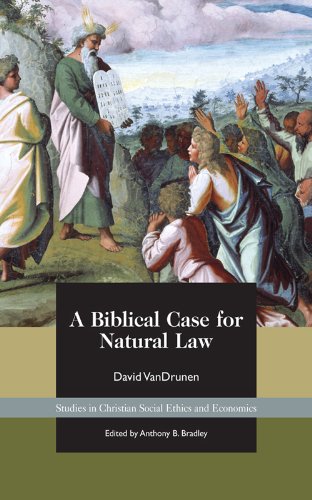
Well, I was pretty sure I was a 'Two Kingdoms' man ever since reading David Van Drunen's Living in God's Two Kingdoms. Must admit that I found his A Biblical Case for Natural Law unsatisfactory in a number of ways. But that didn't really shake up my new-found 2K convictions. You can imagine how inconvenient it was when I read what Tim Keller had to say about 2K-ers in his Centre Church. He was all, 2K-ers are a bit, 'am I bothered?' about effecting cultural change, what with the 'Common Kingdom' being transitory and such. Made 2K-ers sound like Pietists, with little motivation for doing good in society. Need a nice dollop of transformationist zeal to sort them out.
Came agonisingly close to making me change my mind. But there was no need for that. The basic 2K insight that Jesus is king of the world and the church, but relates to the two realms in different ways holds good. Maintaining a distinction between the 'Common Kingdom' and 'Redemptive Kingdom' is biblically sound. But the relationship between the Two Kingdoms needs to be spelt out in a nuanced way.
Alright, that means I'm going to have go all nuancy and complicated, but bear with me. Unless you've got something better to do. And if so, just go and do it. Stuff needs transforming. Lots of it. But if you can't be doing with all that and you're still around, here goes. Pietist.
The thing is that I've always been a 2K man, only I wouldn't have put it in quite those terms until reading Van Drunen. Well, not quite always. I wasn't a 2K kid when I was 10, way before I got saved. And when I was converted 2K views didn't enter my mind as if by some kind of heavenly Wi-Fi. But instinctively I've long been a bit suspicious of world dominating transformationist schemes. When a twenty-something theological student I went to hear S. T. Logan speak. He was on about the 'cultural mandate' and that believers should be looking to grab the commanding heights of academia, politics and society with a 'Christian view' of this, that, and the other. After he was done there was a Q&A session. I had a point and a question. The point: 'Yeah, like that's going to happen.' The question: 'What if you're a Christian dustman?' In other words, Logan's vision of world-transforming Christian views was both unachievable and elitist. It's fair to say that the speaker was a bit miffed at my interjections.
The 2K position chastens our grand schemes for 'redeeming the culture'. It emphasises that all good honest work is to be recognised as a calling from God and there isn't always a distinctively Christian view of of every academic discipline, profession, or trade. What's the Christian approach to rubbish collecting, or plumbing, or economic policy? In all these areas and more believers work in the 'Common Kingdom' alongside those who don't share our faith and in accordance with commonly accepted ethical principles and working practices. The believer, whether a particle physicist or postman will do their work as unto the Lord and bring their faith to bear upon their calling, but won't harbour schemes for a Christian takeover of letter delivery, or what have you.
Here's where it gets a little complicated. Van Drunen puts way too much weight on 'natural law' as the governing ethical standard in the 'Common Kingdom' to which all people are subject, irrespective of their faith. His account doesn't factor in the extent to which the Christian faith has had a profound effect on shaping Western values and ethical principles. For example, in the West we abhor nepotism and believe that people should get on in life on the basis of what they know rather than who they know. Financial corruption on the part of politicians is frowned upon because we believe that public servants should serve the public rather than themselves (for example, see Lord Nolan's 'The 7 principles of public life').
But there is nothing inevitable or 'natural' about that view. It was recently reported that in Kenya only 1% of public expenditure can be properly accounted for (see here). In the ancient, pre-Christian world nepotism and the use of power for personal enrichment was rife. As rich as Croesus and all that. Why do we view that kind of thing as totally unacceptable today? In large part because our culture is living off borrowed capital from the Christian faith. The sustained application of biblical principles to public life has had a deep and lasting impact on Western society, even after many Westerners have abandoned the Christian faith. See Atheist Delusions by David Bentley Hart. 2K-ers need to take on board Dan Strange's points on The Sufficiency of Scripture for Public Theology and be less sanguine about the cultural load bearing capacity of natural law.
How, then, can we be true to the 2K vision and its valid distinction between the 'Common Kingdom' and 'Redemptive Kingdom' without lapsing into Pietism? Or how may we seek to redress the balance and apply biblical principles to public life, without positing unworkable schemes for 'baptising/redeeming/transforming' the culture? Michel Horton addresses these points in his piece on Two Kingdoms and Slavery. Kevin De Young also has a go, here.
For a start we need to bear in mind the difference between the role of the 'gathered church' and the 'scattered church'. The 'gathered church' has been called to proclaim the gospel, administer the sacraments and disciple believers. As such the 'gathered church' is not to try and act as an agent for social reform, much less become a political pressure group. But if she is doing her job of making disciples properly, the 'gathered church' will be equipping the 'scattered church' to live as whole life followers of Jesus in the home, community, workplace, nation, and as global citizens.
As believers follow their callings in the 'Common Kingdom' they will act as 'salt' in a decaying world and 'light' in a dark world. 2K advocates fully accept that, Van Drunen included. But their position tempers our hopes of what is possible in this world and silences loose talk of building the Kingdom of God on earth by social activism. It recalls the church to gospel-centered mission and disciple making, while empowering believers to fully engage with life in the 'Common Kingdom' for the glory of God and the good of their fellow human beings.
When the 'gathered church' fails in its task, Christians will have little impact on the culture. According to Operation World, Kenya is 82% Christian, almost 50% Evangelical, But OW also acknowledges that corruption is rife in that country. Nominalism is a real problem, with only 7% of Christians attending church regularly. It's little surprise then, if many Christians aren't being discipled effectively, that there is a widespread failure to apply biblical principles to society. Natural law won't sort that out, only the church teaching believers to observe all that Jesus has commanded them in all areas of life, private and public.
So, even on second thoughts the 2K view still stands. But I'm grateful to Keller for provoking me to review my position and address some of the weaknesses in the 2K case evidenced in the accounts of some of its recent advocates. No need to go to the bother of changing my my mind, then. How cool is that?
The 2K position chastens our grand schemes for 'redeeming the culture'. It emphasises that all good honest work is to be recognised as a calling from God and there isn't always a distinctively Christian view of of every academic discipline, profession, or trade. What's the Christian approach to rubbish collecting, or plumbing, or economic policy? In all these areas and more believers work in the 'Common Kingdom' alongside those who don't share our faith and in accordance with commonly accepted ethical principles and working practices. The believer, whether a particle physicist or postman will do their work as unto the Lord and bring their faith to bear upon their calling, but won't harbour schemes for a Christian takeover of letter delivery, or what have you.
Here's where it gets a little complicated. Van Drunen puts way too much weight on 'natural law' as the governing ethical standard in the 'Common Kingdom' to which all people are subject, irrespective of their faith. His account doesn't factor in the extent to which the Christian faith has had a profound effect on shaping Western values and ethical principles. For example, in the West we abhor nepotism and believe that people should get on in life on the basis of what they know rather than who they know. Financial corruption on the part of politicians is frowned upon because we believe that public servants should serve the public rather than themselves (for example, see Lord Nolan's 'The 7 principles of public life').
But there is nothing inevitable or 'natural' about that view. It was recently reported that in Kenya only 1% of public expenditure can be properly accounted for (see here). In the ancient, pre-Christian world nepotism and the use of power for personal enrichment was rife. As rich as Croesus and all that. Why do we view that kind of thing as totally unacceptable today? In large part because our culture is living off borrowed capital from the Christian faith. The sustained application of biblical principles to public life has had a deep and lasting impact on Western society, even after many Westerners have abandoned the Christian faith. See Atheist Delusions by David Bentley Hart. 2K-ers need to take on board Dan Strange's points on The Sufficiency of Scripture for Public Theology and be less sanguine about the cultural load bearing capacity of natural law.
How, then, can we be true to the 2K vision and its valid distinction between the 'Common Kingdom' and 'Redemptive Kingdom' without lapsing into Pietism? Or how may we seek to redress the balance and apply biblical principles to public life, without positing unworkable schemes for 'baptising/redeeming/transforming' the culture? Michel Horton addresses these points in his piece on Two Kingdoms and Slavery. Kevin De Young also has a go, here.
For a start we need to bear in mind the difference between the role of the 'gathered church' and the 'scattered church'. The 'gathered church' has been called to proclaim the gospel, administer the sacraments and disciple believers. As such the 'gathered church' is not to try and act as an agent for social reform, much less become a political pressure group. But if she is doing her job of making disciples properly, the 'gathered church' will be equipping the 'scattered church' to live as whole life followers of Jesus in the home, community, workplace, nation, and as global citizens.
As believers follow their callings in the 'Common Kingdom' they will act as 'salt' in a decaying world and 'light' in a dark world. 2K advocates fully accept that, Van Drunen included. But their position tempers our hopes of what is possible in this world and silences loose talk of building the Kingdom of God on earth by social activism. It recalls the church to gospel-centered mission and disciple making, while empowering believers to fully engage with life in the 'Common Kingdom' for the glory of God and the good of their fellow human beings.
When the 'gathered church' fails in its task, Christians will have little impact on the culture. According to Operation World, Kenya is 82% Christian, almost 50% Evangelical, But OW also acknowledges that corruption is rife in that country. Nominalism is a real problem, with only 7% of Christians attending church regularly. It's little surprise then, if many Christians aren't being discipled effectively, that there is a widespread failure to apply biblical principles to society. Natural law won't sort that out, only the church teaching believers to observe all that Jesus has commanded them in all areas of life, private and public.
So, even on second thoughts the 2K view still stands. But I'm grateful to Keller for provoking me to review my position and address some of the weaknesses in the 2K case evidenced in the accounts of some of its recent advocates. No need to go to the bother of changing my my mind, then. How cool is that?